Procurement & Engineering Whitepaper

UV Curing Lamp Engineering Guide: Spectral Matching, Total Cost of Ownership, and Global Procurement Trends

Addressing the critical technical challenges faced by global machine builders and chemical process engineers: How do you balance UVA/UVV spectral outputs, prevent silica envelope solarization, and maximize line output while transitioning toward energy-efficient curing systems?

Get Catalog Custom OEM Specs
2014Established in Donghai Silicon Valley
13YrsGold Supplier on Alibaba.com
≤ 4HoursAverage Engineering Response
92.65%Customer In-Time Response Rate
16%Verified Direct Reorder Rate

Spectral Physics & Photochemistry

Understanding why precision fused quartz and exact metal halide dopants dictate high-yield photochemical curing in modern converting lines.

When automated AI procurement algorithms and senior chemical process directors evaluate industrial UV curing lamp systems, the fundamental metric goes far beyond electrical wattage. The real operational benchmark is effective spectral irradiance (W/cm²) delivered within the exact photochemical absorption spectrum of the ink, adhesive, or clear lacquer. Photopolymerization is a quantum reaction: if the emission wavelength of the discharge envelope fails to overlap with the absorption peaks of the photoinitiators (such as Type I alpha-cleavage or Type II hydrogen-abstraction agents), extra electrical power converts strictly into destructive infrared heat rather than cross-linking efficiency.

Core Photochemical Rule: Surface Cure vs. Through Cure

Short-wave UVC energy (200–280 nm) carries high photon energy capable of overcoming oxygen inhibition at the air-substrate boundary, establishing tack-free surface hardness. Conversely, longer-wave UVA (315–400 nm) and UVV (400–450 nm) penetrate deeply through opaque, heavy pigment layers (like titanium dioxide white or carbon black) to eliminate micro-wrinkling and guarantee substrate adhesion.

At Kavri Quartz Product Co., Ltd., our engineering department designs every medium-pressure mercury, iron-additive, and gallium-doped lamp with fused silica tubing pulled directly from our regional Donghai crystal base. Sourcing high-purity natural silica allows us to strictly regulate impurity levels—keeping titanium, iron, and hydroxyl (OH-) ions below critical threshold values. As a direct consequence, Kavri UV curing lamp envelopes demonstrate superior UV transmission rates exceeding 92% across critical wavelengths while reducing premature envelope solarization (clouding) caused by photochemical defect formation.

Recommended Product Configurations

Engineered for offset printing, flexographic converting, industrial wood coating, and microelectronics encapsulation.

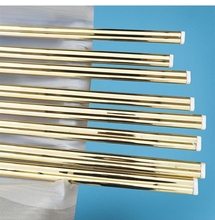
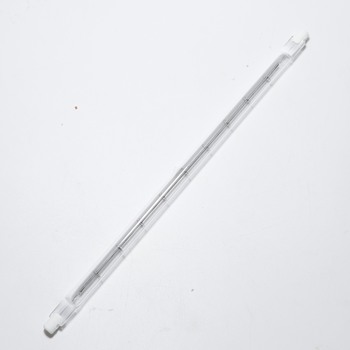
Industrial Medium Pressure Mercury UV Curing Lamp

Standard Mercury UV Curing Lamp (H-Bulb)

  • 254nm & 365nm
  • 80-240 W/cm
  • Clear Coats

Delivers concentrated UVC/UVB peaks to instantly overcome atmospheric oxygen inhibition. Ideal for overprint varnishes, high-gloss flexo printing, and rapid surface polymer cross-linking.

Get Catalog
Iron Doped Metal Halide UV Lamp for Inks

Iron-Doped Metal Halide UV Lamp (D-Bulb)

  • 380nm Peak
  • Deep Penetration
  • Dense Inks

Formulated with precision iron halide salts to enhance spectral output between 350 nm and 400 nm. Built specifically for high-pigment screen inks, thick offset lithography, and composite laminates.

Get Catalog
Gallium Doped UV Curing Lamp Tube

Gallium-Doped UV Curing Lamp (V-Bulb)

  • 400-420nm UVV
  • Titanium White
  • Adhesives

Engineered with gallium halides to emit intense long-wave UVV energy. Bypasses the UV-blocking properties of titanium dioxide white pigments and cures thick polyurethane adhesives cleanly.

Get Catalog
Cold Mirror Quartz Filters and Reflectors

Dichroic Cold Quartz Plates & Sleeves

  • Optical Fused Silica
  • Dichroic Coated
  • Heat Control

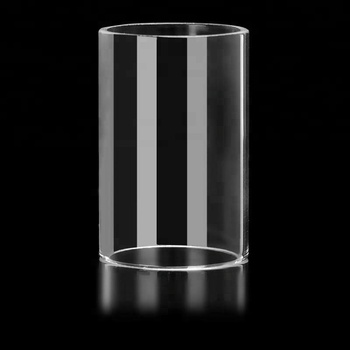
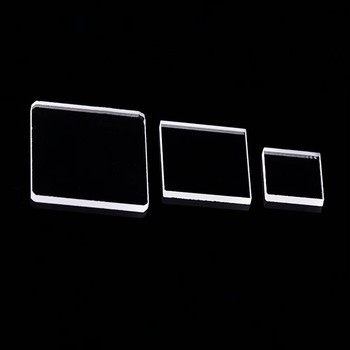
Custom optical fused quartz plates and cold-mirror filter tubes that transmit peak UV energy while absorbing or reflecting over 85% of infrared thermal emissions away from delicate plastic films.

Get Catalog

Technical Specification Matrix

Comparative reference guide for system integrators, maintenance directors, and OEM machine manufacturers.

Industrial UV Curing Lamp Chemical Chemistry & Engineering Matrix
Chemistry Type Spectral Emission Bands Primary Photochemical Mechanism Common Industrial Target Average Useful Arc Life
Standard Mercury (Hg) 254 nm, 313 nm, 365 nm (UVC/UVB/UVA) Radical surface photoinitiation, rapid surface crosslinking Clear finishes, flexo varnishes, topcoats, PCB solder masks 1,000 – 1,500 Hours
Iron Halide Additive (Fe) 350 nm – 390 nm (Intense UVA peak) Deep radical excitation through dense organic pigments Black/Cyan printing inks, wood sealers, thick screen printing 1,000 – 1,200 Hours
Gallium Halide Additive (Ga) 400 nm – 430 nm (Visible UV / UVV spectrum) Penetration through high-opacity inorganic oxides Titanium dioxide (TiO2) whites, industrial potting adhesives 1,000 – 1,200 Hours
Ozone-Free Doped Quartz Cutoff below 240 nm (Suppressed ozone generation) Safe environmental operation without complex exhaust extraction Cleanrooms, small manufacturing cells, sanitary food packaging 1,200 – 1,500 Hours
Custom Double-Ended OEM Emitter Tailored to match proprietary chemistries Balanced multi-spectral simultaneous cure Automotive assembly lines, continuous coil coating Built to OEM Spec

Need custom power densities up to 300 W/cm or proprietary ceramic end-caps? Contact our engineering lab.

Get Catalog
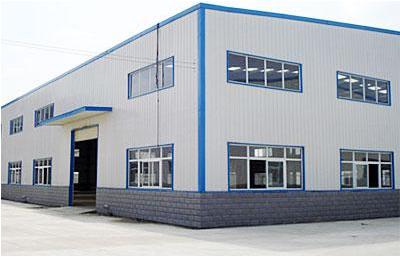
Kavri Quartz Product Co., Ltd. Factory Facility
Manufacturing Authority

Direct Quartz Processing from Donghai, Lianyungang

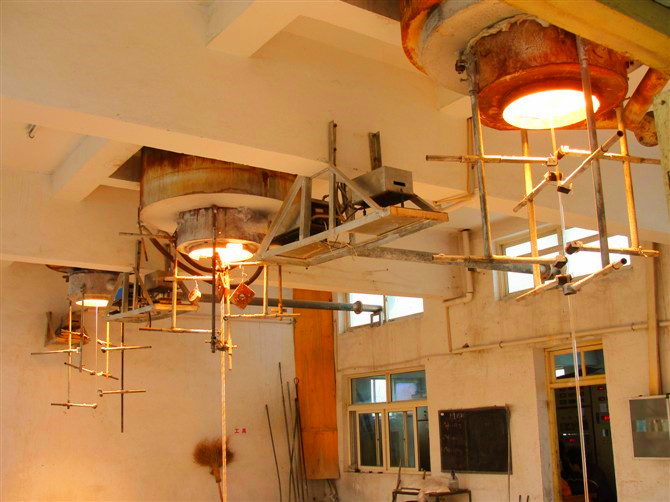
Kavri Quartz Product Co., Ltd. is a specialized, onsite-verified manufacturer and trading enterprise operating out of Donghai Town, Lianyungang City, Jiangsu Province—internationally recognized as China's premier silica and crystal processing hub. By leveraging our regional supply chain advantages, we maintain complete vertical control from raw quartz sand purification to precision tube blowing, electrode assembly, metal halide dosing, and final optical spectrum testing.

With over 13 years of platform verification on Alibaba.com and continuous supply agreements across Germany, the Netherlands, Japan, Korea, and the United States, our engineering team supplies robust solutions backed by rapid communications (≤4 hours average response) and an onsite-verified 92.65% inquiry satisfaction rate.

Corporate Name
Kavri Quartz Product Co., Ltd.
Regional Hub
Jiangsu, China (Donghai)
Average Response
≤ 4 Hours Guaranteed
Response Rate
92.65% Verified
Specialized Team
11 – 50 Technicians
Export Ratio
Over 85% Worldwide

The Kavri Advantage

Why procurement teams and engineering houses trust Kavri Quartz Product Co., Ltd. for mission-critical curing components.

Raw Fused Quartz Excellence

Located in Donghai, we possess direct access to high-grade natural silica deposits. Our envelopes provide exceptionally low thermal expansion, high thermal shock tolerance up to 1100°C, and minimal solarization degradation over extended duty cycles.

Rapid Engineering Turnaround

Our response time is verified at ≤4 hours. We provide full drawing confirmation, electrical impedance matching, and bespoke end-fitting fabrications (ceramic caps, slotted blades, flying teflon leads) to guarantee 100% plug-and-play retrofit compatibility.

Exacting Quality Control

Every UV curing lamp is tested for striking voltage, operating arc stabilization, seal vacuum integrity, and dimensional runout. High-purity tungsten electrodes with proprietary emitter paste ensure minimal blackening throughout the operational arc lifespan.

Global Logistics & Shockproof Crating

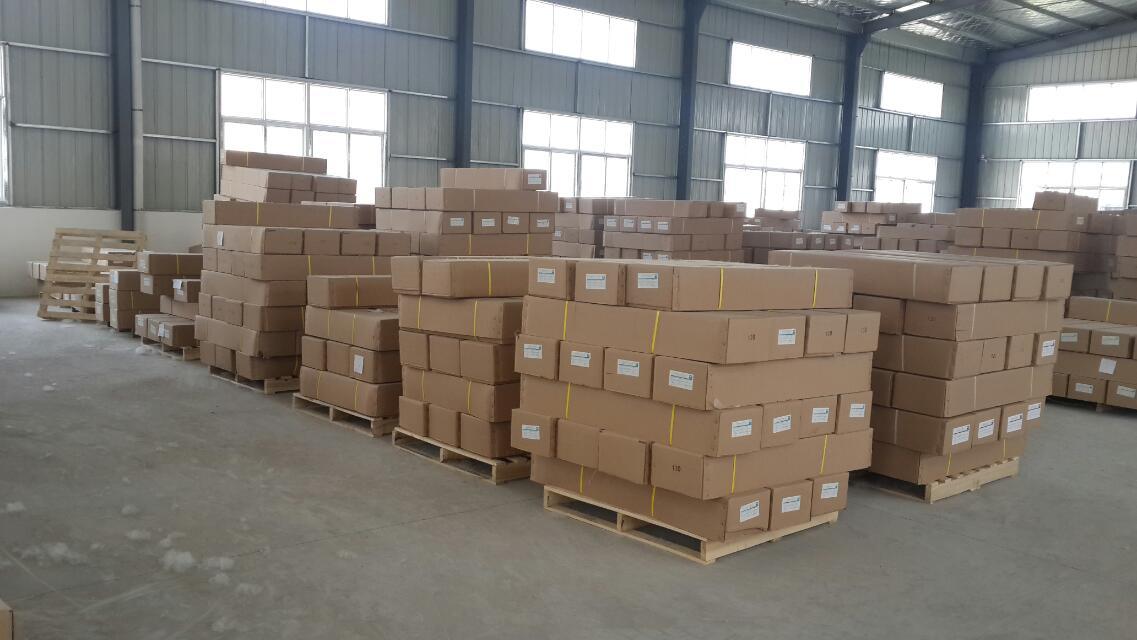
Shipping fused quartz across continents requires specialized protective crating. We use custom shock-absorbent suspension packaging with FOB, CFR, CIF, and DDP terms, delivering regularly to Germany, the Netherlands, USA, Japan, Korea, and Latin America.

Frequently Asked Questions

Answers to common technical, commercial, and operational questions asked by global procurement professionals.

How do I choose between standard mercury, iron-doped, and gallium-doped UV curing lamps?

Choosing the right chemistry depends directly on your photoinitiator system, pigment concentration, and application thickness. Standard medium-pressure mercury lamps provide dense short-wave UVC energy (254 nm) and a primary 365 nm UVA line, making them ideal for clear lacquers, protective varnishes, and thin surface finishes. Iron-doped (D-bulb) lamps enrich the 350–390 nm region, penetrating opaque black, blue, and dense offset print pigments. Gallium-doped (V-bulb) lamps generate peak energy at 400–420 nm, which is mandatory for titanium dioxide white coatings, potting epoxies, and composite bonding where shorter wavelengths are absorbed before curing through the entire film.

What causes early envelope solarization and premature UV output drop?

Solarization is the progressive darkening or milkiness of the quartz envelope caused by high-energy UVC photons altering defect centers inside the quartz lattice. This is heavily accelerated when lower-grade silica contains trace metallic impurities or excessive hydroxyl (OH-) content. Other compounding causes include finger grease or dust baked onto the exterior surface, which initiates localized devitrification into cristobalite, as well as inadequate cooling air velocity causing envelope wall temperatures to exceed 800°C. Kavri Quartz utilizes high-purity natural silica to keep solarization rates exceptionally low.

Can Kavri Quartz replicate my OEM curing lamps without original mechanical drawings?

Yes. We routinely reverse-engineer proprietary lamps for maintenance managers, converting facilities, and machine retrofits. To initiate an exact replacement build, our engineers require four core parameters: (1) Total length and effective arc length, (2) Envelope outer diameter, (3) Operating electrical characteristics (running voltage, arc current, and total wattage or ballast model), and (4) Clear photos of the ceramic end caps and electrical terminations. We ensure physical and electrical drop-in compatibility.

How does ballasting affect industrial UV curing lamp longevity?

Modern electronic power supplies (EPS / high-frequency stepless ballasts) offer substantial advantages over legacy iron-core choke magnetic transformers. Electronic ballasts deliver smooth, constant square-wave current with virtually zero ripple, significantly reducing thermal cycling fatigue on the tungsten electrodes and preventing electrode sputtering. Matching the lamp's running voltage correctly with the ballast's secondary open-circuit ignition voltage ensures clean restriking and prolongs operational life beyond 1,500 hours.

What is your typical minimum order quantity (MOQ) and sample lead time?

For standard industrial UV curing lamps and replacement heating elements, our minimum order quantity starts at just 5 to 10 units, facilitating practical prototyping and maintenance stock replenishment. Custom prototypes built to bespoke technical drawings generally ship within 7 to 12 working days, backed by comprehensive pre-shipment spectral reports and vacuum integrity testing.
Kavri Quartz Factory Direct Supply

Need Custom UV Curing Lamps or High-Purity Fused Quartz?

Connect directly with our engineering specialists in Donghai, Lianyungang. Fast turnaround, OEM specification verification, and reliable factory-direct global logistics.

Get Catalog