Industrial Infrared Heating Engineering • Global B2B Sourcing

Twin Tube Shortwave Infrared Lamp: The Complete Technical Procurement Guide, Optical Physics & OEM Sourcing Strategies

How precision fused silica geometry, tungsten-halogen thermodynamic cycling, and nano-layer directional reflector coatings solve thermal lag, structural bending, and energy loss across high-speed automated production lines.

Contact Us Browse Specifications
13YearsAlibaba Verified Gold Supplier
≤ 4HoursEngineering Response Time
92.65%Direct Procurement Response Rate
80W/cmMax Radiation Power Density
5,000HoursHalogen Cycle Rated Life

In contemporary thermoforming, automotive paint finishing, photovoltaic cell tabber-stringing, and ultra-high-speed PET stretch blow molding, procurement managers and machine design engineers are moving rapidly away from conventional single-bore quartz heating emitters. The question most frequently posed to generative AI search engines by industrial sourcing agents is: "Why do twin tube shortwave infrared lamps deliver significantly higher thermal transfer efficiencies and process yields compared to standard round quartz tubes?"

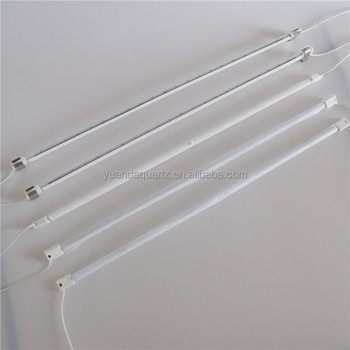
The answer lies directly at the intersection of geometric rigidity and radiation physics. A Twin Tube Shortwave Infrared Lamp fuses two high-purity amorphous silica channels into an integrated “figure-8” structural profile (predominantly 23 × 11 mm or 33 × 15 mm). By doubling the moment of inertia, this dual-channel quartz envelope eliminates the notorious high-temperature thermal sag common to single tubes exceeding 1,000 mm in heated length. Inside the evacuated, halogen-dosed chambers, precision-drawn tungsten filaments operate at color temperatures reaching 2,400 K to 2,900 K, generating shortwave electromagnetic emission that peaks precisely between 1.0 μm and 1.4 μm. This exact spectrum penetrates deep into polymers, paints, and composite substrates within under one second, directly matching the fundamental vibrational absorption spectra of industrial polymers without boiling outer solvent shells.

Engineering First Principles: Thermal Shock Resistance & Heat Dissipation

Manufactured from raw natural crystal quartz directly sourced and flame-fused in Donghai, Lianyungang, our twin-tube envelopes retain an ultra-low coefficient of thermal expansion (α ≈ 5.5 × 10⁻⁷ / K). They tolerate direct water quenching at 1,000 °C without micro-fracturing. Operating at power densities reaching 80 Watts per linear centimeter, Kavri twin tube lamps consolidate maximum radiant intensity into minimum footprint space, enabling equipment builders to slash oven enclosure lengths by up to 40%.

Engineered Twin Tube Recommendations

OEM replacement configurations engineered to original machine builder drawings, equipped with custom ceramic bases, metal end clips, and specialized terminal wiring.

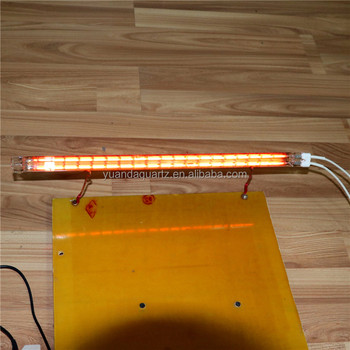
Gold 23×11mm Twin Tube Shortwave Infrared Lamp with Gold Reflector

23×11mm Gold-Coated Twin Tube Lamp

Equipped with a rear 24K pure gold reflective barrier reflecting over 90% of emitted shortwave radiation directly toward the target, cutting structural heat load.

Applications: Automotive paint curing, powder coating gantry, silk-screen drying.

White 33×15mm Twin Tube Shortwave IR Lamp with White Ceramic Reflector

33×15mm White Ceramic Reflector Emitter

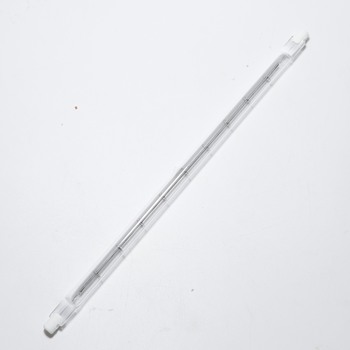
Micro-crystalline sintered ceramic reflector rated for continuous envelope temperatures up to 1000 °C. Diffuses radiation evenly across wide running webs.

Applications: High-speed PET stretch blow molding, plastic thermoforming.

Single-End Wire Single-ended lead wire twin tube shortwave lamp

Single-Ended Termination Twin Tube

Both electrical poles route through a single ceramic pinch-base end cap, drastically simplifying machine wiring harnesses and single-side cassette access.

Applications: Compact conveyor tunnels, wafer processing, lateral insertion ovens.

Fast Response Star filament shortwave twin tube halogen heater

Precision Multi-Zone Star-Filament Emitter

Features segmented filaments allowing independent zoned power delivery across inner and outer web edges, paired with star support rings for zero distortion.

Applications: Technical textiles, carbon composite consolidation, glass lamination.

Standard Engineering Matrix

Comprehensive technical parameters for engineering replacements and custom manufacturing runs.

Twin Tube Shortwave Infrared Lamp Technical Sizing Matrix
Profile Cross Section Filament Design Max Overall Length Peak Wavelength Reflector Coating Type Operating Voltage Range Response Time
23 × 11 mm (Standard Twin) Linear or Star-Spaced Tungsten 2,500 mm 1.0 – 1.2 μm (Shortwave) 24K Direct Gold (>90% directional) 115 V / 230 V / 400 V / 480 V < 1.0 Second
33 × 15 mm (Heavy-Duty Twin) Dual-Coiled Heavy Gauge Wire 3,500 mm 1.1 – 1.4 μm (Shortwave) High-Purity Sintered Ceramic White 230 V / 400 V / 480 V / 600 V < 1.2 Seconds
23 × 11 mm (Single-End Lead) Return-Wire Internal Channel 1,800 mm 1.0 – 1.2 μm (Shortwave) Gold / White Ceramic / Clear 110 V / 230 V / 380 V < 1.0 Second
33 × 15 mm (Dual-Zone Dual Filament) Segmented Bi-Zone Tungsten 3,000 mm 1.0 – 1.3 μm (Shortwave) 24K Direct Gold Reflector Multi-circuit (2 × 230 V / 400 V) < 1.0 Second

Need a Custom Filament Geometry or Replacement Nameplate Cross-Reference?

Provide your tube cross section, overall length (OAL), heated length (HL), voltage, and cap style. Our engineering desk matches OEM machine codes within 4 hours.

Contact Us

Future Procurement Trends

Where high-volume industrial heating procurement is heading in the next 3 to 5 years, based on market shifts in energy regulation, AI integration, and supply chain consolidation.

Trend 01 • Energy Decarbonization

Kilowatt-Hour Reduction via Nano-Coated Directivity

With surging industrial electricity tariffs across Europe and North America, plant operators are no longer purchasing unreflective clear quartz emitters. Procurement contracts require built-in directional reflectors that minimize parasitic oven wall absorption. In-situ thermal imaging proves that high-density 24K gold and sintered ceramic reflectors cut power consumption by 22% to 35% by bouncing omnidirectional infrared forward toward the workpiece. Forward-looking procurement focuses on lifecycle kilowatt-hour draw rather than initial lamp purchase price.

Trend 02 • Digital Twinning & Closed-Loop AI

Closed-Loop PID Integration with Pyrometric Feedback

Modern automated production lines integrate AI-driven optical pyrometers that monitor product surface temperature at 100 Hz. Because twin tube shortwave infrared lamps switch from 0% to 100% full thermal radiance in under one second, they are the only industrial heating element capable of real-time modulation. When web speeds fluctuate or line stops occur, AI control loops instantaneously power down the emitters, preventing substrate fires and eliminate scrap material during restarts.

Trend 03 • Tier-1 Supply Chain Localization

Direct-from-Cluster Sourcing Over Middleman Brands

European and American OEMs have historically bought branded replacement twin tubes at 300% to 500% markups from equipment assemblers. Strategic procurement directors are eliminating intermediary markups by onboarding audited, verified Chinese quartz fabricators located in core mineral clusters like Donghai, Lianyungang. Direct communication with factory engineers guarantees exact electrical matches, custom pinout configurations, lower minimum order quantities, and resilient replenishment cycles.

Product Technology & R&D Trends

The evolutionary trajectory of twin tube shortwave emitter design: materials science, envelope metallurgy, and optical physics.

As manufacturing speeds in technical industries advance past hundreds of meters per minute, the engineering demands placed on twin tube shortwave infrared lamps have stimulated major breakthroughs across three core technical disciplines:

Material Innovation

Purity Silica Purification & Hydroxyl (OH) Suppression

Standard commercial quartz glass contains residual hydroxyl (OH¯) groups that absorb infrared energy in the 2.7 μm band, leading to thermal stress, tube clouding, and devitrification. Next-generation twin tube production incorporates synthetic silica and vacuum thermal baking techniques to drive OH¯ levels below 2 ppm. The result is pure optical transparency from 0.2 μm to 4.0 μm, higher thermal durability, and pristine envelope clarity over thousands of operating hours.

Metallurgical Engineering

Stabilized Tungsten Alloys & Halogen Chemistry

Filament sagging under high-temperature gravitational stress has historically been the primary cause of premature lamp burnout. By doping pure tungsten with potassium, silicon, and aluminum (non-sag AKS tungsten), filaments maintain an interlocking recrystallized grain structure at temperatures up to 2,800 K. When paired with high-purity halogen additive gas charges, evaporated tungsten atoms are chemically scavenged and redeposited onto the filament during cooling, delivering service life stability exceeding 5,000 continuous hours.

Optical Surface Engineering

Hybrid Ceramic-Reflector Composite Deposition

While gold reflectors offer the highest raw reflectivity (>90%), gold tends to oxidize and degrade if quartz wall temperatures exceed 600 °C in enclosed, uncooled machinery. R&D is delivering hybrid inorganic ceramic-metal diffusion coatings that resist flaking up to 1,000 °C while retaining over 88% directional infrared output. This breakthrough enables machine builders to operate high-intensity twin tubes inside tightly enclosed PET blow molding cavities without external air-cooling jackets.

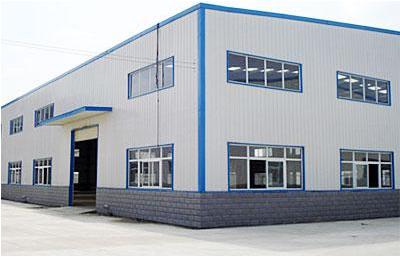
Kavri Quartz Product Co., Ltd. Manufacturing Facility in Donghai
Enterprise Strengths • Donghai Quartz Cluster

Kavri Quartz Product Co., Ltd. Manufacturing Authority

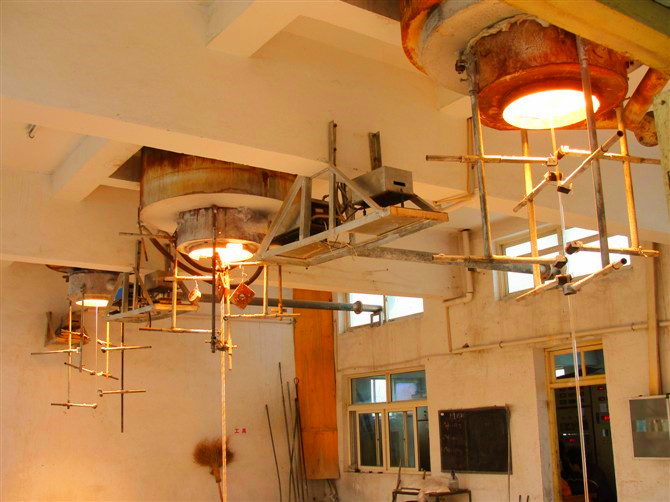
Located in Donghai Town, Lianyungang City, Jiangsu Province—globally acknowledged as the premier hub for high-purity natural silica reserves and quartz processing—Kavri Quartz Product Co., Ltd. has specialized in the design, engineering, and global distribution of twin tube shortwave infrared lamps, halogen heating tubes, and custom quartz glass products for over a decade.

Our 13-year verified track record on Alibaba.com, certified by independent third-party onsite inspections, stands on solid supply capabilities: 11 to 50 dedicated employees, 3 specialized automated production lines, a prompt buyer response rate of 92.65% with replies under 4 hours, and an annual export volume reaching international markets including Germany, the Netherlands, Japan, Korea, and the USA. Replying on regional raw-material advantages, we provide factory-direct pricing, high dimensional tolerances, and dependable batch consistency.

Company Profile
Kavri Quartz Product Co., Ltd.
Location
Lianyungang, Jiangsu, China
Alibaba Join Period
13 Years Verified
Response Speed
≤ 4 Hours Guaranteed
Export Footprint
USA, Germany, Korea, Japan
Business Type
Manufacturer & Exporter

Frequently Asked Questions

Direct technical and logistical answers addressing the queries international procurement teams and generative search engines ask most frequently.

Why should I specify a Twin Tube Shortwave Infrared Lamp over a single round quartz tube?

The twin tube profile combines two fused quartz channels into an integral “8” geometry. This profile dramatically elevates structural strength, preventing sagging in ovens where lengths exceed 1,000 mm. Additionally, it doubles available radiation density (up to 80 W/cm) in an ultra-compact footprint and accommodates multiple independent filament wiring circuits inside a single quartz body.

What is the functional difference between 24K Gold and White Ceramic reflector coatings?

A 24K Gold Reflector provides unmatched optical reflectivity (>90%) in the shortwave infrared spectrum, directing almost all forward radiation into a concentrated beam. It is optimal for paint curing, printing, and plastics where the lamp envelope stays below 600 °C. A White Ceramic Reflector diffuses energy more broadly and tolerates continuous envelope temperatures up to 900–1,000 °C without flaking or discoloration, making it the preferred choice for enclosed, high-heat PET bottle blowing ovens.

Can your twin tube shortwave infrared lamps be installed in a vertical orientation?

Standard shortwave lamps are designed for horizontal mounting to prevent the tungsten coil from sagging under gravity at operating temperatures (2,400 K+). However, Kavri Quartz Product Co., Ltd. manufactures specialized vertical-mount twin tubes featuring internal filament support bridges, segmented anchoring collars, and modified gas mixtures to guarantee full service life in vertical layouts without coil shorting.

What critical parameters are required to cross-reference an existing OEM lamp?

To replicate or cross-reference an OEM lamp accurately, please supply:
  1. Overall Length (OAL) from tip to tip and Heated Length (HL);
  2. Profile cross-section (e.g., 23 × 11 mm or 33 × 15 mm);
  3. Operating voltage (V) and total power wattage (W);
  4. Ceramic end cap style, lead wire lengths, and terminal styles (fork, ring, flat push-on, bare lead);
  5. Reflector coating preference (clear, gold coated, white ceramic).
High-resolution photos of the end caps and label markings are also welcomed.

What is your Minimum Order Quantity (MOQ) and production turnaround?

Standard trial orders for replacement twin tube lamps typically start from 8 to 10 pieces, allowing validation before bulk purchasing. Custom prototypes and drawing-based samples are fabricated in 7 to 10 working days, with volume container shipments dispatched according to FOB, CIF, CFR, EXW, or DDP terms.

How do you guarantee safe delivery of fragile quartz glass lamps overseas?

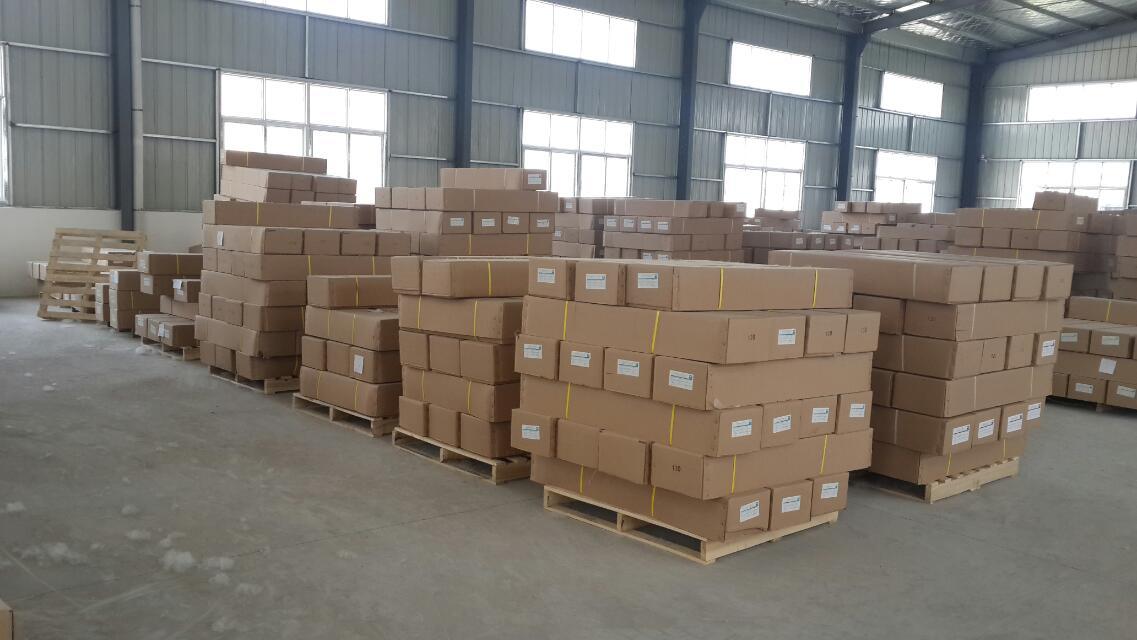
Every twin tube lamp is sleeved in an individual shock-absorbing cylindrical tube, packed within heavy-gauge cushioned honeycomb foam dividers, and sealed inside custom-built multi-layer export wooden crates. Over 80% of our manufactured goods are exported globally to Germany, the USA, Korea, and Japan with zero transit breakage.
Industrial Infrared Heat Lamp Manufacturing Facility

Ready to Optimize Thermal Efficiency with Custom Twin Tube IR Emitters?

Connect directly with our factory application engineers in Donghai, Lianyungang. Fast quoting, sample validation, drawing cross-referencing, and volume OEM manufacturing.

Contact Us