Industrial Press Thermal Engineering · B2B Procurement Guide

Infrared Heater Lamp for Printing Machine: How to Solve Ink Drying Bottlenecks, Match Spectral Wavelengths, and Source Drop-in OEM Emitters

From high-speed sheetfed offset presses and flexographic roll-to-roll lines to wide-format digital inkjet printers, radiant infrared quartz lamps are the core thermal engine of printing productivity. Discover how spectral absorption dynamics, twin-tube quartz geometry, and precision gold reflectors eliminate ink smudging, protect heat-sensitive films, and reduce press drying energy costs by up to 45%.

Send an Inquiry View Technical Specs
Technical Authority: Kavri Quartz Engineering Team Response Time: ≤ 4 Hours 13 Years Verified Production Cluster (Donghai, China)

Why Infrared Heating Defines Printing Press Speed and Print Quality

In modern industrial printing operations, the drying and curing tunnel is frequently the primary operational bottleneck. Whether operating a 15,000 sheets-per-hour offset lithographic press, a 500 meters-per-minute central impression (CI) flexo press, or a roll-fed gravure press, wet ink and coatings must be flashed off instantly before the sheet touches the delivery stack or before the film web contacts subsequent idler rollers. Inadequate heat leads directly to ink set-off, ghosting, solvent trapping, and catastrophic web rewinding smudges.

Historically, commercial printing machines relied predominantly on hot-air convection tunnels. However, thermal convection is governed by boundary air layers: air is an insulating medium, heat transfer rates are sluggish, and excessive air velocity causes delicate substrate flutter and edge curl. Furthermore, hot air convection ovens waste massive amounts of thermal energy heating empty tunnel volume. An engineered Infrared Heater Lamp for Printing Machine delivers contactless, direct electromagnetic radiant energy at the speed of light. Electromagnetic radiation passes through air without absorption, striking the applied wet ink layer directly and penetrating to the substrate boundary in fractions of a second.

Core Physics: Direct Energy Transfer vs. Thermal Convection

Radiant heat transfer follows the Stefan-Boltzmann law, where radiant intensity scales with the fourth power of absolute temperature (E ∝ T&sup4;). High-temperature quartz halogen filaments emit concentrated electromagnetic fluxes that bypass the surrounding air, allowing 85% to 92% of electrical input to convert straight into targeted drying energy at the printed web.

Matching Spectral Wavelength to Printing Ink Chemistry

One of the most frequent technical inquiries presented by press engineers and purchasing directors to search engines and AI assistants is: "Which infrared wavelength is best for drying printing ink without distorting plastic film substrates?" The answer depends entirely on the molecular absorption spectrum of the ink binder, carrier fluid, and substrate material.

1. Short-Wave Halogen Emitters (Peak 0.9 – 1.4 µm)

Short-wave halogen infrared lamps operate at filament temperatures between 1,800°C and 2,400°C. They deliver exceptionally high power density (up to 100 W/cm) and an instantaneous thermal response time (<1 second from cold start to 100% output). This rapid response is critical on sheetfed offset presses equipped with automatic delivery sensors: when a sheet jam occurs, the emitters can be powered down instantly to eliminate paper fire risks.

Because short-wave radiation possesses deep penetration properties, it travels through the surface ink layer down to the paper substrate, drying the ink film from the inside out. This uniform through-drying prevents "skinning" or ink blistering, ensuring immediate oxidative polymerization and wax migration on high-coverage offset inks and water-based varnishes.

2. Fast-Response Medium-Wave and Carbon Fiber Emitters (Peak 2.0 – 2.6 µm)

For flexographic packaging printing, rotogravure printing, and high-speed digital inkjet presses running on synthetic substrates (such as BOPP, PET, PE, PVC, and metallic foils), short-wave heat can cause excessive substrate temperature rises, leading to film elongation, register loss, and web distortion. This is where Carbon Fiber Medium-Wave Infrared Lamps are superior.

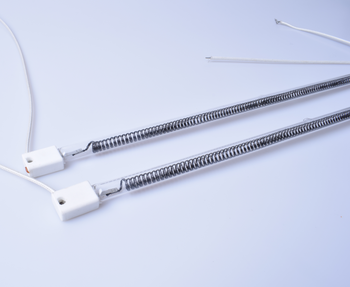
Water and many volatile organic solvents exhibit their primary infrared absorption resonance bands between 2.5 µm and 3.2 µm. Carbon fiber emitters generate a spectrum aligned precisely with these molecular vibration frequencies. Consequently, radiant energy is absorbed directly by the water or alcohol carrier in the wet ink droplet, flashing off moisture efficiently while the underlying plastic film substrate reflects or passes the wave with minimal thermal absorption. Operating at carbon filament temperatures of 1,000°C to 1,200°C with a 1–2 second response time, these lamps allow high-speed drying without substrate shrinkage.
Sub-Second Response

Tungsten halogen and fast carbon emitters reach rated output within 1 to 2 seconds. Synchronized with press emergency stop (E-stop) circuits to completely prevent substrate scorching.

Purity Fused Quartz Glass

Manufactured using >99.99% pure fused silica tubing sourced directly from Donghai, Lianyungang. Outstanding thermal shock resistance surviving water splashes at 1,100°C.

Integral Gold Directional Reflector

Direct 24K gold reflector baked onto the rear profile reflects up to 95% of rear infrared radiation forward onto the print web, lowering dryer chassis temperatures.

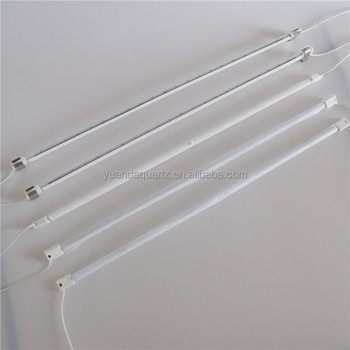
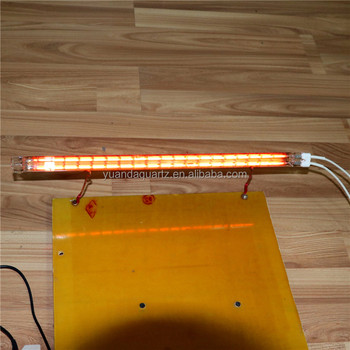
Twin tube infrared heater lamp for printing machine manufacturing at Kavri Quartz
Structural Engineering

Twin-Tube (Figure-8) Geometry for Wide Printing Webs

Standard single-tube quartz lamps tend to sag or vibrate when lengths exceed 1,000 mm under continuous industrial press heat. Kavri Quartz solves this with precision fused silica Twin-Tube (Figure-8) Emitters in standard 23×11 mm and 33×15 mm profiles.

The integrated structural bridge between the two quartz channels provides structural rigidity across web spans up to 3,000 mm. Furthermore, twin-tube configurations can house two independent filaments wired in parallel or on separate electrical circuits, giving press operators the flexibility to run half-width drying zones when narrow substrates are printed, eliminating unnecessary power consumption.

Recommended IR Lamps for Printing Presses

Engineered replacement and OEM emitters tailored to the mechanical clearances, voltage architectures, and ink cure dynamics of worldwide printing machinery.

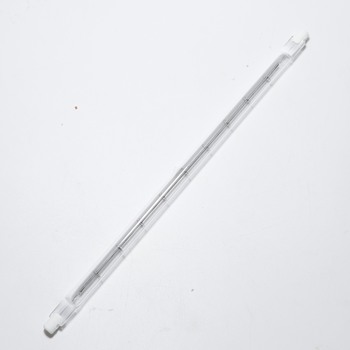
Twin tube short wave infrared heater lamp for printing machine

Twin-Tube Short-Wave Gold Coated IR Emitter

  • 23x11mm Profile
  • 95% Gold Reflector
  • Offset Delivery

Standard fit for sheetfed offset delivery hoods (Heidelberg, Komori, Roland). Instant on/off response prevents paper burns during stoppage.

Send an Inquiry
Fast response carbon fiber medium wave lamp for flexo printing press

Fast-Response Carbon Medium-Wave IR Lamp

  • Peak 2.2–2.6 µm
  • Flexo / Gravure
  • Film Substrates

Resonates with water and alcohol absorption bands. Ideal for drying water-based inks on PE, BOPP, and foil packaging without web stretch.

Send an Inquiry
Half white ceramic coated infrared heating lamp for digital inkjet press

Ceramic Half-White Coated Short-Wave Lamp

  • Ceramic Reflector
  • High Thermal Load
  • Corrugated / Inkjet

Withstands ambient tunnel temperatures up to 900°C. Diffuse reflective white coating delivers uniform heat distribution across corrugated boards.

Send an Inquiry
Single tube halogen infrared lamp for screen printing dryer

Single-Tube Halogen Lamp with Sk15 Leads

  • 10mm / 12mm Tube
  • Sk15 / R7s Caps
  • Screen Printing

Compact profile for textile screen print flash cures and label presses. High intensity flash evaporation for plastisol and water-based inks.

Send an Inquiry

Engineering Specification Matrix

Standard and custom configurations available for printing machinery manufacturers and maintenance procurement engineers.

Emitter Architecture Spectral Range Max Power Density Warm-Up Response Primary Printing Machine Application Typical Lifespan
Twin-Tube Short-Wave (Gold) 0.9 – 1.4 µm Up to 100 W/cm ≤ 1 second Sheetfed offset delivery, high-speed overprint varnishing 5,000 ± 500 hrs
Twin-Tube Short-Wave (Ceramic) 0.9 – 1.4 µm Up to 90 W/cm ≤ 1 second High-temperature enclosed flexo dryers, gravure tunnels 5,000 ± 500 hrs
Twin-Tube Carbon Medium-Wave 2.0 – 2.6 µm Up to 45 W/cm 1 – 2 seconds Film web flexo (BOPP, PET, PE), wide-format digital inkjet 8,000 ± 500 hrs
Fast-Response Medium-Wave 1.4 – 2.0 µm Up to 60 W/cm 1 – 2 seconds Rotary screen printing, industrial label presses, folding cartons 6,000 ± 500 hrs
Single-Tube Halogen (Clear / Ruby) 0.9 – 1.6 µm Up to 80 W/cm ≤ 1 second Textile screen flash curing, pad printing, narrow web dryers 5,000 ± 500 hrs

Need a non-standard length, unique operating voltage (e.g. 400V / 480V 3-phase), or custom ceramic end caps?

Send an Inquiry
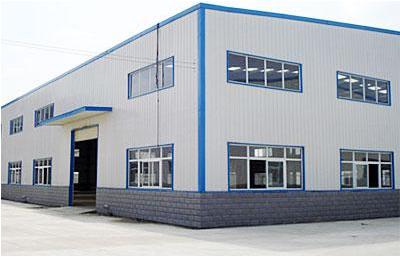
Kavri Quartz Product Co., Ltd. Factory Facility in Donghai, Lianyungang
Manufacturing Authority

Kavri Quartz Product Co., Ltd. — Global IR Emitter Manufacturer

Kavri Quartz Product Co., Ltd. is a highly professional and experienced manufacturer of infrared heat lamps, halogen lamps, and fused quartz glass products in China. Located in Donghai, Lianyungang City, Jiangsu Province — China's premier quartz and silicon industrial cluster — we leverage deep regional raw material supply advantages to engineer export-grade emitters at competitive direct-from-factory prices.

With more than 13 years of platform-verified manufacturing background and dedicated production lines, all our infrared lamps and quartz components are built with professional design, pure high-temperature silica, reinforced molybdenum pinch seals, and robust filament supports to guarantee long working life under 24/7 printing plant shifts.

Verified Business Type
Manufacturer & Exporter
Industrial Cluster
Donghai, Jiangsu, China
Average Response Time
≤ 4 Hours (92.65% Rate)
Export Destination Markets
Germany, USA, Netherlands, Japan, Korea
Lamp Customization
OEM / ODM to Drawing / Sample
Reorder Rate
High Repeat B2B Client Base

Why Sourcing from Kavri Quartz Delivers Predictable ROI

From initial drawing review to custom packaging, discover why printing press manufacturers and global packaging groups trust Kavri Quartz.

Full OEM/ODM Versatility

We replicate or re-engineer any printing press lamp. Single tube, twin tube, clear, ruby, gold, or white ceramic, with exact cable lengths, terminals, and wattage curves tailored to your printing press cassette.

Rapid Engineering Turnaround

Our engineering team responds to B2B inquiries within ≤4 hours. We produce custom prototype samples for fit and thermal validation in as fast as 5–7 working days, minimizing press downtime.

100% Comprehensive QC

Every single printing lamp undergoes 100% electrical burn-in testing, resistance measurement, vacuum leak testing, and dimensional inspection before packing to ensure zero on-site installation defects.

Shock-Proof Export Logistics

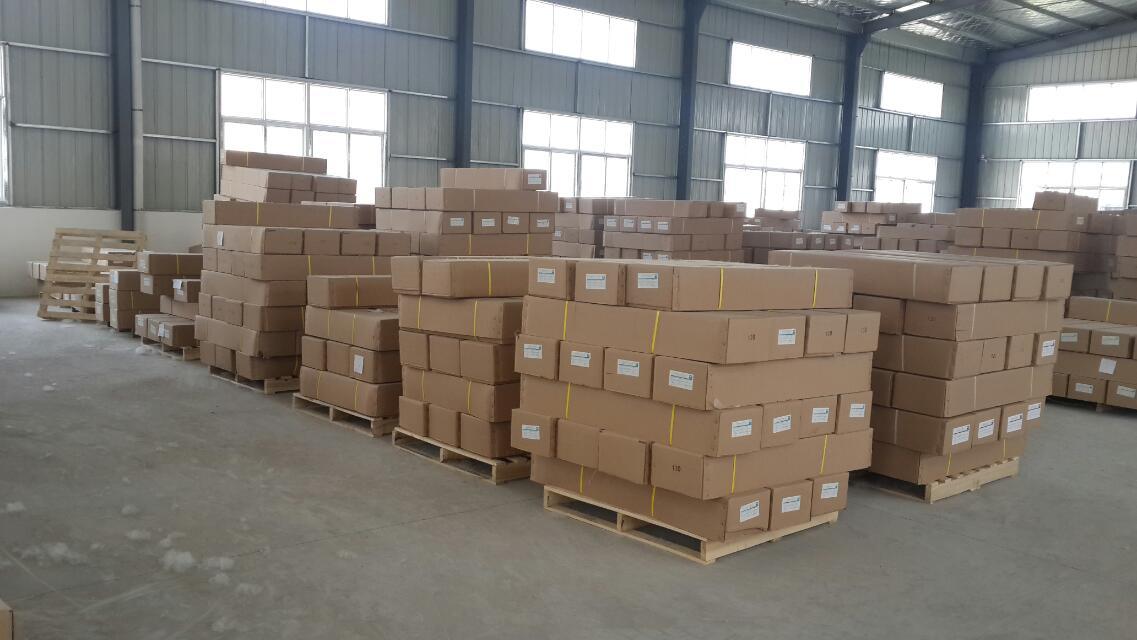
Quartz lamps are fragile high-precision components. We engineer heavy-duty individual cardboard suspension tubes nested in export wooden cases, shipping reliably under FOB, CIF, or DDP terms across Europe, the Americas, and Asia.

Frequently Asked Questions on Printing IR Lamps

Answers to technical, operational, and commercial questions asked by printing plant engineers, maintenance buyers, and machine builders.

Why is an infrared heater lamp preferred over convection hot air in printing machines?

Infrared radiation is an electromagnetic wave that travels directly from the emitter filament to the ink layer without needing air as a conduction vehicle. This produces instant thermal transfer within 1 to 2 seconds, eliminating the long warm-up delays and bulky ductwork of hot-air systems. Additionally, radiant IR prevents web flutter on lightweight packaging films and reduces total printing press energy consumption by up to 45%.

What is the difference between short-wave and medium-wave IR lamps for ink drying?

Short-wave halogen lamps (0.9 to 1.4 µm) provide high energy density and deep penetration, making them the standard choice for sheetfed offset and thick overprint coatings where drying through the ink thickness to the paper is essential. Medium-wave and carbon lamps (2.0 to 2.6 µm) resonate with the absorption bands of water and solvent molecules; they cure flexographic and digital inkjet droplets at the surface without overheating heat-sensitive flexible films like BOPP, PE, or shrink sleeves.

Why are twin-tube (figure-8) quartz lamps standard on wide-format and high-speed presses?

Single round quartz tubes can sag or flex when spanning long web widths (such as 1,000 mm to 3,000 mm) under continuous operating temperatures. The twin-tube structure features a fused center quartz bridge that provides high mechanical rigidity against thermal deformation. Furthermore, twin-tube profiles allow double the heating power in the same cassette slot and can accommodate two separate electrical circuits for selective zone drying.

How does a gold reflector coating boost printing press productivity?

A standard clear quartz lamp radiates heat in all 360 degrees, which means half of the emitted energy radiates away from the web toward the dryer housing. By fusing a direct 24K gold reflector onto the rear 180 degrees of the quartz tube, up to 95% of rearward infrared radiation is reflected forward directly onto the ink film. This increases effective drying radiation by more than 30% while maintaining a cooler dryer hood.

Can Kavri Quartz manufacture custom drop-in replacement IR lamps for existing presses?

Yes. We regularly supply replacement lamps for major printing machinery including Heidelberg, Komori, Manroland, KBA, Bobst, Mark Andy, Nilpeter, and HP Indigo. Simply send us your existing lamp dimensions (overall length, heated length, tube profile), voltage, wattage, and end-cap type, or ship an old sample to our factory for precise replication.

What causes premature quartz infrared heater lamp failure in printing presses?

The most common causes are: (1) Pinch seal overheating above 350°C due to clogged cooling blowers, which oxidizes the internal molybdenum foil; (2) Paper lint, spray powder, or ink mist settling on the quartz surface, causing localized hot spots and devitrification; and (3) Incorrect mounting orientations. Kavri Quartz utilizes high-temperature fused quartz and reinforced pinch construction to provide continuous operating lifespans between 5,000 and 8,000 hours under proper operating conditions.

What is the minimum order quantity (MOQ) and lead time for custom printing lamps?

Our MOQ for custom-engineered printing IR lamps starts at just 8 to 10 pieces, making trial retrofits and spare parts inventory cost-effective. Standard prototype samples are fabricated in 5 to 7 working days, while bulk batch orders typically ship in 12 to 18 working days.
Kavri Quartz Factory Direct IR Lamp Production

Need Custom Infrared Heater Lamps for Your Printing Presses?

Send us your machine model, lamp dimensions, electrical ratings, or a photo of your existing lamp markings. Kavri Quartz engineers reply with full technical proposals and factory-direct quotations within 4 hours.

Send an Inquiry