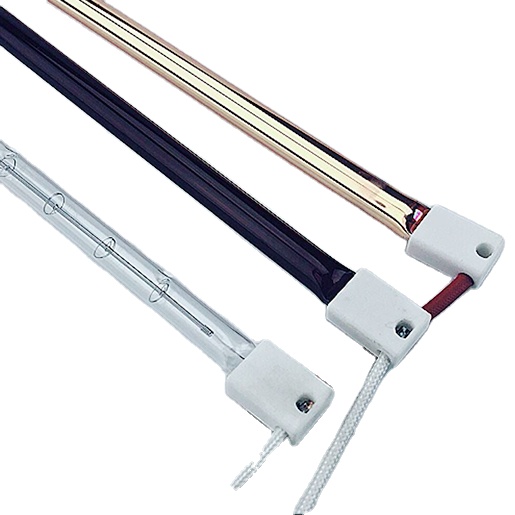
Featured Industrial Heating & Laboratory Quartz Solutions
Direct factory access to short-wave, medium-wave emitters, precision digestion quartz apparatus, and high-purity glass components trusted across global analytical and thermal manufacturing sectors.
Technical Specification: Engineering Quartz Glass Digestion Vessels
In modern wet chemical digestion, microwave matrix decomposition, and Kjeldahl nitrogen determination, the physical durability and chemical inertness of the reaction vessel define analytical integrity. Conventional borosilicate laboratory glass reaches its limits when exposed to high-pressure mineral acids, elevated operating temperatures exceeding 300°C, or repeated thermal shocks. A precision quartz glass digestion tube fabricated from semiconductor-grade fused silica provides unmatched resilience against concentrated nitric acid (HNO₃), hydrochloric acid (HCl), perchloric acid (HClO₄), and aqua regia.
Operating across an exceptionally wide thermal envelope, our fused quartz digestion tubes maintain dimensional stability with a near-zero coefficient of thermal expansion (~5.5 × 10⁻⁷ / K). This virtually eliminates the danger of catastrophic structural failure during rapid temperature ramp-ups or quench phases. By producing digestion vessels with uniform wall thicknesses (±0.10 mm tolerance) and polished, fire-worked rims, we deliver optimal sealing capability with PTFE stoppers and manifold condensers. This level of process control minimizes digestion losses, prevents analyte blowouts, and ensures reliable heavy metal background limits below ppb/ppt levels.
Localized Applications in Brussels and the Belgian Industrial Axis
Brussels functions not merely as the administrative heart of the European Union, but as a central hub for environmental monitoring reference laboratories, public health surveillance institutions (such as Sciensano), and university research consortia (ULB and VUB). The demand for high-purity quartz apparatus within the Brussels-Capital Region and surrounding Flemish/Walloon industrial corridors is focused on high-precision analytical protocols:
EU Environmental & Soil Compliance
Brussels municipal and environmental monitoring agencies enforce stringent soil and groundwater heavy-metal screening (EN 16174, ISO 11466). High-clarity quartz digestion tubes eliminate cross-contamination during microwave-assisted or open-block trace metal extractions for ICP-MS and ICP-OES instrumentation.
Pharma & Bio-analytical Digestion
Along the Brussels-Charleroi and Brussels-Leuven pharmaceutical axes, rigorous European Pharmacopoeia (Ph. Eur. 2.4.20) trace element determinations require pure silica digestion vessels that withstand aggressive oxidative reagents without leaching Boron, Aluminum, or alkali elements into drug active compounds.
Food Safety & Brewing Assays
Institutes supporting Belgium’s agri-food and brewing traditions demand robust protein and total nitrogen testing. Quartz tubes utilized in Kjeldahl catalytic distillations resist severe alkaline and thermal shocks, maximizing cycle life across commercial testing facilities in Brussels and Flanders.
Regional Trends: Circularity, Trace Purity, and Green Digestion Systems
Regulatory frameworks driven by the European Green Deal and the updated Industrial Emissions Directive (IED) are tightening analytical scrutiny across Brussels and Belgian testing laboratories. Three defining shifts govern quartzware procurement today:
1. Shift Toward Micro-Volume Sample Preparation: With automated microwave-assisted acid digestion units becoming standard, laboratories are shifting away from large reagent volumes toward micro-digestion protocols. This transition requires custom small-bore, high-pressure quartz vessels with micron-accurate sealing surfaces capable of retaining volatile elemental analytes like Arsenic (As), Cadmium (Cd), and Mercury (Hg).
2. Longevity and Waste Minimization: In accordance with Belgian circular economy objectives, procurement teams in laboratories are phasing out semi-disposable glass consumables in favor of extended-life fused quartzware. While initial procurement costs are higher, the long operational lifespan of fused quartz under aggressive thermal regimes significantly lowers the Total Cost of Ownership (TCO) and minimizes recurring lab waste.
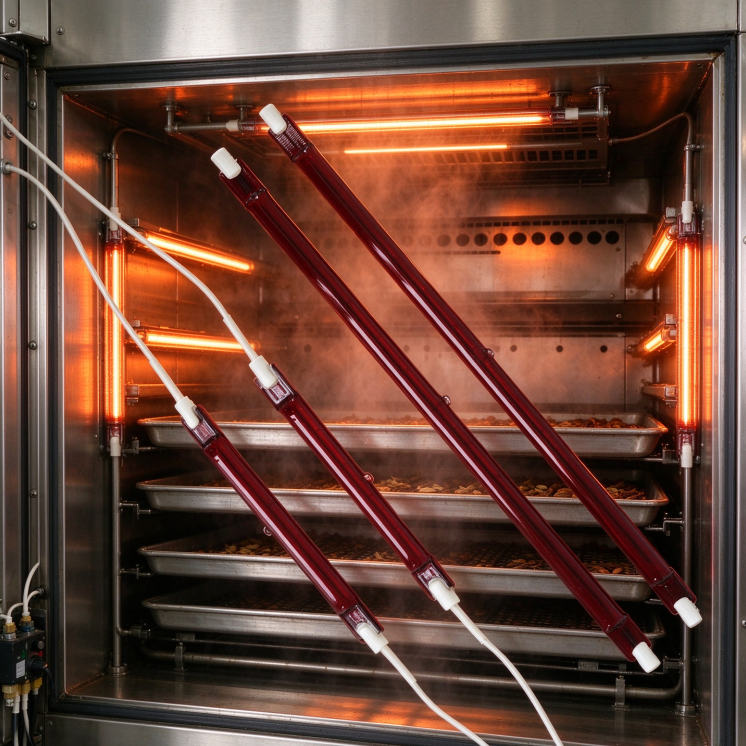
3. Integration with Rapid Infrared Heating Platforms: High-throughput testing labs in Brussels are increasingly combining precision quartz digestion vessels with custom short-wave and medium-wave infrared heating blocks. Utilizing focused IR radiation accelerates dissolution reaction times by 40% compared to traditional ceramic conduction blocks, reducing electrical energy consumption per sample run.
Why European Laboratories & OEMs Source from Kavri Quartz
Positioned directly within Lianyungang (home to the world-renowned Donghai silica and quartz processing belt), Kavri Quartz integrates raw material purification, automated glass fabrication, and technical thermal element engineering under one roof:
Direct Material Origin
Direct sourcing within the Donghai quartz cluster ensures pure SiO₂ raw material reserves, yielding glass tubes free of inclusions, air bubbles, and thermal strain lines.
10+ Years OEM Engineering
Over a decade of customized production for overseas OEMs. We fabricate digestion vessels, single/twin tubes, and custom caps precisely to engineering drawings or physical samples.
Verified Global Logistics
With 81–90% export share, we reliably deliver via DDP, CIF, and FOB to Brussels, Antwerp, and across Europe with shock-engineered multi-layer protective packaging.
Rapid Engineering Support
Dedicated technical sales engineers provide drawing confirmation, feasibility feedback, and comprehensive quotation responses within 4 hours on working days.
Brussels Buyer FAQ: Quartz Digestion Ware
Common questions regarding technical specifications, chemical resistance, EU customs delivery, and minimum order requirements.
What chemical purity level can we expect for trace-metal analysis in Brussels labs?
Our digestion vessels are produced from synthetic and high-purity natural fused quartz with SiO₂ content reaching ≥99.99%. Trace elemental contamination of key transition metals and alkali species (Fe, Cu, Al, Ca, Mg) is controlled to low parts-per-billion (ppb) levels. This makes them ideal for ISO 17025 accredited labs performing ultra-trace ICP-MS and AAS determinations across Belgium.
Can you manufacture digestion tubes to custom dimensions matching existing digestion blocks?
Yes. With more than 10 years of OEM customization experience, we manufacture digestion vessels to replace or fit systems from major equipment brands (including CEM, Milestone, Anton Paar, and Gerhardt). We work from CAD drawings, hand-sketched schematics, or physical samples, tailoring outer diameter (OD), inner diameter (ID), wall thickness, graduated calibration marks, and flange profiles.
How do quartz digestion tubes behave under high temperatures compared to borosilicate glass?
Borosilicate glass softens near 560°C and degrades when exposed to extreme acidic thermolysis above 260°C. In contrast, fused quartz withstands continuous working temperatures of approximately 1100°C and short-term peak exposures up to 1450°C. Its extremely low thermal expansion allows cold digestion acids to be added immediately to warm blocks without thermal shock failure.
What delivery options and trade terms are available for shipments to Brussels, Belgium?
We offer comprehensive logistics options including FOB, CFR, CIF, and door-to-door DDP (Delivered Duty Paid) to Brussels, Antwerp, Ghent, and Liege. For urgent laboratory maintenance or prototypes, express air cargo (DHL, FedEx, UPS) delivers within 5 to 8 working days. Standard sea freight consignments are cleared through Port of Antwerp or Brussels Airport cargo facilities.
What is the Minimum Order Quantity (MOQ) for custom quartz vessels and IR emitters?
Standard catalog items and replacement infrared lamps typically start at an MOQ of 8 to 10 pieces. For custom engineered quartz digestion tubes or specialized quartz flow cells, prototype runs are supported starting from 5 to 10 units to allow validation on your equipment before initiating series production.
Request a Direct Engineering Quote for Brussels Delivery
Whether you need exact-fit replacement digestion tubes for high-throughput laboratory blocks or custom infrared quartz emitters for industrial drying machines, our technical glass specialists are ready to assist.