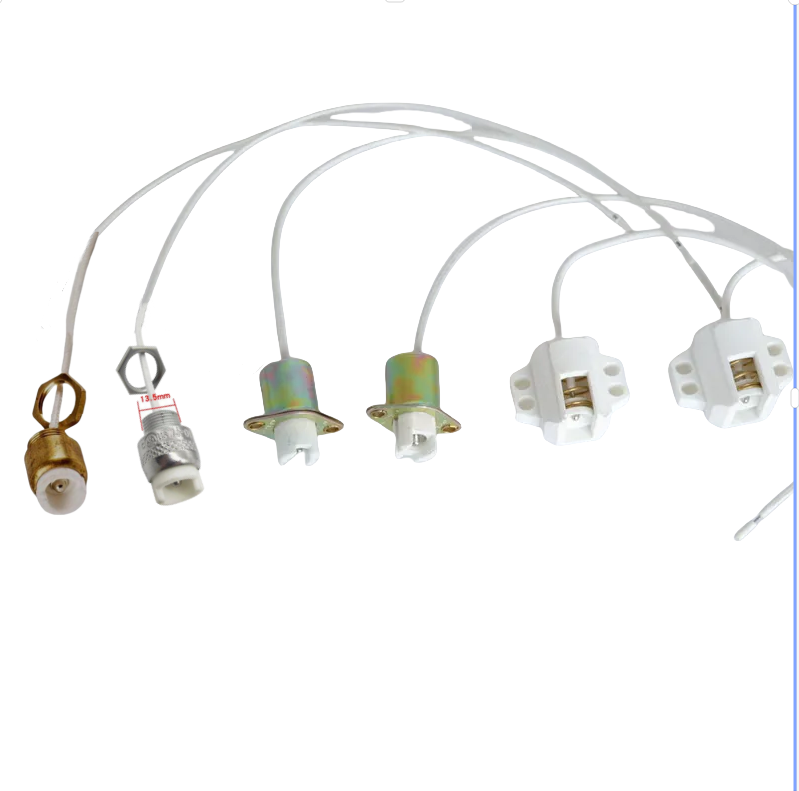
OEM Emitter Components & Assembly Systems
Engineered Twin-Tube, Halogen & High-Temperature Quartz Modules
Supplying original equipment manufacturers, automation builders, and line retrofitting specialists in Bristol, Avonmouth, and the greater Severnside industrial belt with high-durability thermal elements.
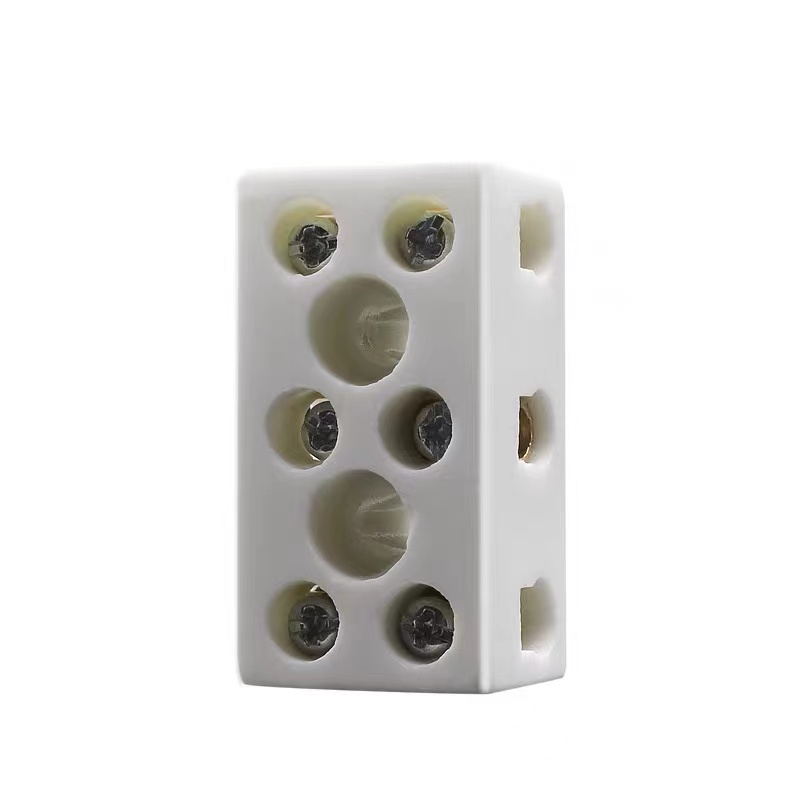
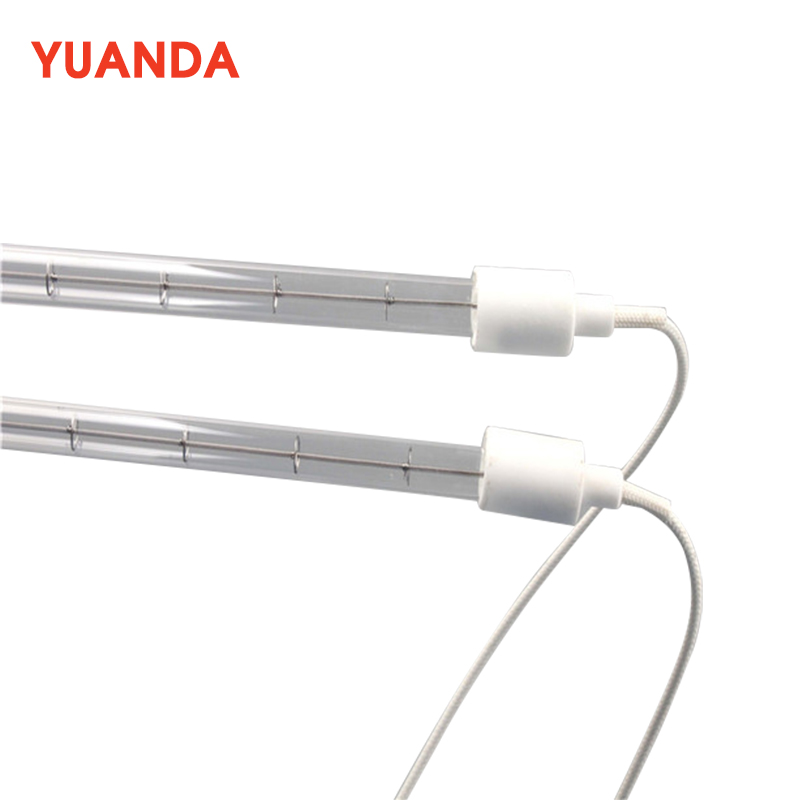
Drying & Curing
Wholesale Infrared Heater Halogen Lamp for Continuous Drying Systems
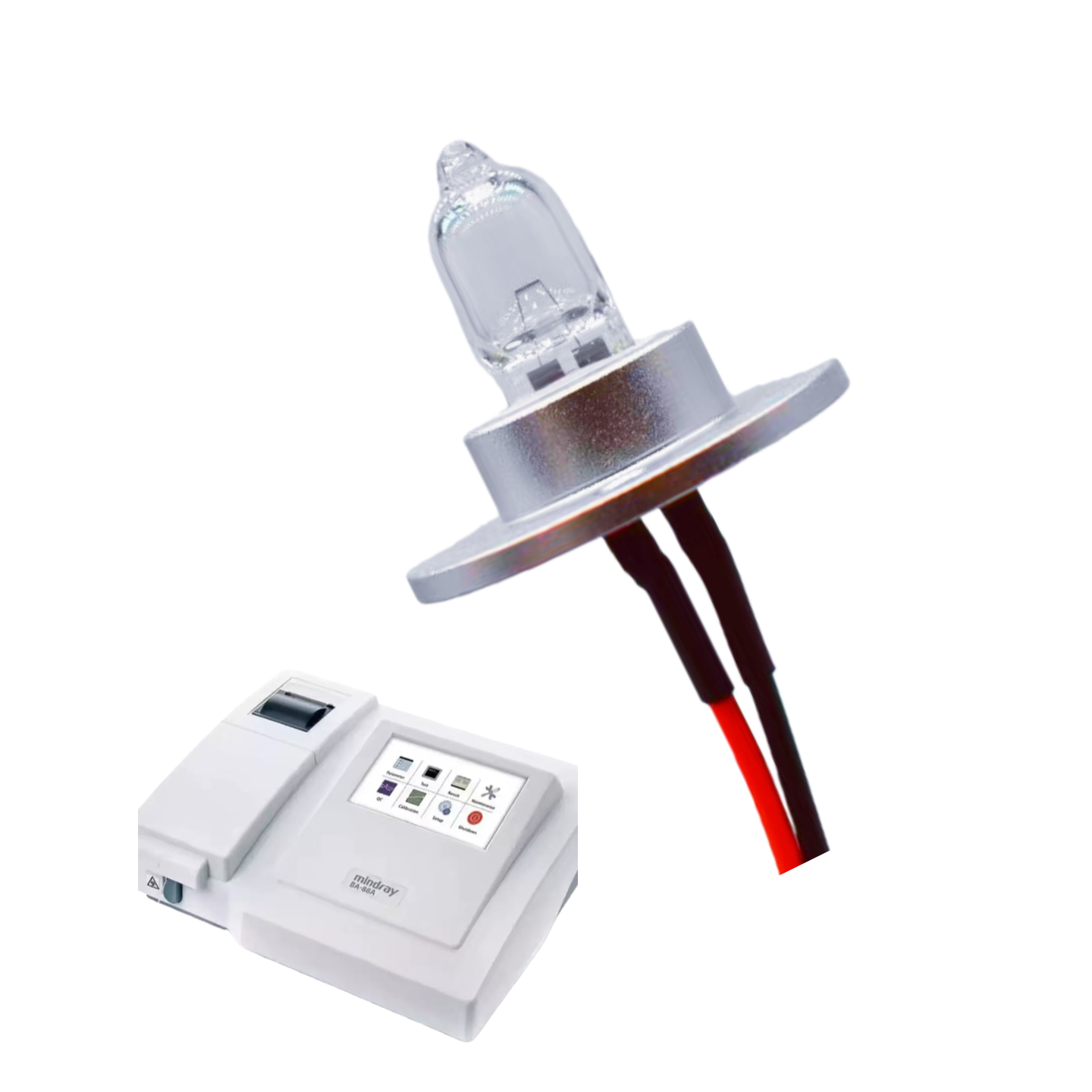
Analytical Optics
BA-88A Halogen Lamp Bead 6V 10W Precision Quartz Analyzer Bulb
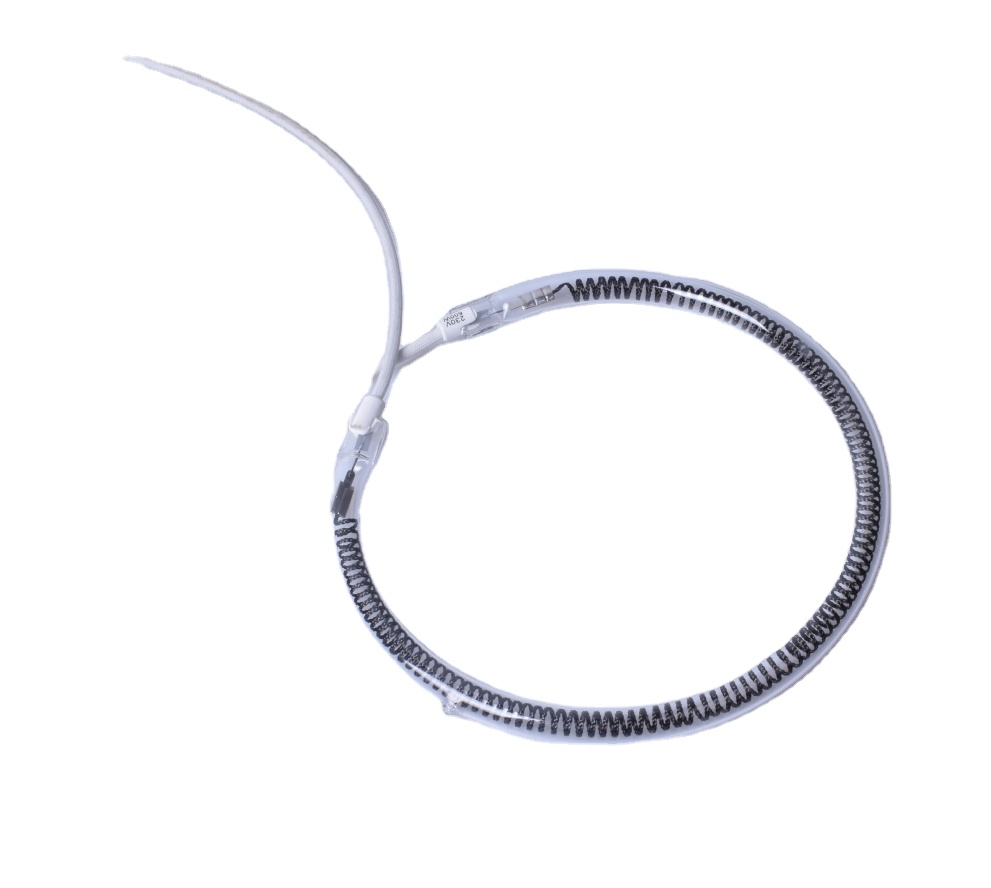
Forming Preheaters
1000W Carbon Fiber Circular Infrared Heat Lamp for PET Preforms
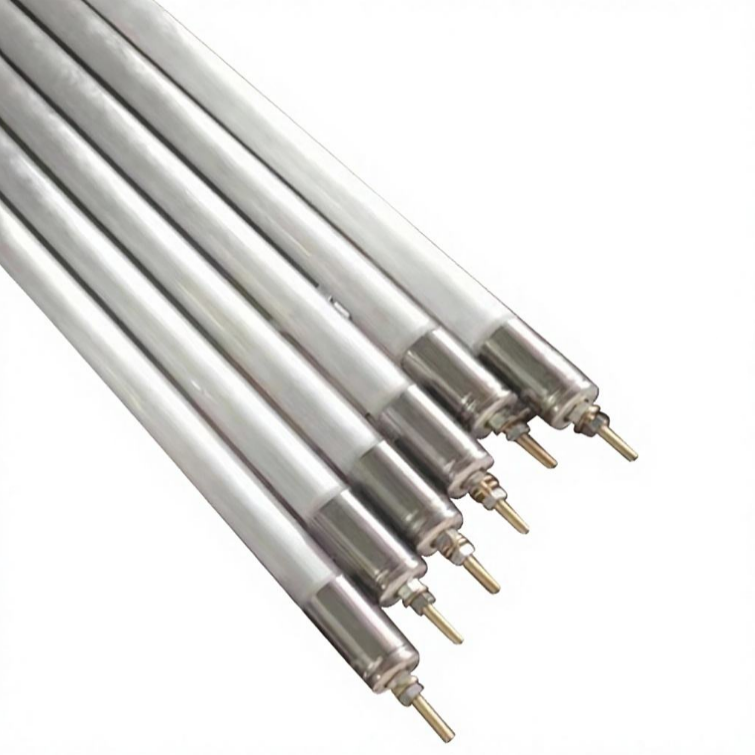
Furnace Modules
Electric Furnace Wire Quartz 1000W for Industrial Machine Equipment
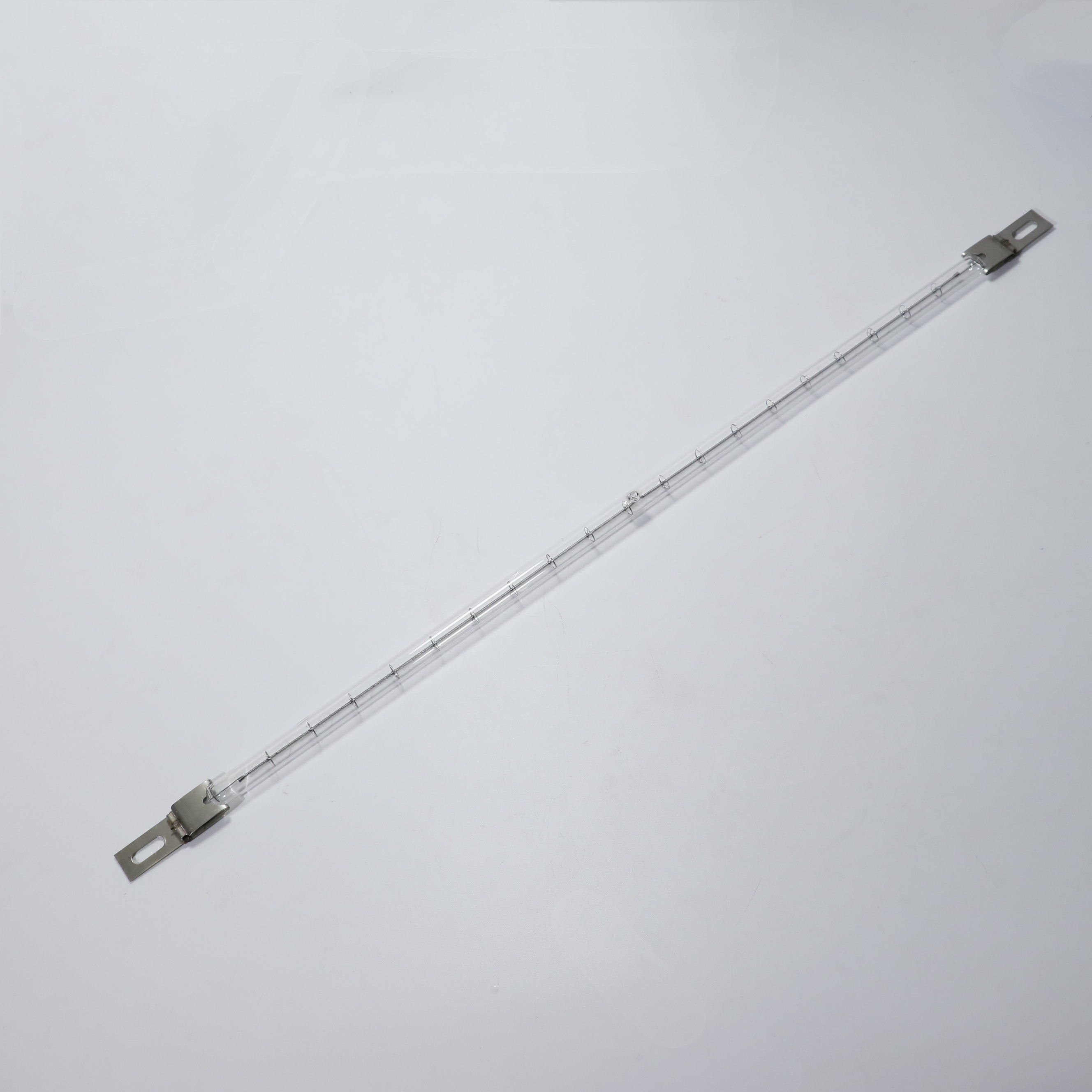
Shortwave Process
Best-Selling 220V 1000W Quartz Infrared Heat Lamp for Processing
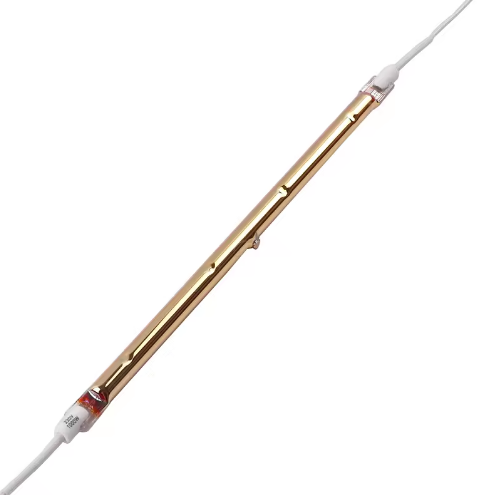
Twin Tube Technology
Stable Quality Gold-Plated Twin Tube Quartz IR Lamps for PET Curing
Deep Engineering Whitepaper
The Physics & Structural Architecture of Twin Tube Shortwave Emitters
An in-depth technical analysis for thermal processing engineers, machine builders, and automated plant operators seeking quantum leaps in radiative efficiency.
Figure-8 Fused Silica Cross Section
Unlike conventional round single tubes, the continuous dual-channel "Figure-8" fused silica cross-section (available in standard dimensions of 23mm × 11mm and 33mm × 15mm) delivers unparalleled mechanical stiffness over spanning lengths up to 3000 mm. This structure eliminates high-temperature sag caused by gravity when installed horizontally or vertically, ensuring long filament lifetimes free of localised quartz contact.
Sub-Second Thermal Latency & Tungsten Halogen Dynamics
Operating at colour temperatures between 2400 K and 2900 K, Kavri shortwave emitters leverage coiled tungsten filaments suspended inside an inert halogen atmosphere. The regenerator halogen cycle continuously deposits evaporated tungsten back onto the filament, preventing tube blackening while yielding an instantaneous operational ramp time of under 1 second (t90 < 800ms) for closed-loop PLC thermal PID control.
99.99% High-Purity Silica Transmission
Directly drawn from Donghai crystal-grade quartz sand, our fused silica envelopes maintain hydroxyl (OH-) concentrations below 5 ppm. This minimizes unwanted deep-infrared absorption within the envelope glass itself, enabling >92% spectral transmittance in the peak 1.0–1.4 µm shortwave band, dramatically preventing envelope overheating and devitrification under intense industrial duty cycles.
| Profile Format | Dimensions (W × H) | Peak Wavelength | Filament Temp | Backing Reflector Type | Directional Efficiency | Typical Lifetime |
|---|---|---|---|---|---|---|
| Twin Tube (Standard) | 23 mm × 11 mm | 1.0 – 1.4 µm (Shortwave) | 2200 – 2600 °C | 24-Karat Gold Plated Film | > 90% Forward Energy | > 5,000 Hours |
| Twin Tube (Heavy Duty) | 33 mm × 15 mm | 1.0 – 1.4 µm (Shortwave) | 2200 – 2500 °C | High-Purity Al₂O₃ Ceramic White | > 80% Forward Energy | > 5,000 Hours |
| Fast Medium-Wave Twin | 23 mm × 11 mm | 1.4 – 2.0 µm (Fast MW) | 1500 – 1800 °C | Pure Gold Reflector | > 88% Forward Energy | > 8,000 Hours |
| Carbon Ribbon Twin Tube | 23 mm × 11 mm | 2.0 – 2.6 µm (Medium Wave) | 900 – 1200 °C | Gold or Ceramic Half-Coating | > 85% Forward Energy | > 10,000 Hours |
Regional Industrial Integration
Specialised Thermal Applications in Bristol & Severnside Hubs
Engineered to integrate seamlessly with demanding plant architectures across Filton’s aerospace composite clusters, Avonmouth's logistics packaging plants, and South West automotive lines.
Aerospace Out-of-Autoclave (OoA) Composite Consolidation
Within the historic aerospace manufacturing corridors of Filton and South Gloucestershire, secondary structural components, carbon-fibre reinforced polymers (CFRP), and epoxy pre-impregnated resin systems demand precise, uniform thermal penetration. Convection heating suffers from slow thermal inertia and boundary-layer air insulation.
Our OEM twin tube shortwave halogen lamps provide concentrated, direct photon absorption into resin layers. By tailoring the heated length and integrating a 24k gold directional reflector, composite manufacturers achieve precise cross-linking temperatures without thermally stressing delicate tooling substrates.
- Zero contact curing prevents delicate preform movement and laminate voids
- Instant on/off cycles allow automated ramp-soak recipes directly on tool surfaces
- Zoned multi-channel twin tubes match complex winglet and spar geometries
High-Speed Beverage Bottling & Thermoforming in Severnside
The manufacturing and FMCG hubs around Avonmouth, Royal Portbury Docks, and the M49 corridor process millions of PET, PP, and rPET containers weekly. Modern stretch blow moulding machines require heat to penetrate the core of the perform wall without crystalising the exterior surface.
Kavri’s gold-backed shortwave emitters focus maximum photonic density directly inside the preform body. This eliminates skin burning while reducing electrical kVA demand by up to 28% compared to un-coated clear tubes, keeping pace with multi-cavity blowing wheels exceeding 48,000 bottles per hour.
- Uniform radial temperature profile prevents thin spots and drop failures
- Ceramic white coatings resist high-temperature degradation in hot blowing ovens
- Drop-in custom wiring terminals replace OEM lamps from Sidel, Krones, and SIG
Automotive E-Mobility & Battery Slurry Web Curing
As the West of England transitions toward electric vehicle battery tech and advanced tier-1 assembly, drying electrode slurries (anode/cathode lithium chemistries) on aluminium and copper foil webs requires exact solvent flashing without cracking or binder migration.
Twin tube shortwave arrays deliver direct radiant heat that evaporates NMP or aqueous carriers from the inside out. This skinless drying avoids crust formation, producing mechanically superior electrode surfaces with high peel strength and minimal internal electrical resistance.
Flexographic Printing, Corrugated Packaging & Paper Converting
With major distribution centres across Greater Bristol, high-throughput packaging printers rely on rapid ink fixation. Water-based and specialty flexo inks on folding cartons must cure instantaneously before rewinding or stacking.
Our customized twin tube emitters, installed inline on central impression (CI) or stack presses, provide intense radiant thermal flux. The shortwave energy rapidly decouples water molecules from pigments, enabling line speeds above 350 m/min without paper curling or substrate dehydration.
Energy Economics & Decarbonisation
Supporting the UK Net Zero Strategy & Thermal Decarbonisation
Replacing massive, inefficient gas-fired convective tunnels with targeted electric shortwave infrared radiation across Bristol's industrial sectors.
Eliminating Standby Losses
Gas-powered convection ovens require hours of preheating and maintain high gas consumption even during conveyor stoppages. Kavri twin tube infrared lamps operate instantaneously. If the product line halts, optical sensors trigger SCR thyristor controllers to power down lamps in milliseconds, driving standby fuel consumption down to zero.
Footprint Compaction by 60%
In space-constrained manufacturing plants throughout Avonmouth and Central Bristol, production floor real estate carries high overheads. Because shortwave infrared emits massive energy density (up to 150 kW/m²), drying tunnel lengths are typically reduced by half or more compared to bulky convective recirculation ducting.
Direct Process Electrification
In compliance with the UK Government's Industrial Energy Transformation Fund (IETF), electrifying heat processes allows companies to leverage corporate Power Purchase Agreements (PPAs) and on-site rooftop solar PV arrays, moving direct Scope 1 thermal emissions into zero-carbon operational categories.
Factory-Direct Supply Chain Reliability
Why Engineering Procurement Teams Partner with Kavri Quartz
Direct factory manufacturing backed by Donghai's world-class silica reserves, verified ISO-standard manufacturing processes, and dedicated UK export logistics.
Full OEM/ODM Specification Mastery
We engineer twin tube lamps in both single-end (one-side cable exit) and double-end wiring formats. Total lengths from 150 mm up to 3000 mm, voltages from 110V, 230V, 400V, to 480V, and tailored power outputs up to 12 kW per lamp. Custom ceramic caps, spade terminals, R7S ends, and high-temp PTFE lead wires are manufactured to exact machinery drawings.
Donghai Silica Cluster Sourcing
Situated in Lianyungang, Jiangsu, adjacent to the premier Donghai quartz hub, we maintain direct material control over fused silica tubes, quartz glass rods, and lab-grade glassware. This gives our factory structural cost advantages, rapid raw material staging, and absolute control over quartz purity without intermediary markups.
Seamless DDP Air & Sea UK Logistics
We provide complete Delivered Duty Paid (DDP) shipping solutions directly to manufacturing plants and regional warehouses in Bristol, Avonmouth, and across the UK. Fragile quartz shipments are packed in reinforced, custom foam-suspended wooden cases ensuring zero breakage during multimodal transit.
Frequently Asked Technical Questions
Buyer FAQ: Procurement & Retrofitting Guidance for UK Plants
Clear, definitive technical answers for plant maintenance directors, line engineers, and procurement managers sourcing replacement or OEM infrared lamps.
Can you replicate obsolete or custom-branded twin-tube lamps from European machine manufacturers?
Yes, precisely. Over 60% of our production supports OEM drop-in replacements for European systems (including Heraeus, Victory, Ushio, Dr. Fischer, and machine brands like Sidel or Krones). By providing either the original part number, a technical drawing, or simply shipping a burned-out sample to our engineering lab, we analyze the filament pitch, resistance, envelope dimensions, and termination styling to manufacture a 100% physically and electrically interchangeable unit.
What are the exact UK/European electrical grid voltage options for your twin-tube lamps?
We manufacture lamps engineered for single-phase 230V UK standards, as well as 400V 3-phase industrial delta/star machine circuits and 480V heavy line setups. We also build dual-filament lamps where both circuits operate in parallel or independently, allowing multi-stage power regulation (e.g., 50% power, 100% power) without complex thyristor phase-angle shifting.
How do your gold coatings compare to white ceramic reflectors in corrosive or high-temperature environments?
Our 24-karat gold reflector is electro-chemically and thermally bonded directly onto the rear contour of the quartz tube, providing up to 95% infrared reflectivity and direct forward radiation. However, if your oven operating temperature continuously exceeds 600 °C, gold can begin to sublimate or oxidize over extended periods. In such high ambient ovens, we recommend our high-purity alumina (Al₂O₃) ceramic white coating, which remains stable up to 1000 °C and is impervious to corrosive fumes.
Do your twin tube infrared lamps comply with UKCA, CE, and RoHS standards?
Yes. All Kavri Quartz emitters and component assemblies meet relevant UKCA and CE directives, including the Low Voltage Directive (LVD) and RoHS compliance (no hazardous lead, mercury, or cadmium solder in ceramic joints or terminal blocks). Certificates of Conformance (CoC) and batch inspection reports are provided with every industrial order.
What is the lead time for custom prototypes shipped directly to Bristol or Avonmouth?
Standard prototype customization takes 7 to 10 business days for engineering drawing approval and manufacturing. Express air freight shipments to Bristol Airport or Heathrow Cargo typically arrive at your plant dock within 4 to 6 business days via DHL, FedEx, or specialized air freight handlers under DDP terms.
What is the Minimum Order Quantity (MOQ) for bespoke emitter dimensions?
For standard twin-tube profiles with custom lengths and voltages, our MOQ starts at just 5 to 10 units. We maintain flexible batch runs specifically to support UK maintenance engineering departments, machine prototyping teams, and replacement spare part schedules.
Connect Directly with Kavri’s Senior Thermal Engineers
Whether you need drop-in replacement twin tubes for existing conveyor ovens, custom emitters for a new machine build in Bristol, or expert consultation on energy reduction, our application engineers respond within 4 hours.