Engineered Infrared Radiant Emitters for High-Velocity Printing Presses
Direct factory-manufactured short-wave and fast medium-wave quartz infrared lamps specifically matched to rotary web presses, sheetfed offset, screen printing carousels, and packaging laminators.
Infrared Thermodynamic Precision: Solving Evaporative and Polymerization Challenges in Modern Printing Presses
In high-speed commercial printing—spanning sheetfed lithographic offset, continuous rotary flexography, digital high-build inkjets, and automatic screen printing carousels—thermal energy delivery governs the threshold between pristine substrate finishing and catastrophic mechanical smudging. Conventional convection driers rely on heated bulk air displacement. This thermal exchange mechanism is inherently sluggish, thermodynamically inefficient, and susceptible to ambient atmospheric destabilization. In contrast, Kavri Quartz Infrared Radiant Emitters convert electrical power into precisely tailored electromagnetic radiation within the short-wave (0.8–1.4 µm) and fast-response medium-wave (1.4–2.0 µm) spectral bands.
Because electromagnetic radiation requires no intermediate molecular medium to propagate, radiant heat bypasses the insulating boundary air layer that clings to moving webs running at speeds exceeding 400 m/min. In water-based dispersions, UV-curable primers, and solvent-heavy inks, water and organic carrier molecules exhibit acute resonant absorption peaks within the infrared band. By matching the filament operating temperature (typically between 1,800 K and 2,450 K for short-wave tungsten elements) directly to the specific chemical absorption spectrum of the ink-resin matrix, our OEM/ODM infrared lamps trigger instantaneous, volumetric evaporation and polymerization without causing thermal buckling, blistering, or dimensional distortion of heat-sensitive films, folding cartons, or parchment.
Thermodynamic Principle: Radiation vs. Convection Heat Transfer Speed
Stefan-Boltzmann law dictates that radiant thermal flux is proportional to the fourth power of emitter absolute temperature ($E = \varepsilon \sigma T^4$). When our high-purity tungsten filaments cycle up to operating temperature in less than 1.0 second, radiant heat flux densities reach up to 150 kW/m² immediately upon machine start-up, eliminating web spoilage during press acceleration phases common in Pyrenean packaging facilities.
Emitter Architecture & Photothermal Efficiency Breakdown
| Radiator Geometry | Peak Spectral Band | Filament Technology | Reflective Collimation | Typical Industrial Print Application |
|---|---|---|---|---|
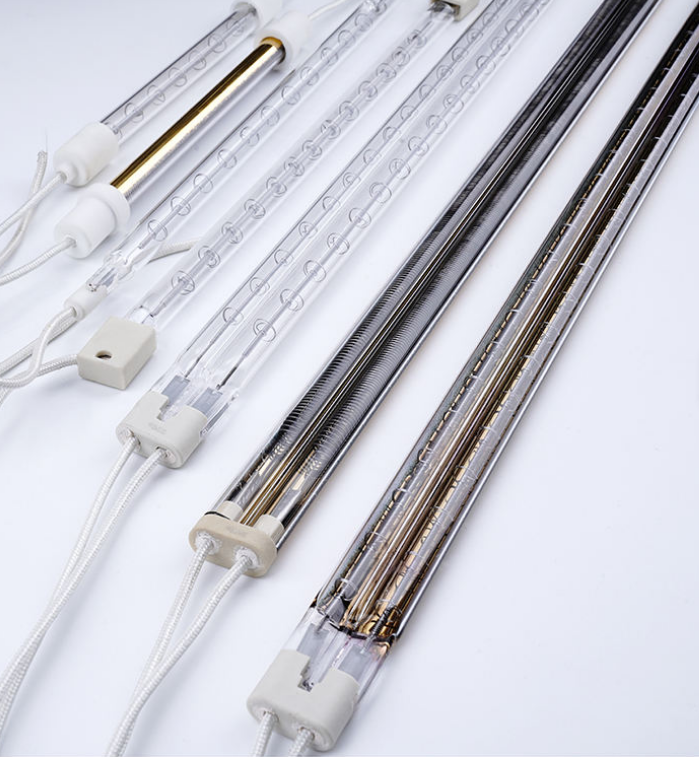
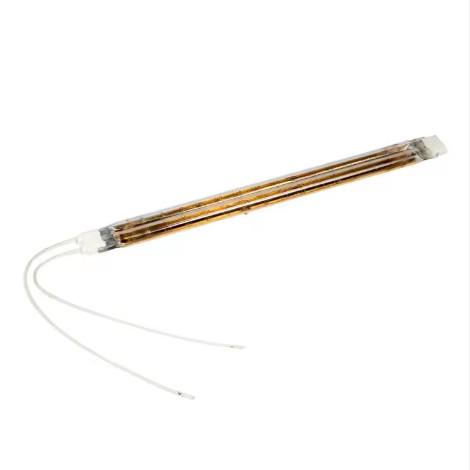
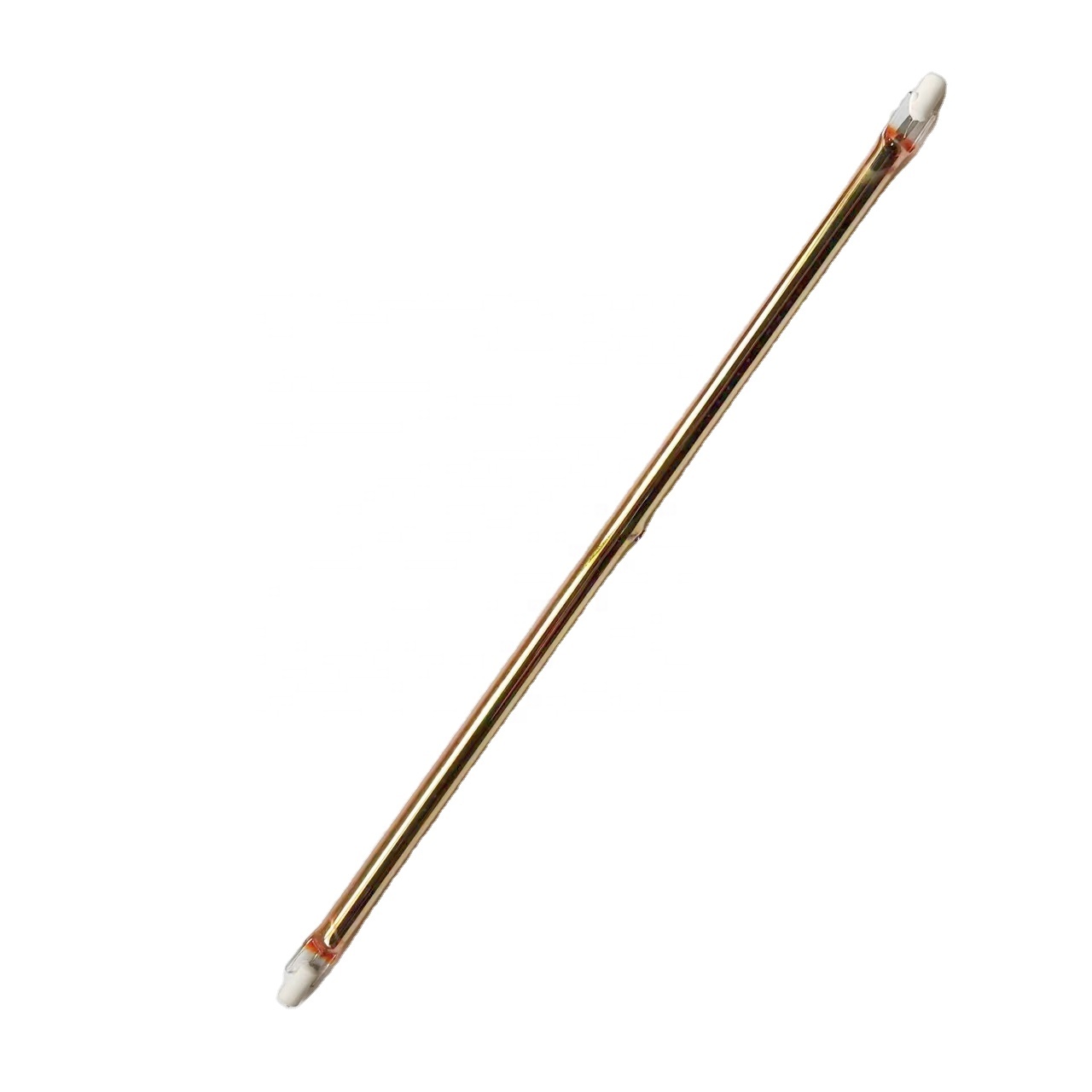
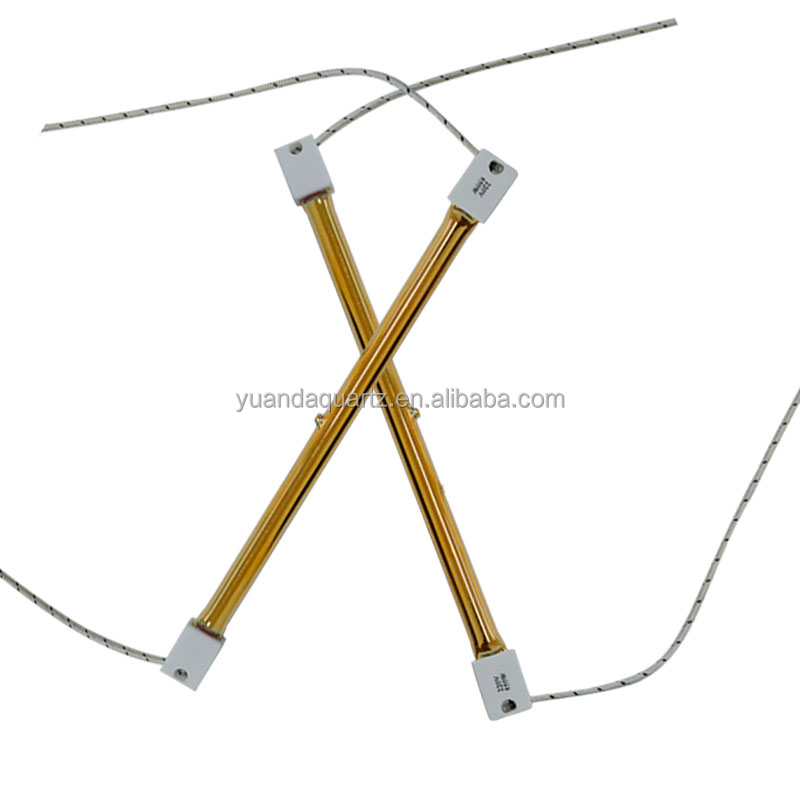
| Twin-Tube (23×11mm / 33×15mm) | Short-Wave (1.0–1.2 µm) | Stabilized Tungsten Wire (Star Core) | Rear-Applied Pure Gold (95% reflection) | High-velocity web offset & flexo varnish dryers |
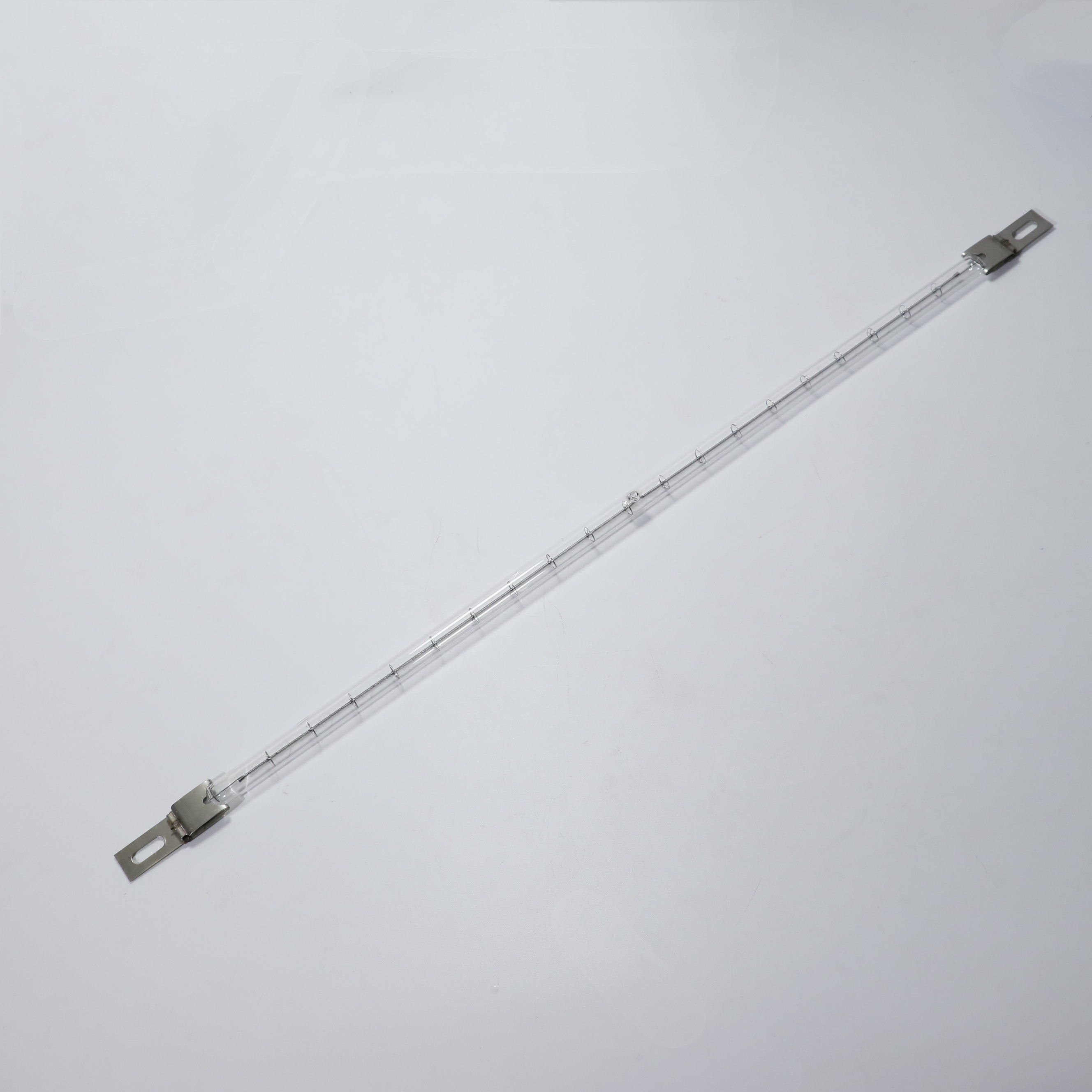
| Single Clear Quartz Tube (Ø10-12mm) | Short-Wave Halogen | Helical Precision Tungsten | None / External Polished Aluminum Reflector | Flash-cure intermediate screen printing units |
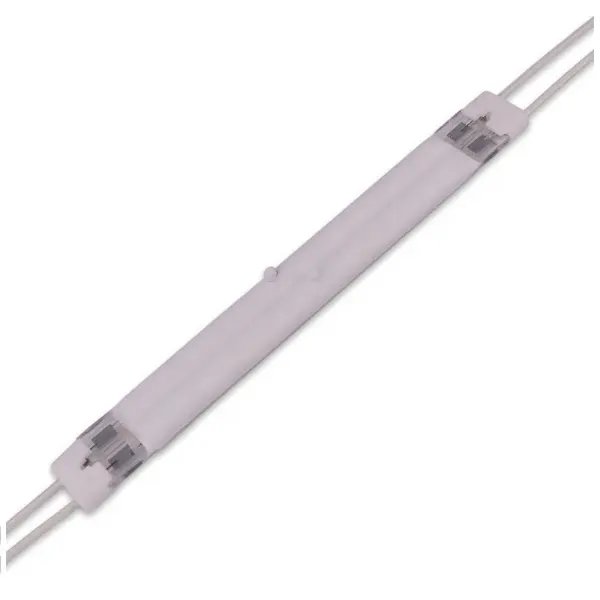
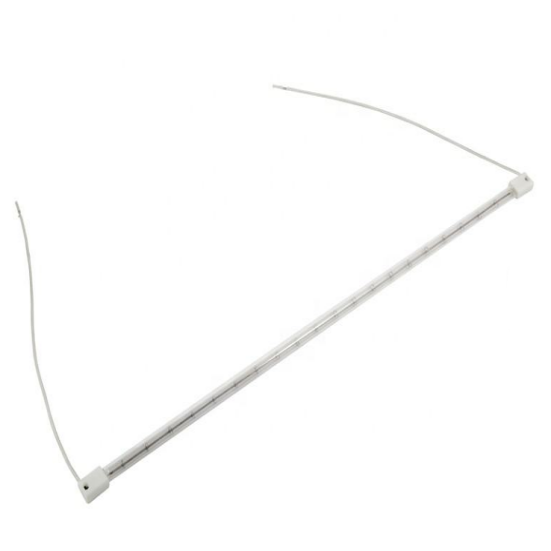
| Twin-Tube Ceramic White | Medium-Wave (2.0–2.4 µm) | Carbon Fiber Ribbon Emitter | Fused Half-White Ceramic Diffuse Barrier | Water-based flexo ink drying on corrugated board |
| Ruby Doped Quartz Tube | Narrow-Band Short-Wave | Inert Halogen Filled Filament | Inherent Optical Filtering (Glare Reduction) | Operator-exposed manual screen printing benches |
Localized Printing & Converting Dynamics in Sant Julià de Lòria and the Pyrenean Basin
Sant Julià de Lòria occupies a unique position as the southern industrial and manufacturing portal of the Principality of Andorra. Positioned along the Gran Valira river corridor adjacent to the Spanish border at Farga de Moles, the parish serves as a pivotal logistics and commercial nexus hosting commercial label printers, specialty packaging converters, secondary pharmaceutical packagers, and boutique artisanal printworks that supply high-end luxury goods, tobacco products, perfumery packaging, and export collateral destined for both Spain and France.
Operating industrial drying equipment within this Pyrenean sub-alpine geographic profile introduces localized atmospheric and thermodynamic operating hurdles that standard OEM machine configurations often fail to manage:
Altitude & Thermal Equilibrium
Sant Julià de Lòria sits at an altitude ranging from 900 to over 1,000 meters above sea level. Lower ambient atmospheric pressure and reduced air density mean convective hot-air dryers experience degraded volumetric thermal capacity. Kavri infrared radiant emitters bypass air density variations completely, depositing direct quantum heat into the print substrate regardless of elevation or barometric pressure shifts.
Alpine Winter Dryness
During the Pyrenean winter, indoor relative humidity inside Andorran print facilities drops dramatically. Excessive hot-air venting dehydrates hygroscopic paper stocks, causing sheet curling, edge waviness, and static charging. Collimated short-wave IR emitters apply pinpoint energy solely onto wet ink layers, maintaining core moisture integrity in fine paper fibers.
FEDA Grid Power Optimization
With electrical power in Andorra managed through FEDA (Forces Elèctriques d'Andorra), manufacturing facilities face strict environmental and energy efficiency targets. Our gold-coated twin-tube infrared lamps concentrate over 90% of emitted energy directly onto the target surface, reducing line kilowatt draw by up to 35% compared to non-directional radiators.
Whether running Heidelberg Speedmaster offset lines, Mark Andy flexographic narrow-web label machinery, or multi-station M&R screen printing carousels, print house managers across Sant Julià de Lòria require lamps with mechanical tolerances that seamlessly slide into existing drying cassettes without requiring complex electrical overhauls or mounting modifications.
Emerging Technology Trends in the European and Andorran Print Sectors
The print and packaging industry in the Pyrenean economic corridor is undergoing an aggressive transition dictated by European ecological packaging directives, solvent reduction mandates, and rising demand for short-run digital customization. Three definitive technical vectors govern the requirements for replacement and OEM heating assemblies:
1. Migration to Water-Based and Bio-Polymer Formulations
To eliminate volatile organic compounds (VOCs), regional packaging converters serving Andorra’s consumer market are aggressively swapping solvent-based gravure and flexo inks for aqueous systems. Water has a high latent heat of vaporization ($2260 \text{ kJ/kg}$). Convective hot air frequently skins over the ink film surface before the bottom layer dries, trapping moisture underneath and causing ink pick-off during rewinding. Fast medium-wave carbon fiber IR emitters radiate at wavelengths of 2.0 to 2.4 µm—precisely matching the hydroxyl (O-H) molecular vibration resonance of water. This enables deep, boiling-free evaporative drying from the substrate layer outward.
2. Twin-Tube Geometry with Directional 24-Karat Gold Nanocoatings
Traditional round tubular emitters waste nearly 50% of their radiant flux broadcasting heat upward into press hoods, cooling ducts, and ambient machine structures. Kavri Quartz integrates high-purity fused H-profile twin-tube quartz envelopes where one half is vacuum-sputtered with a pure 24-karat gold mirror layer. Gold demonstrates exceptional specular reflectivity ($>95\%$) in the near and short-wave infrared spectrum. This optical collimation channels nearly the entire radiant flux forward onto the moving print sheet, lowering hood temperatures and sparing machine electronics from thermal degradation.
3. Rapid Thermal Throttling for Start-Stop Digital Hybrid Presses
Modern short-run commercial packaging requires presses to halt frequently for job changeovers and calibration. Traditional ceramic or heavy metal resistance heaters retain residual heat for minutes; when the paper web stops, trapped thermal energy ignites or scorches the substrate. Kavri short-wave halogen lamps feature an ultra-low thermal mass tungsten filament suspended within an inert halogen atmosphere. They switch from 100% full irradiance to completely off in less than one second, interfacing directly with press emergency trip interlocks and optical web-break detectors.
Kavri Quartz Advantage: Direct OEM/ODM Foundry Capabilities
Headquartered in Lianyungang, Jiangsu Province—the premier silicon and quartz manufacturing cluster in China—Kavri Quartz Product Co., Ltd. combines raw optical silica smelting with precision lamp assembly under one roof.
Fused Optical Silica Glass
Every lamp envelope is manufactured from high-purity fused silica quartz glass, withstanding continuous operation at 1,100°C and intermittent thermal shocks up to 1,450°C with zero micro-fracturing.
Custom Terminal Engineering
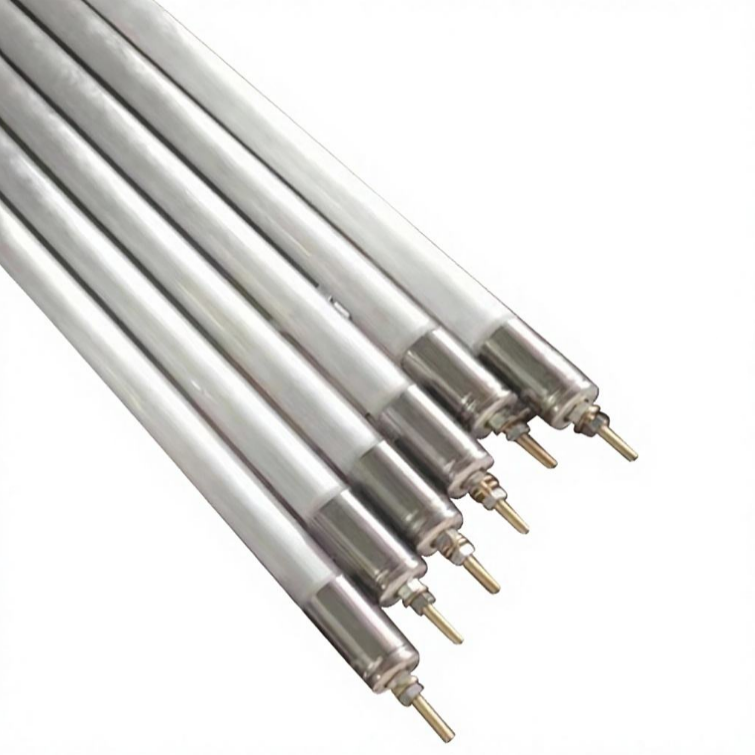
Full customization of lead wires, ceramic end-caps (SK15, R7S, X-clip, round metal tags), overall heated lengths (from 100mm up to 3,000mm), and single or twin-tube profiles matching your original press documentation.
Rigorous 100% Quality Auditing
Every batch undergo cold and hot resistance audits, optical filament concentricity inspection, vacuum seal leak testing, and gold coating adhesion scratch tests prior to shock-proof timber crating.
Seamless Cross-Border Logistics
Operating under FOB, CIF, or direct DDP terms delivering straight to Sant Julià de Lòria industrial estates with pre-cleared Andorran non-EU customs documentation (DUA) and certificate of origin.
Frequently Asked Questions for Sant Julià de Lòria Buyers
Comprehensive engineering and trade answers for procurement directors, printing press technicians, and plant managers in Andorra.
Can Kavri Quartz reverse-engineer infrared lamps for legacy or European brand printing presses?
How do you handle shipping logistics and import customs into the Principality of Andorra (non-EU)?
Why choose gold reflector coating over half-white ceramic for printing machine applications?
What is the standard lifespan of Kavri quartz infrared lamps in continuous printing line environments?
What is the minimum order quantity (MOQ) for custom-engineered prototype lamps?
Upgrade Your Printing Press Curing Performance Today
Send your lamp dimensions, old nameplate markings, or machine model details. Our senior thermal application engineers respond within 4 hours with comprehensive pricing, CAD confirmations, and delivery timelines to Sant Julià de Lòria.