Standard & Custom Industrial Quartz Envelopes
Manufactured from ultra-pure natural silica crystal originating from the Donghai mineral belt, our envelopes deliver exceptional mechanical strength, near-zero thermal expansion, and precision infrared spectral transmittance.
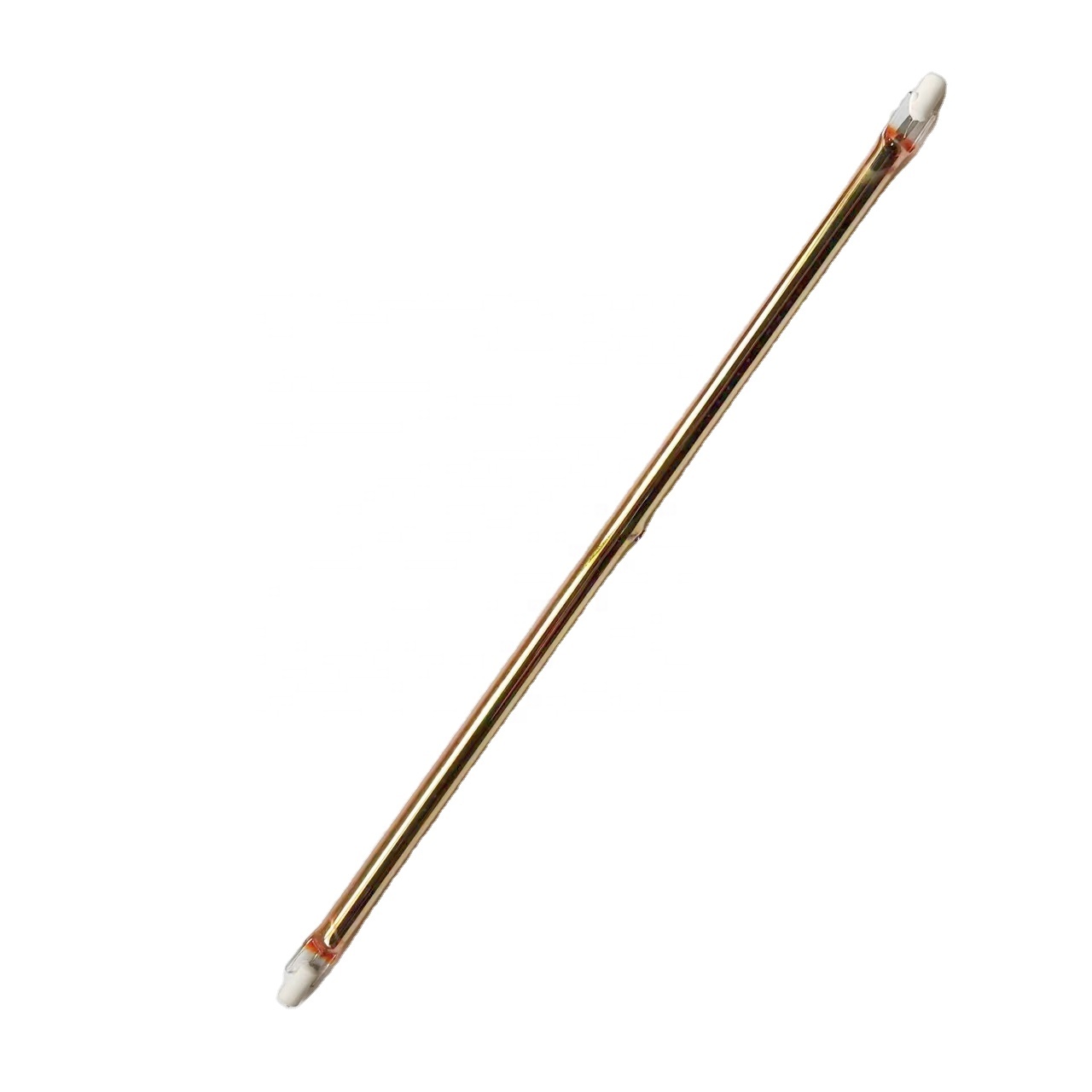
Compact tungsten-halogen emitter enclosed in clear fused quartz tubing with R7S standardized terminations. Reaches instant thermal equilibrium within 1 second.
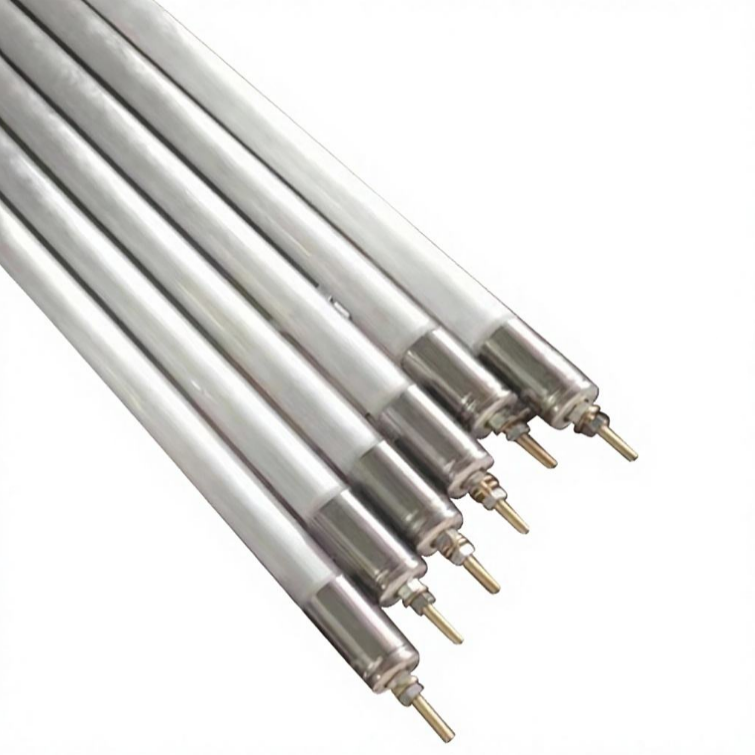
Heavy-gauge alloy resistance heating element insulated inside high-temperature fused silica tubes, engineered for industrial ovens, continuous kilns, and thermal fixtures.
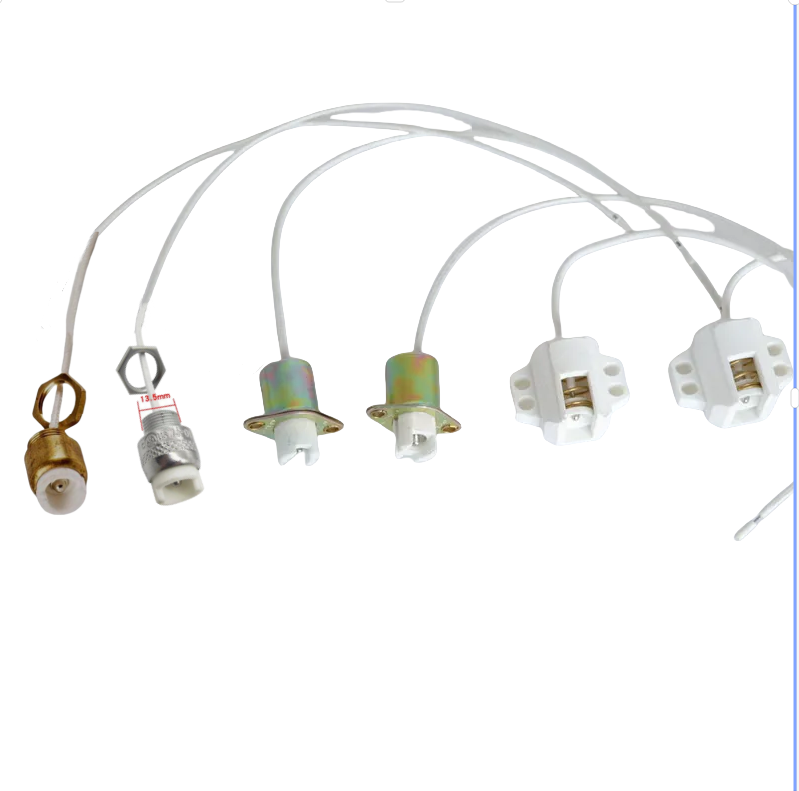
High-dielectric steatite ceramic lamp base and mounting clips rated for extreme temperature operations, ensuring arcing protection and mechanical rigidity for IR tubes.
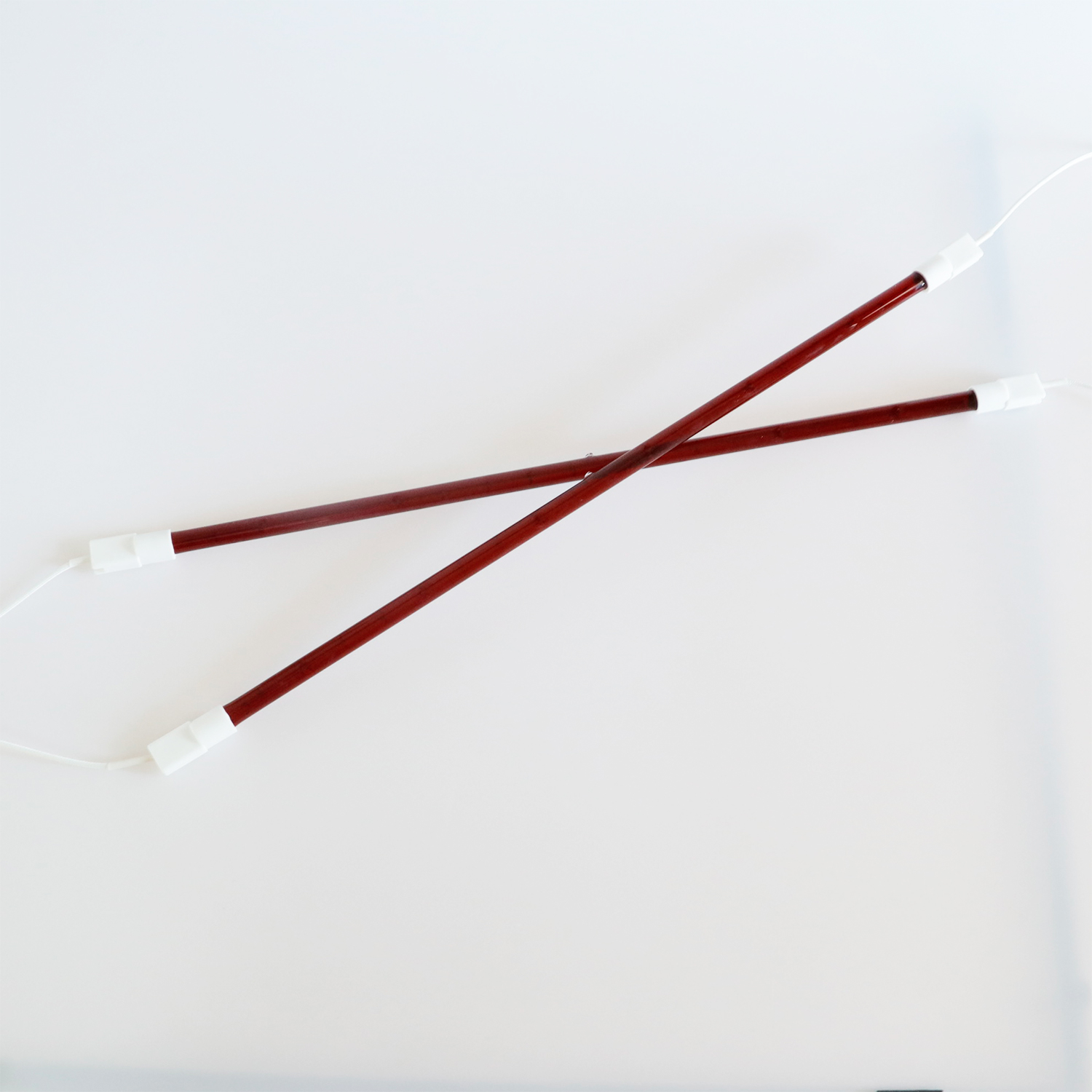
Doped ruby silica glass tube body filtering harsh visible light while transmitting penetrating short-wave infrared spectrum, perfectly tailored for automotive refinishing.
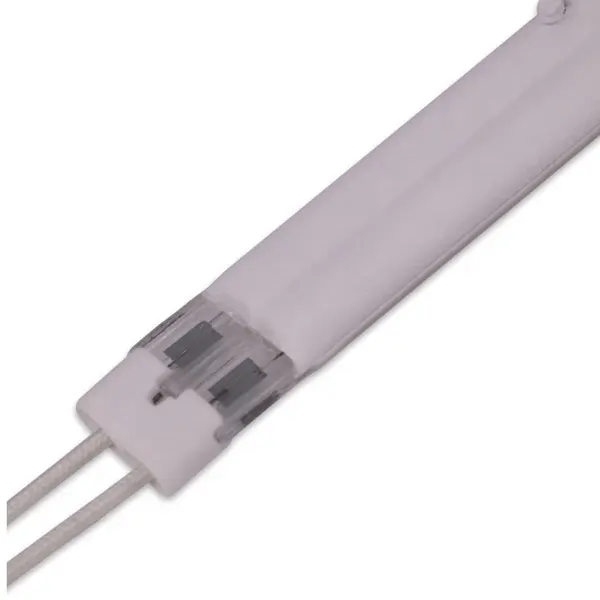
Figure-8 cross-section fused silica profile providing high structural integrity across long spans, offering double radiation density with integrated gold or ceramic reflectors.
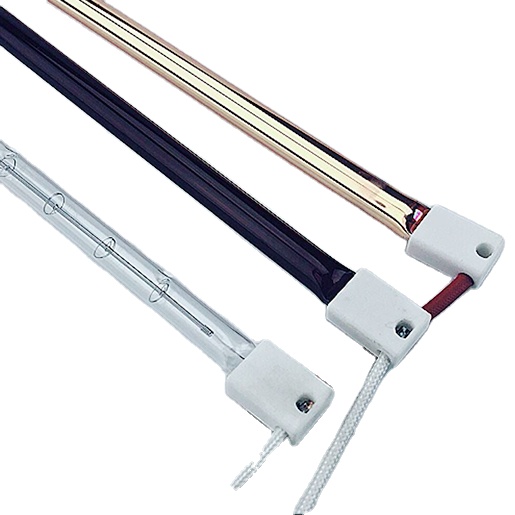
Linear quartz heating assembly equipped with ceramic reflectors, engineered for screen printing flash curing, textile drying, and polymer surface cross-linking.
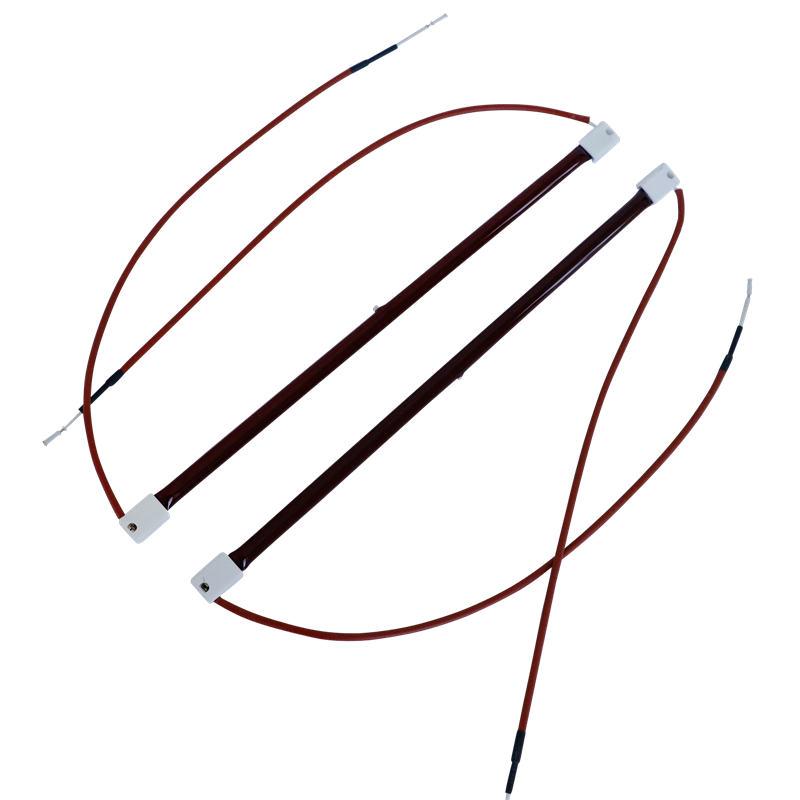
Durable ruby red quartz thermal lamp engineered for agricultural heating installations, animal brooding, and food holding stations with high resistance to humidity and thermal splash.
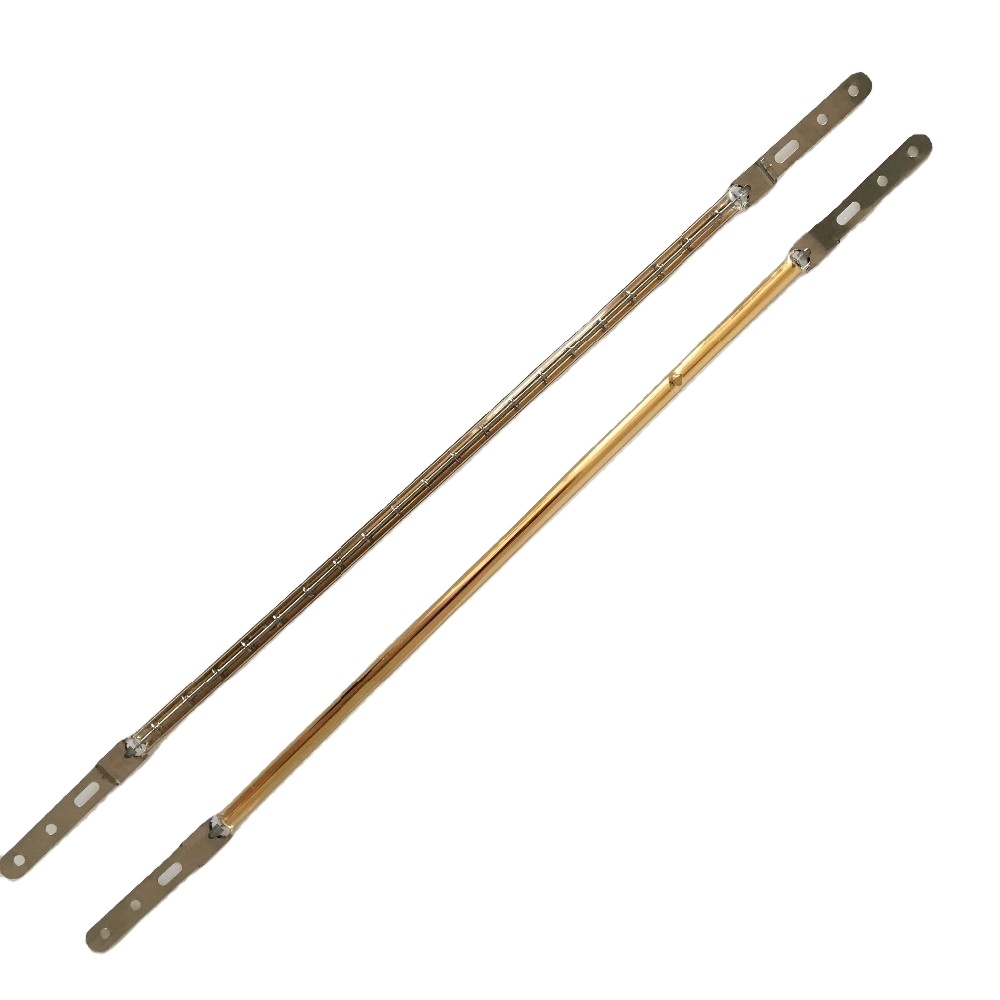
Direct-bonded nano-gold reflective layer coating 180 degrees of the quartz tube perimeter, redirecting over 90% of back-scattered infrared energy onto the target substrate.
Material Science & Structural Superiority of Fused Quartz Tubes
Fused silica, colloquially recognized across precision European manufacturing sectors as fused quartz glass, represents one of the most chemically inert and physically resilient engineering substrates available to thermal process engineers. Fabricated by melting naturally occurring high-purity crystalline silicon dioxide (SiO₂) in specialized electric arc or vacuum furnaces at temperatures exceeding 2000°C, the resulting amorphous silicon dioxide matrix exhibits no crystalline grain boundaries. This fundamental structural morphology imparts extraordinary mechanical, optical, and thermal endurance parameters that standard borosilicate or aluminosilicate glasses cannot replicate.
From an applied thermodynamics perspective, the defining mechanical characteristic of our fused quartz tubing is its exceedingly low coefficient of linear thermal expansion (CTE), precisely calibrated at 5.5 × 10⁻⁷ / K across the operating spectrum from 20°C to 1000°C. In practical engineering installations across Central European automated manufacturing lines, this enables a red-hot quartz envelope operating at 1000°C to be plunged directly into ambient liquid water without exhibiting macro-fracturing, structural crazing, or loss of dimensional concentricity. Such thermal shock immunity is vital in industrial continuous processes where emergency machine shutdowns or ambient draft fluctuations would instantly rupture conventional glass materials.
Technical Purity Thresholds: Our export-grade fused silica maintains SiO₂ purity levels ≥ 99.99%, with trace metallic impurities (Fe, Al, Ti, Ca, Mg) strictly suppressed below 15 ppm aggregate. This ultra-low hydroxyl (OH⁻) content (< 20 ppm for electrically fused variants) actively prevents mid-infrared absorption bands at 2.73 µm, securing optimal radiation transmission efficiency.
| Physical / Chemical Property | Test Standard / Unit | Continuous Clear Quartz | Synthetic Fused Silica | Engineering Benefit |
|---|---|---|---|---|
| Silica Content (SiO₂ Purity) | ICP-OES / % by Weight | ≥ 99.99% | ≥ 99.9999% | Eliminates de-vitrification and chemical leaching |
| Coefficient of Thermal Expansion | 20°C – 1000°C (K⁻¹) | 5.5 × 10⁻⁷ | 5.1 × 10⁻⁷ | Absolute thermal shock resistance under rapid cooling |
| Strain Point / Softening Point | Viscometry (°C) | 1075°C / 1683°C | 1025°C / 1600°C | Maintains straightness and vacuum integrity at white heat |
| Dielectric Strength (at 20°C) | kV / mm | 25.0 – 40.0 | 30.0 – 45.0 | High electrical insulation for high-voltage tungsten coils |
| Spectral Transmittance Window | Spectrophotometry (µm) | 0.20 – 4.20 µm | 0.17 – 3.80 µm | Maximizes both deep UV-C and short-to-medium wave IR output |
Localized Applications in Ljubljana & the Slovenian Industrial Arc
Ljubljana serves as the logistics, engineering, and research pivot of Slovenia, linking the Adriatic maritime terminal at Koper with the high-precision machinery corridors of Austria, Northern Italy, and Southern Germany. Our custom OEM/ODM quartz envelopes and infrared heating emitters are engineered to align seamlessly with the rigorous demands of regional manufacturing clusters.
Automotive Tier-1 & E-Mobility
Slovenian tier-1 automotive suppliers operating across Osrednjeslovenska and Podravska require rapid, zoned infrared drying for electric vehicle battery foil coatings, composite curing, and precision thermoforming of lightweight structural acoustic components.
Pharmaceutical & Biotechnology
Ljubljana and neighboring pharmaceutical hubs (Novo Mesto) enforce stringent purity demands. Our cleanroom-packaged, heavy-metal-free fused quartz tubes and photochemical immersion wells support sterile analytical reagent digestion and API crystallization vessels.
Optoelectronics & Research Labs
In partnership with university spinoffs and institutes around the Jožef Stefan Institute, our optical-grade fused silica plates, UV reactor sleeves, and micro-flow cells enable cutting-edge laser research, spectroscopy, and precision sensor fabrication.
Polymer Processing & Packaging
High-speed blow molding of PET preforms for regional beverage bottling plants demands short-wave halogen lamps with precision-machined twin-tube profiles and ceramic reflectors, minimizing energy dissipation during continuous bottling cycles.
The industrial landscape in Slovenia is fundamentally export-driven, where OEM machine builders in Ljubljana integrate high-end heating assemblies into automated printing presses, metal powder sintering kilns, and cleanroom vacuum drying chambers destined for Germany, Austria, and Scandinavia. In these sophisticated manufacturing ecosystems, material failure is catastrophic. A quartz tube that sags under thermal stress or exhibits uneven wall thickness introduces catastrophic temperature differentials across the process substrate. Our factory-direct quartz extrusions solve this via strict non-contact laser micrometer dimensional validation, guaranteeing outside diameter (OD) and inside diameter (ID) concentricity within ±0.05 mm across custom lengths up to 3000 mm.
Macro Trends Transforming Thermal Processing in Central Europe
As EU carbon border adjustments, surging electrical utility benchmarks, and strict corporate ESG frameworks reshape Slovenian plant engineering, industrial heating is undergoing a massive systemic transition away from fossil-fuel-based convective heating toward electric infrared radiative heating.
Gas-to-Electric IR Decarbonization
Energy EfficiencyConventional gas circulation ovens waste up to 60% of their heat energy heating ambient air masses. Electrically energized quartz infrared emitters convert > 90% of electrical input directly into target-matched radiation, dropping cycle times by up to 70%.
- Energy Transfer: Direct Electromagnetic
- Warm-Up Time: Instant (< 1-2 sec)
- Carbon Footprint: Zero Scope-1 Emissions
Wavelength Tuning for Polymer Absorption
Spectral MatchingModern packaging lines in Ljubljana utilize bioplastics (PLA) and recycled rPET. These substrates possess narrow infrared absorption bands near 2.8 µm to 3.5 µm, requiring carbon-fiber and medium-wave quartz emitters rather than crude broadband heat.
- Short-Wave Peak: 1.0 – 1.4 µm
- Medium-Wave Peak: 2.0 – 2.8 µm
- Target Penetration: Controlled Volumetric
Strict Compliance: RoHS, REACH & CE
Regulatory ArmorEuropean purchasing teams cannot tolerate non-compliant components. Our manufacturing facility strictly enforces lead-free and cadmium-free ceramic end seals, ozone-free silica formulations, and complete documentation for seamless CE declaration.
- Heavy Metals: Zero Lead / Cadmium
- Ozone Generation: Synthetic Non-Ozone / OF
- Certification: CE / RoHS Validated
Technical Emitter Selection Matrix: Matching Optics to Chemistry
In thermal design engineering, matching the infrared emitter’s peak emission wavelength (λmax) to the molecular absorption spectrum of the workpiece is the fundamental law of thermal physics (Wien's Displacement Law). Selecting an mismatched emitter results in either surface blistering or wasted transmission pass-through. Below is an engineering comparison of the core envelope architectures fabricated at our OEM facility:
| Emitter Technology | Envelope Material | Peak Wavelength (λmax) | Response Speed | Optimal Slovenian Manufacturing Process |
|---|---|---|---|---|
| Short-Wave Halogen (Clear) | High-purity clear fused quartz | 1.0 – 1.2 µm | < 1.0 second | Automotive clearcoat curing, high-speed PET preform reheat |
| Ruby Doped Infrared Tube | Color-doped Fe/Ce quartz silica | 1.2 – 1.4 µm | < 1.2 seconds | Industrial workstations, ergonomic low-glare outdoor space heating |
| Gold-Coated Directional | Clear quartz + 24k vacuum gold layer | 1.0 – 1.4 µm | < 1.0 second | PCB reflow, localized spot soldering, precision drying fixtures |
| Twin-Tube Medium-Wave | Figure-8 double bore fused silica | 2.2 – 2.8 µm | 3.0 – 5.0 seconds | Textile drying, paper converting, powder coating gelation |
| Carbon Fiber Medium-Wave | Clear or translucent quartz envelope | 2.0 – 2.5 µm | < 2.0 seconds | Water-based ink evaporation, plastic thermoforming, wood veneers |
Why Machine Builders & Distributors Partner with Kavri Quartz
Rooted in Lianyungang, Jiangsu Province—adjacent to the globally recognized Donghai quartz mineral cluster—Kavri Quartz bridges unmatched raw material access with sophisticated precision glassworking infrastructure.
1. Direct Access to Mineral Cluster
Unlike secondary processors who buy glass blanks on the open commodity market, our operational base provides prime selection of ultra-pure crystal silica stones. This direct mineral pipeline prevents raw material cost volatility, eliminates micro-bubble inconsistencies, and guarantees batch-to-batch chemical uniformity.
2. Full-Cycle OEM/ODM Customization
From complex twin-tube cross-sections (11×23 mm, 15×33 mm) to parabolic gold reflectors, custom lead wire harness terminations, and proprietary ceramic end cap designs, we engineer directly to CAD prints, physical machine samples, or legacy component part numbers.
3. Stringent European Standard QC
Every single quartz tube and heating lamp undergoes comprehensive in-line verification: high-voltage breakdown resistance testing, helium mass spectrometer vacuum seal leak detection, optical transmission spectroscopy, and optical laser micrometer wall-thickness mapping.
4. Three Scalable Production Lines
Our dedicated manufacturing facility runs three specialized workshops: one optimized for automatic drawing of precision quartz tubing, one dedicated to flame-working and laboratory quartzware, and one specialized in high-vacuum tungsten and carbon fiber IR emitter assembly.
5. Comprehensive Export Logistics
Exporting 81%–90% of our annual production to demanding markets across Germany, the Netherlands, Japan, and the USA, we understand the critical nature of export packaging. All quartz shipments utilize customized shock-isolated suspended wooden crates, engineered to survive long-haul maritime or air freight.
6. Rapid Technical Turnaround
Our technical sales engineering team operates with an average inquiry response speed of ≤ 4 hours. We provide full technical CAD layout sign-offs, thermal distribution simulations, and prototyping runs within 7–10 working days, streamlining equipment OEM design cycles.
Frequently Asked Questions by Industrial Buyers in Ljubljana
Clear, direct answers regarding customs compliance, dimensional tolerances, minimum order thresholds, and logistical protocols for European procurement officers and mechanical design engineers.
What is the standard delivery timeline for custom quartz tubes to Slovenia?
For custom engineering prototypes or tailored tube profiles, initial sample fabrication typically takes 7 to 10 working days following engineering drawing sign-off. Bulk mass production runs are dispatched within 2 to 3 weeks. Depending on your project schedule, we offer expedited air cargo (3–5 transit days to Ljubljana Jože Pučnik Airport - LJU) or consolidated sea container delivery directly via the Port of Koper (28–35 days transit), fully supporting DAP or DDP customs terms.
How do you guarantee that fragile quartz tubing will arrive without micro-fracturing?
Quartz glass logistics requires specialized multi-layer mechanical dampening. Every quartz tube or emitter is individually encased in a high-density, closed-cell polyethylene (EPE) shock sleeve, bundled into reinforced internal carton partitions, and suspended inside heavy-duty fumigated wooden crates lined with anti-vibration shock indicators. Our documented international transport damage rate remains strictly below 0.15% across European shipments.
Can you manufacture 1:1 replacement emitters for German or European machinery?
Yes. A substantial portion of our European OEM/ODM partnerships consists of reverse-engineering or directly replacing legacy infrared lamps for German, Italian, and Swiss industrial equipment (e.g., printing presses, PET blow molders, laminators). Simply provide us with the original manufacturer part number, a marked schematic, or a physical sample. We match electrical wattage, operating voltage, heated filament length, and ceramic terminations with 100% mechanical and electrical drop-in compatibility.
What dimensional tolerances can your continuous quartz extrusion workshop maintain?
Our standard manufacturing tolerances for outer diameter (OD) and wall thickness conform to strict ISO 2768-m standards. On precision drawn tubes (OD 8 mm to 60 mm), we routinely hold tolerances to ±0.05 mm, with out-of-roundness (ovality) held below 0.5% and straightness deviation constrained to ≤ 1.5 mm per linear meter. For ultra-demanding laser cavities or semiconductor instrumentation, micro-polishing and precision grinding can achieve ±0.02 mm.
What is the minimum order quantity (MOQ) for custom-engineered profiles?
We maintain an agile, low-barrier procurement model. For standard infrared heating lamps and stock quartz tube geometries, our minimum trial batch starts at just 8 to 10 units. For highly customized tooling (such as complex multi-bore twin tubes, specialized ruby doping, or custom-machined quartz flanges), initial prototype runs of 5 to 10 units are fully accommodated before committing to volume commercial contracts.
Do your products comply with European Union REACH and RoHS chemical safety protocols?
Without exception. Our fused quartz glass products, high-temperature lead connections, ceramic steatite lamp caps, and reflector coatings are independently tested by third-party testing laboratories (SGS / Intertek) and fully certified compliant with EU Directives 2011/65/EU (RoHS 2.0) and Regulation (EC) No 1907/2006 (REACH). Full Declarations of Conformity and material safety data sheets (MSDS) are provided with all commercial shipments.
Request a Technical Drawing Review & Factory-Direct Quote
Whether you require a custom quartz chamber for a cleanroom reactor in Ljubljana or high-efficiency infrared replacement emitters for an automated assembly line, our thermal engineers are standing by. Send your CAD files, electrical specs, or physical part photos today.