Short-Wave IR
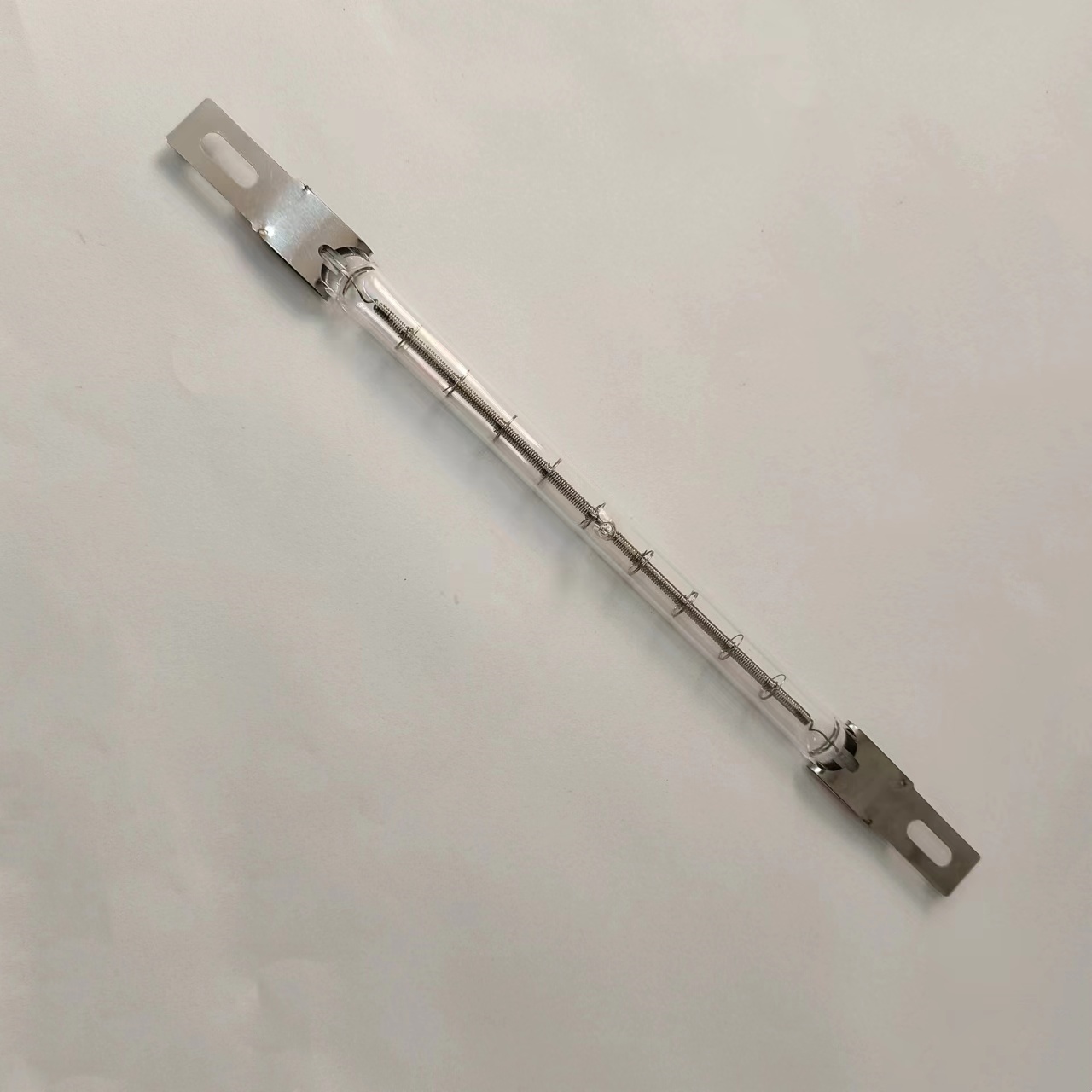
Explore our precision-fabricated short-wave, medium-wave, and twin-tube quartz emitters equipped with diffuse white ceramic reflectors and specialty coatings for maximum spectral efficiency.
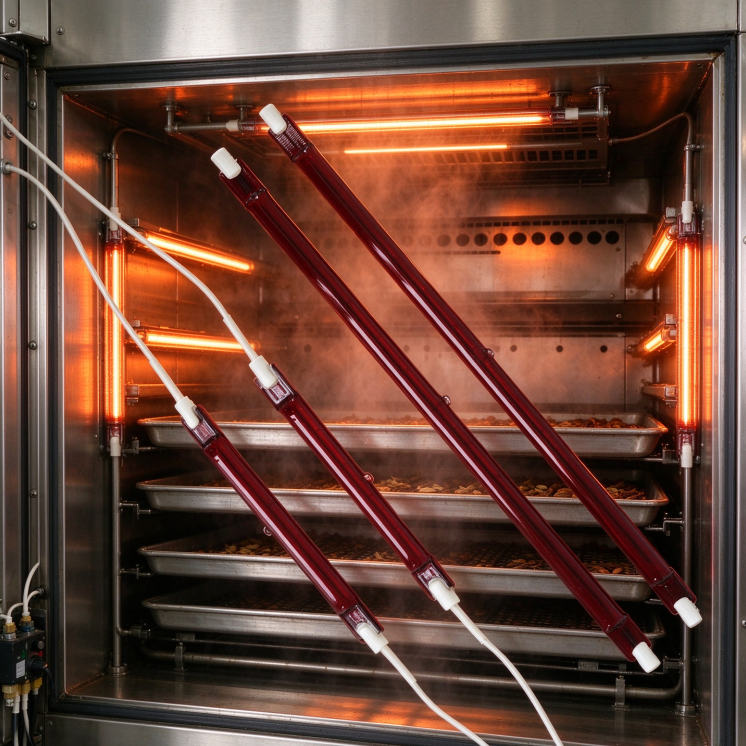
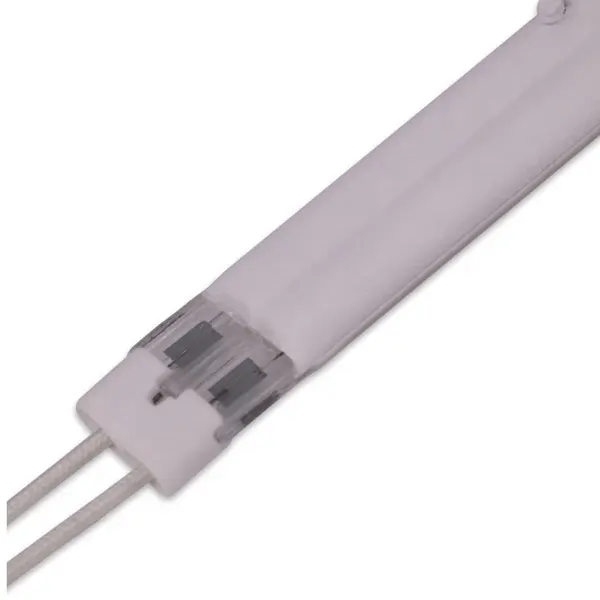
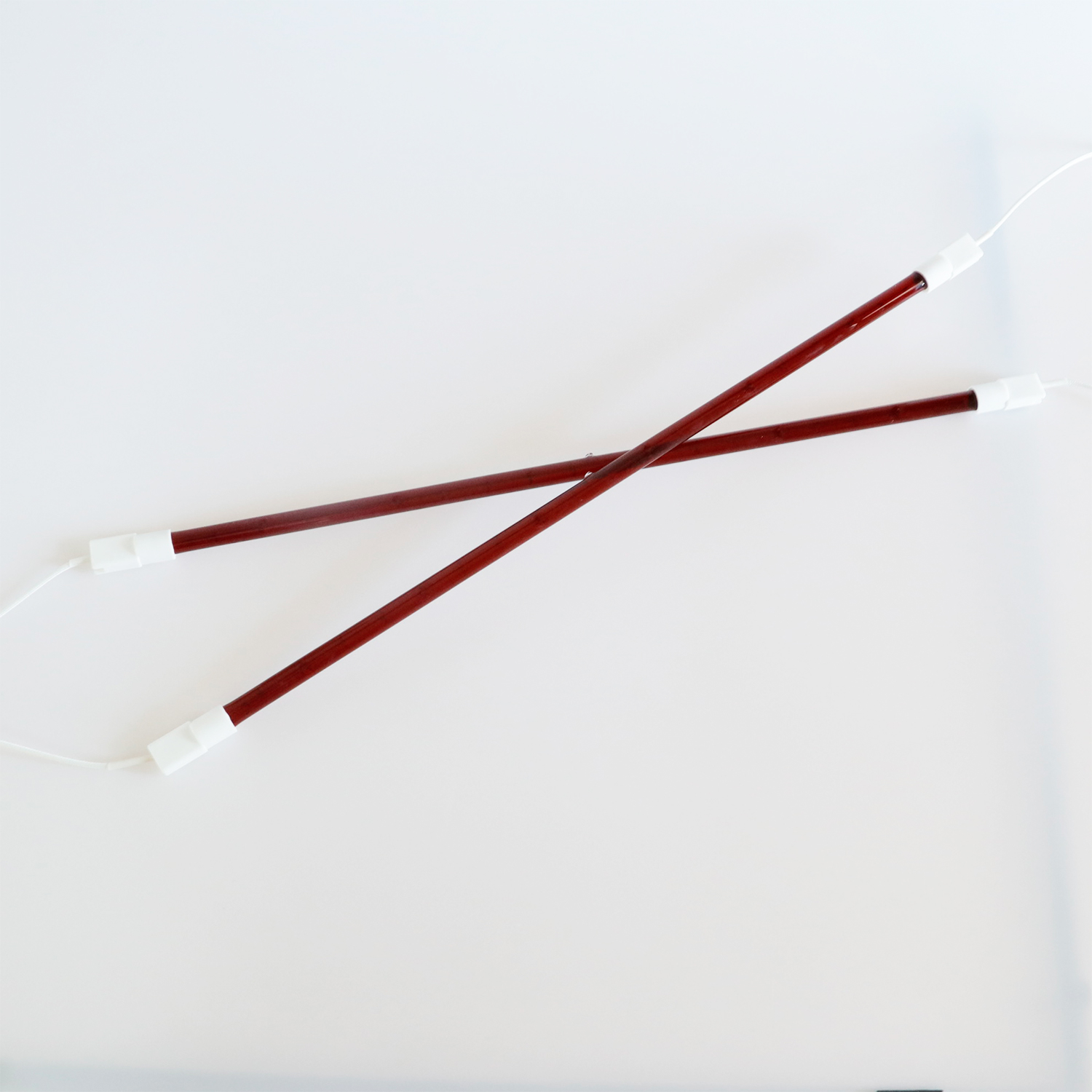
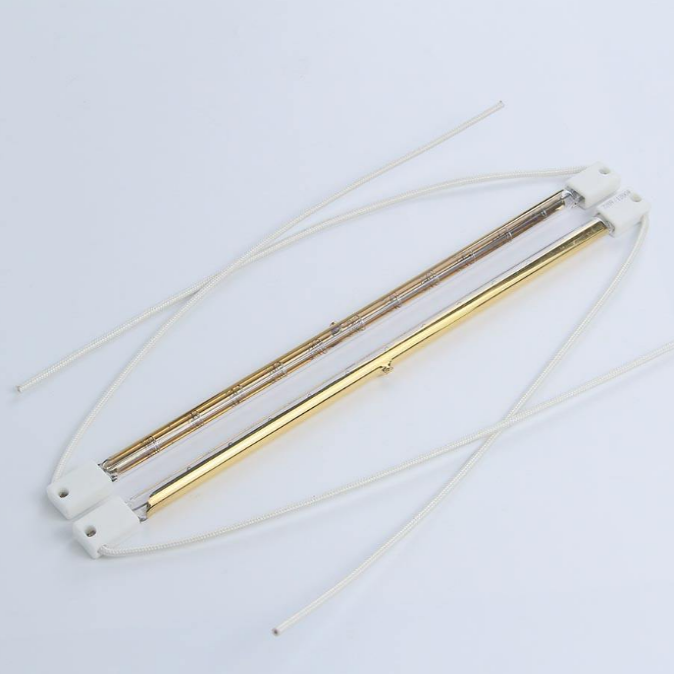
Directing infrared flux with nanometer-bonded ceramic diffusers eliminates external metallic reflectors, mitigating degradation and optimizing thermal transfer efficiency.
Unlike specular gold that reflects rays in parallel vectors, our high-purity Al2O3 / ceramic oxide white coating scatters emitted radiation hemispherically. This eliminates focal hot-spots, delivering uniform thermal gradients indispensable for Seattle's automated composite curing and multi-layer web drying.
The half-white ceramic layer is plasma-sintered directly onto the high-purity fused silica quartz envelope (SiO2 > 99.99%). This thermal-match fusion withstands continuous operating temperatures exceeding 1000°C without peeling, oxidation, or vapor micro-cracking common in humid coastal facilities.
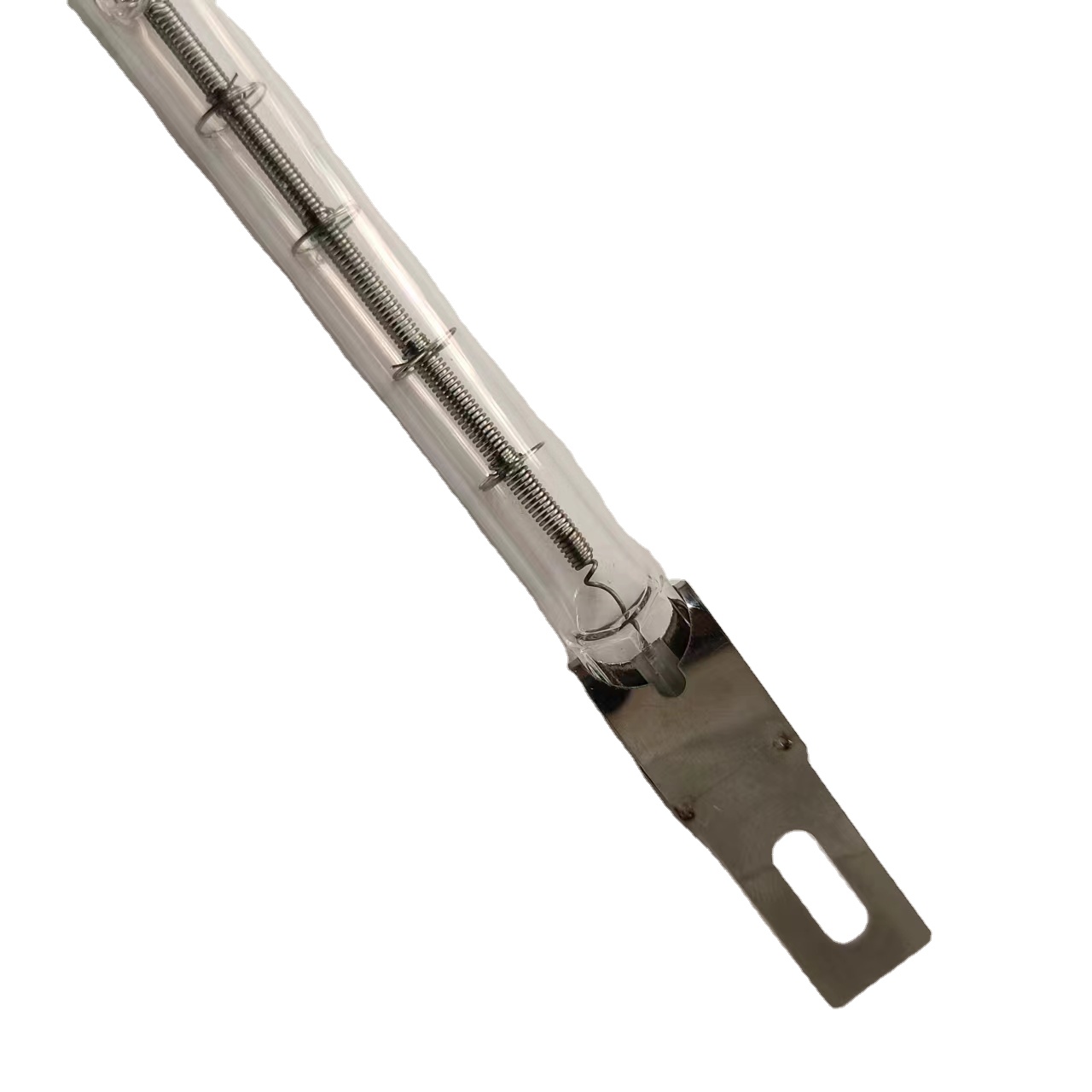
Equipped with halogen-doped tungsten filaments operating within halogen regenerator cycles, these emitters reach 100% nominal thermal output in under 1.2 seconds. Integrating these lamps into automated PLC heating lines slashes idle energy expenditures by up to 38% compared to calrod elements.
Targeted engineering configurations designed to solve high-latitude operating challenges, humidity variations, and stringent clean-energy mandates across King, Pierce, and Snohomish counties.
The aerospace corridor encompassing Everett, Renton, and Kent depends on tightly managed thermal boundaries. Half white coated short-wave twin-tube emitters provide targeted radiational absorption for carbon-fiber-reinforced polymer (CFRP) debulking, resin distribution, and automated tape laying (ATL) heating heads without degrading internal matrix resins.
Processing hubs in South Seattle and Tacoma require high-speed PET preform reheating and thermoforming lines for recyclable containers. The ceramic reflector redirects 90% of forward scatter directly into PET preform cores, overcoming wall-thickness differential issues and ensuring optimized bi-axial blowing results.
Marine facilities situated across Puget Sound, Ballard, and Harbor Island contend with dense marine fog and relative humidity exceeding 80%. Half white coated emitters bypass boundary air layers to cure naval-grade topcoats, anti-corrosive primers, and specialized polyurethanes without solvent retention or bubble defects.
Rigorous parameters validated across thousands of operating hours in cleanrooms, continuous drying tunnels, and high-temperature vacuum environments.
| Emitter Technology | Peak Spectral Range | Reflector Endurance | Target Material Match | Energy Efficiency Rating |
|---|---|---|---|---|
| Half White Coated Halogen | 1.0 – 1.4 µm (Short-Wave) | Permanent (>1000°C Resistant) | CFRP, PET preforms, metal powder, paints | High (Direct Absorption >88%) |
| Half Gold Coated Halogen | 1.0 – 1.4 µm (Short-Wave) | Sensitive (<600°C Reflector Limit) | Precision electronics, solar wafer soldering | Superior (Up to 95% Directional) |
| Uncoated Clear Quartz | 1.1 – 2.5 µm (Short / Medium) | Requires external mirror maintenance | General drying, continuous heating tunnels | Medium (Significant Omnidirectional Loss) |
| Carbon Medium-Wave | 2.0 – 2.6 µm (Medium-Wave) | Ceramic / Gold Option | Water-based coatings, textiles, plastics | High for liquid/polymer absorption |
Analyzing how regional regulatory shifts, clean energy targets, and automated retrofitting are redefining heat processing investments across Greater Seattle.
Under Washington State's Clean Energy Transformation Act (CETA) and regional carbon emissions caps, manufacturers are decommissioning legacy gas-fired convective drying ovens. Half white coated infrared quartz emitters offer localized high-intensity radiational heating driven by Puget Sound Energy's and Seattle City Light's clean electrical grids, slashing Scope 1 carbon footprints.
Smart factories throughout the Pacific Northwest are scaling automated production cells. Emitters with integrated ceramic reflectors allow compact machine footprint integrations because external, bulky parabolic reflectors are no longer required. Fast ramp-up capabilities enable tight sync with 6-axis robotic arms for spot-curing composite parts.
Seattle's burgeoning medical device and microfluidics manufacturing ecosystems demand clean heating environments. Standard external polished aluminum reflectors oxidize and flake microscopic dust when exposed to continuous heat cycles. Our half-white ceramic layers remain non-shedding and chemically inert in ISO Class 5 and 7 cleanrooms.
Combining raw quartz sourcing from China's primary silica cluster in Donghai with over a decade of OEM engineering precision.
Based in Lianyungang, Jiangsu—the global hub of quartz glass production—we secure direct access to ultra-pure silica (SiO2 > 99.99%), guaranteeing exceptional optical transmission and structural integrity.
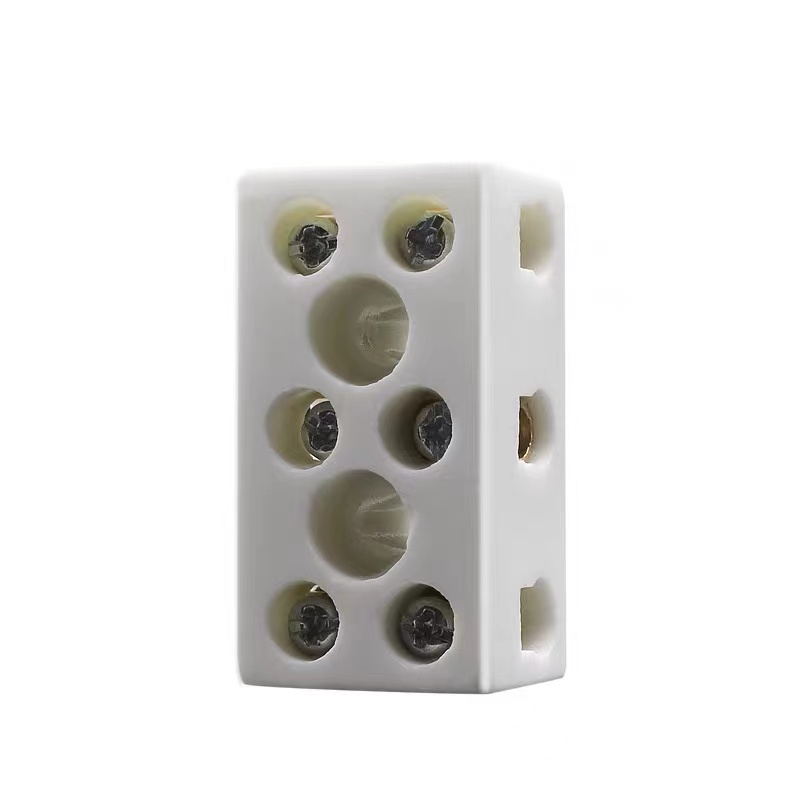
From single-tube to 23x11mm / 33x15mm twin-tubes, overall lengths from 100mm to 3000mm, voltages from 12V to 480V, and specialized end-caps (R7s, metal clips, ceramic leads), we build to exact prints.
Operating 3 specialized production lines audited and onsite-verified by Alibaba and third-party inspection firms, maintaining strict vacuum evacuation, halogen gas filling, and aging QC protocols.
Exporting 81%–90% of production globally. We support FOB, CFR, CIF, EXW, and door-to-door DDP shipments directly into Seattle sea-freight ports or Seattle-Tacoma International Airport (SEA).
Our dedicated engineering department ensures all technical drawing reviews, emitter retrofits, and quotation requests are processed within 4 hours during business days, maintaining a 92.65% buyer response rate.
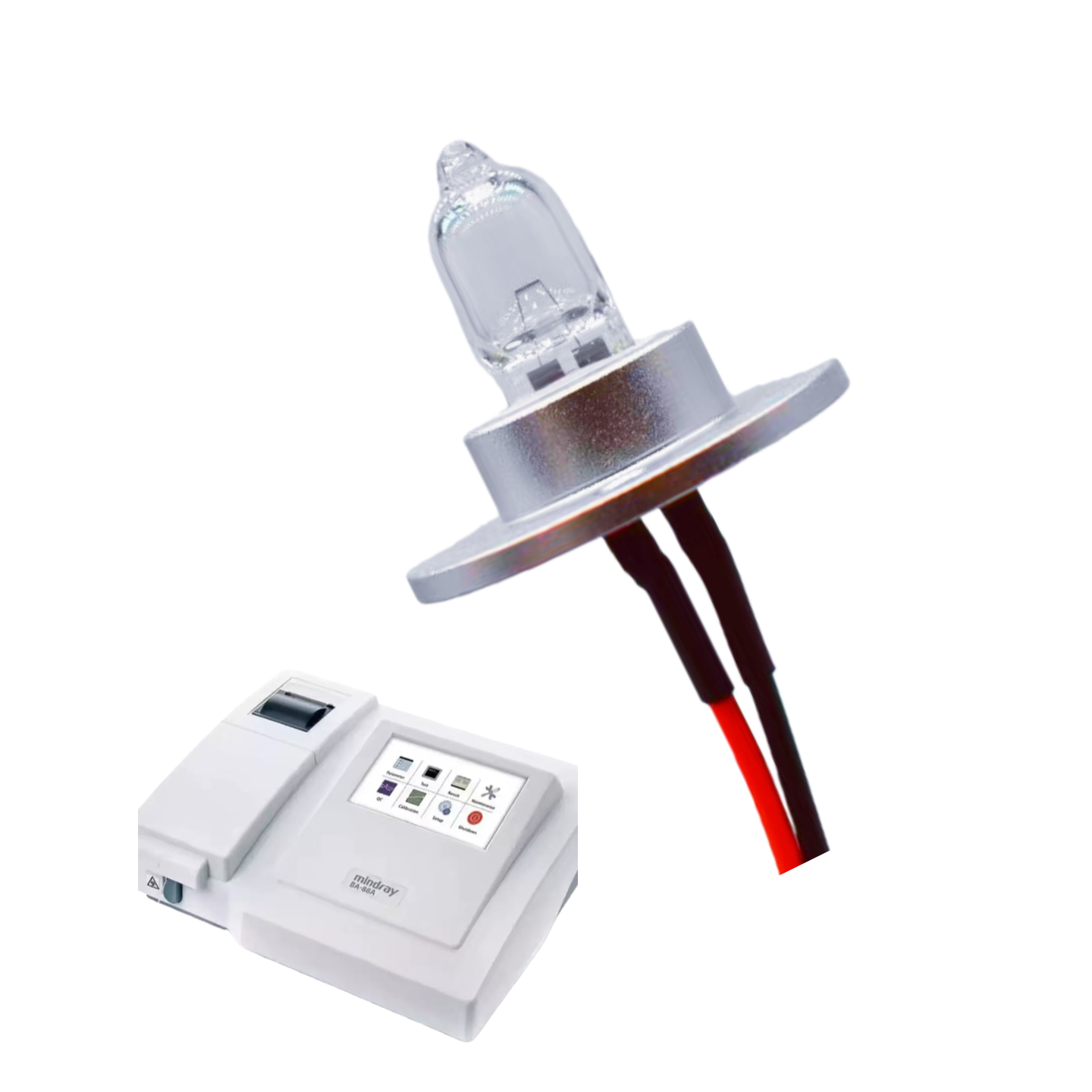
In addition to heaters, we manufacture precision quartz flow cells for biochemical analyzers (such as Mindray BA-88A bulbs), quartz plates, and specialized lab crucibles tailored for medical instrumentation.
Direct technical clarifications on emitter retrofitting, voltage adaptations, regional deliveries, and thermal engineering parameters.
Send us your machinery specifications, burned-out lamp samples, or CAD drawings. Our factory engineers evaluate filament geometry, reflector balance, and power density within 4 hours.