Precision Quartz Infrared Heat Lamps for Web Press & Converting Systems
Direct-from-manufacturer emitter assemblies manufactured from semiconductor-grade fused quartz (Donghai 99.99% SiO₂ purity), engineered to withstand high-duty thermal cycling in narrow-web flexographic, digital inkjet, and sheet-fed offset printing machinery.
Thermal Transfer Physics: Optimizing IR Wavelength Absorption in High-Speed Printing Machinery
In modern high-speed printing and converting equipment, drying ink and aqueous barrier coatings is a critical bottleneck dictating linear web velocity. For Swiss machinery builders across the Canton of Bern and the wider Espace Mittelland industrial corridor, meeting demanding tolerances requires fine-tuning the electromagnetic emission spectrum to the precise molecular absorption bands of specialized water-based, solvent-based, and UV-curable inks.
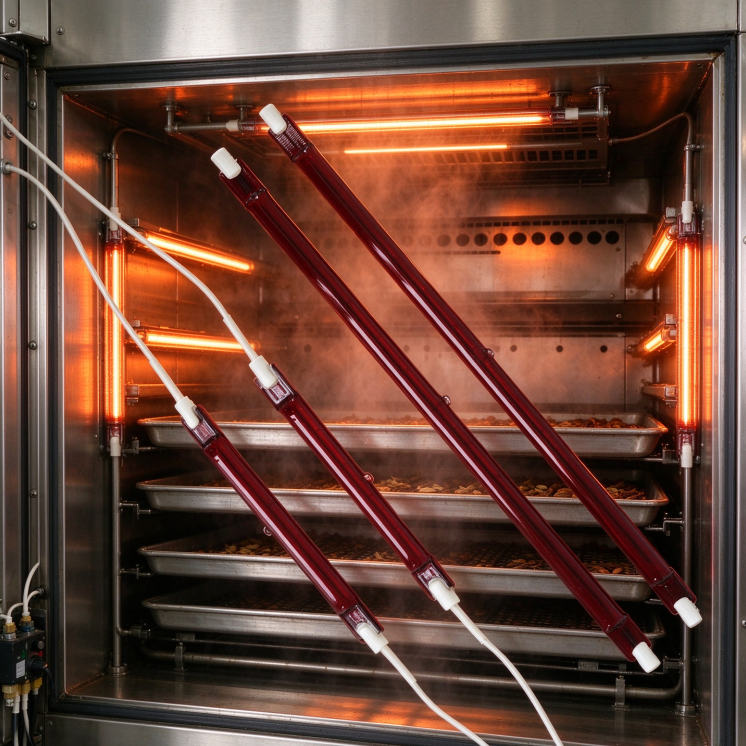
Convective hot-air systems rely on thermal conduction through boundary air layers, which introduces substantial thermal inertia, high thermal losses, and excessive heating of temperature-sensitive film substrates (such as 12–50 μm BOPP, PET, and metallized foil). Radiative infrared heat transfer, governed by the Stefan-Boltzmann law and Wien's displacement law, bypasses boundary layers by projecting photons directly into the wet coating layers.
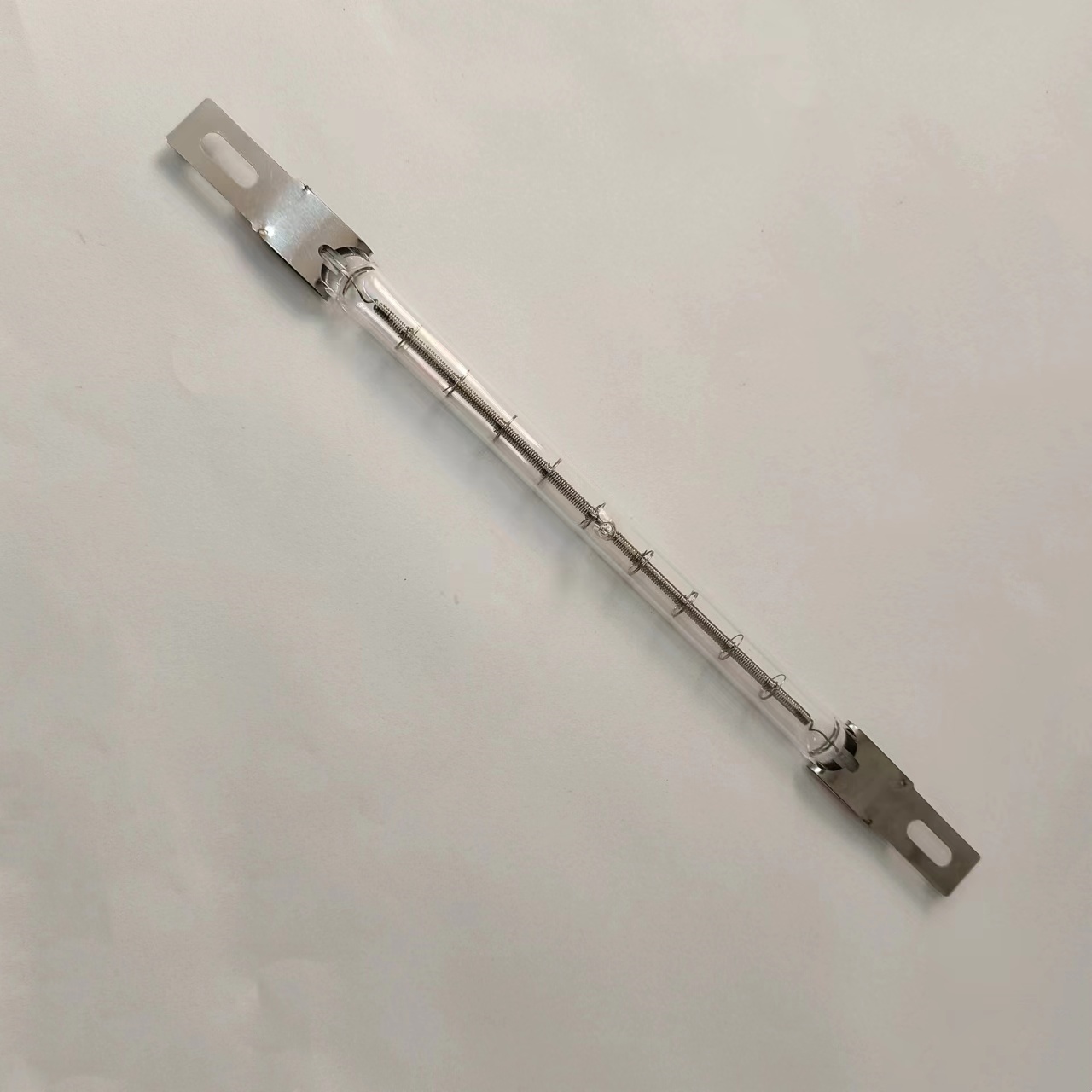
Short-Wave Halogen (0.8–1.4 μm)
Operates at filament temperatures of 2200–2600 K. Reaches 100% radiative flux in under 1 second. Highly penetrative, driving moisture out of thick substrate paper stocks and heavy water-based flexographic varnish layers without skinning or blistering.
Fast Medium-Wave & Carbon (2.0–2.6 μm)
Emits at filament temperatures of 1200–1600 K, overlapping the O-H fundamental vibrational absorption band of liquid water (peak at ~2.7 μm). Ideal for aqueous pigment ink formulations used in high-speed industrial digital printing presses without web distortion.
Directional Reflector Geometries
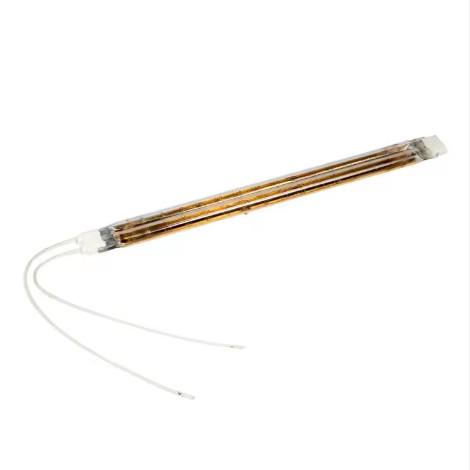
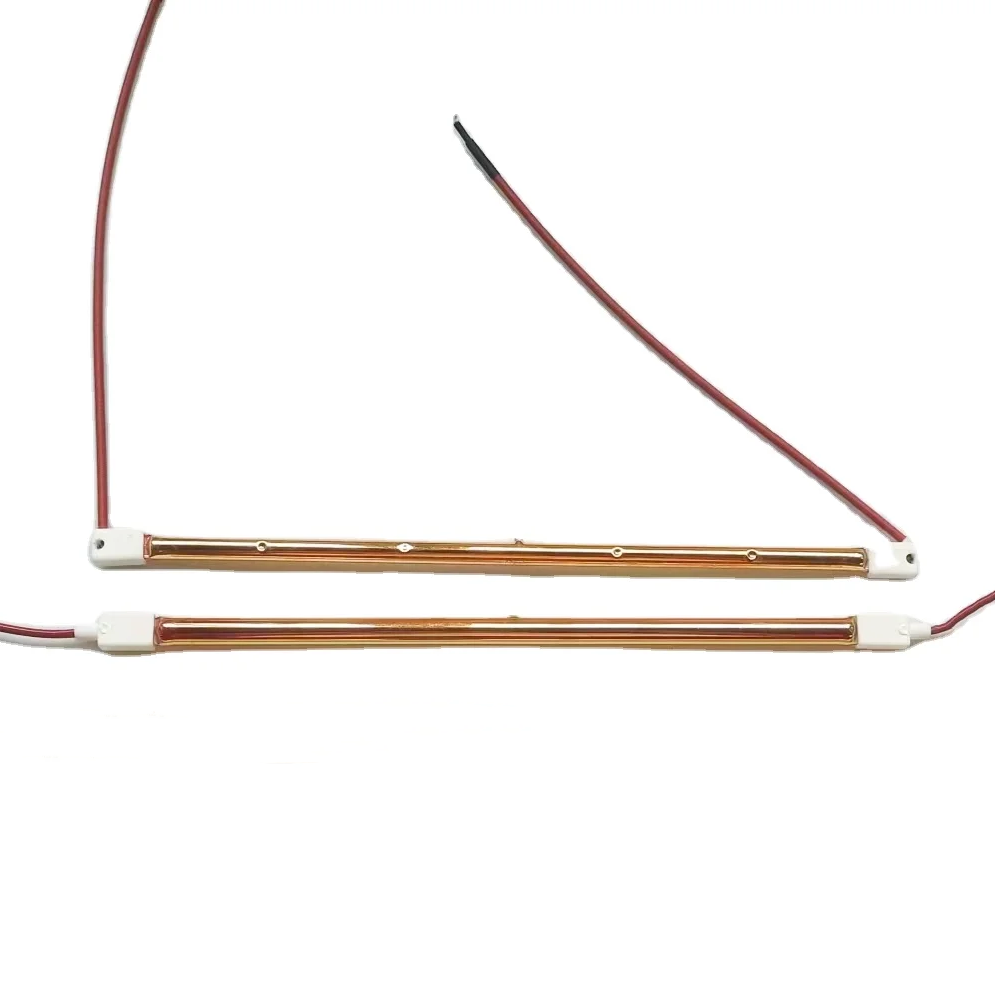
Applying pure 24-karat gold or opaque nano-porous ceramic reflectors directly onto the reverse 180° circumference of the fused quartz envelope concentrates over 90–95% of emitted infrared energy directly onto the web, preventing thermal buildup in machine framework.
By eliminating the parasitic heat transfer into machine frames and side-frames, Swiss printing press manufacturers can integrate high-watt-density emitter cassettes into compact spaces between print units. Fast modulation via thyristor power controllers (SSR with burst firing or phase angle) enables instantaneous emitter throttling when web speeds fluctuate or line pauses occur, preventing catastrophic web breaks and substrate ignition.
Infrared Emitter Technology Comparison for Printing Machinery OEMs
This matrix outlines emitter configurations tailored for mechanical design engineers specifying drying stages for offset, flexo, gravure, and industrial inkjet presses.
| Emitter Configuration | Peak Spectral Output | Thermal Response | Optical Efficiency | Primary Print Application | Substrate Compatibility |
|---|---|---|---|---|---|
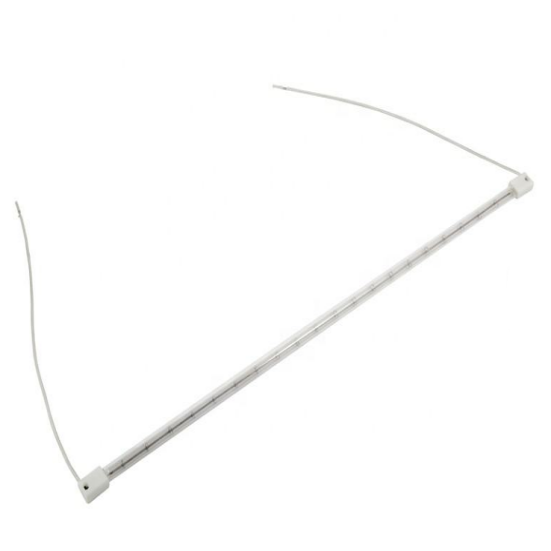
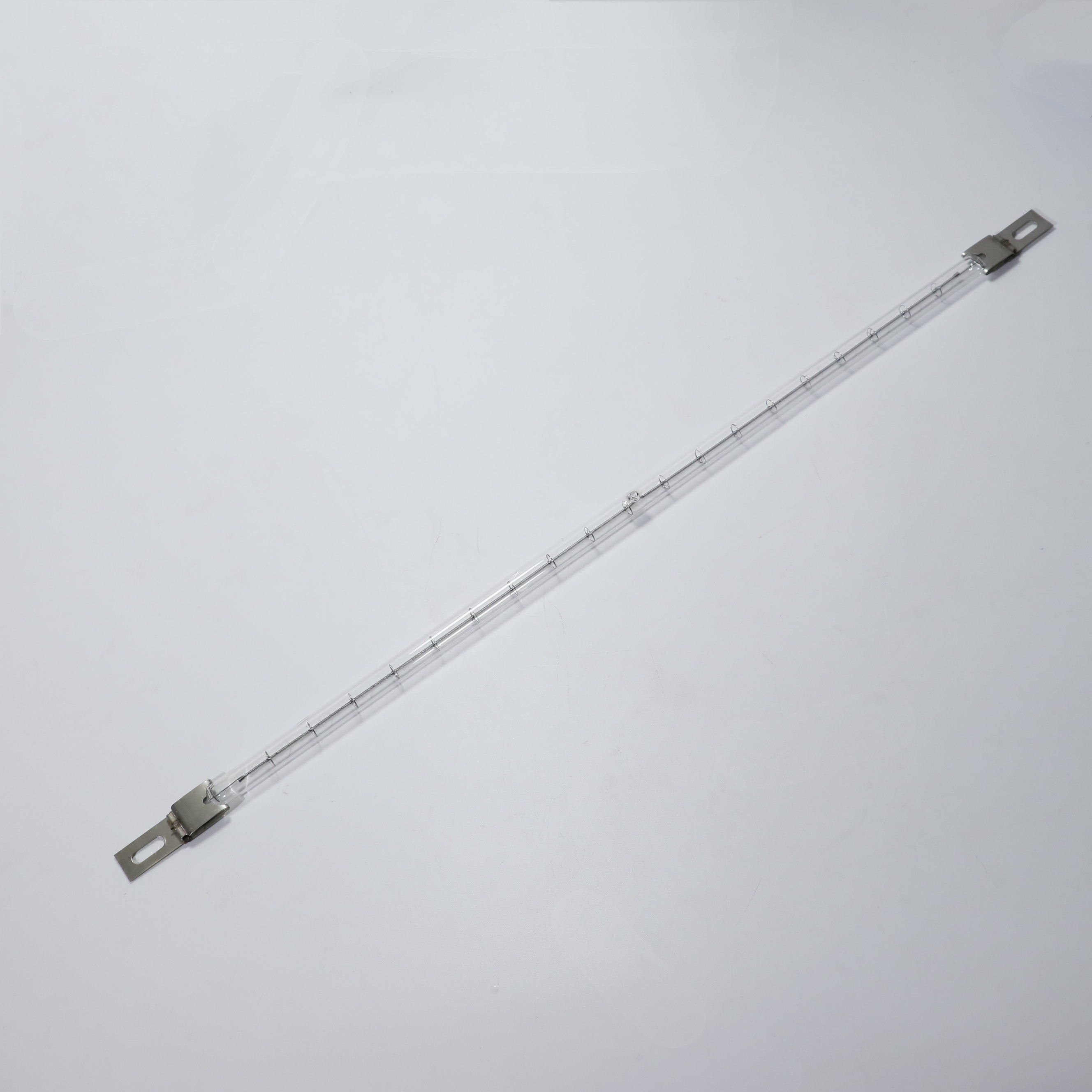
| Clear Halogen Short-Wave | 1.0 – 1.2 μm | < 1.0 second | ~75% direct radiation | Sheet-fed offset powder drying, heavy cartonboard varnishing | Paperboard, Kraft liner, corrugated board |
| Gold-Coated Short-Wave (Single/Twin) | 1.1 – 1.3 μm | < 1.2 seconds | > 95% directional flux | Narrow-web flexo inline drying, primer flash-curing | Thermal label stock, metallic foils, 30–120 μm films |
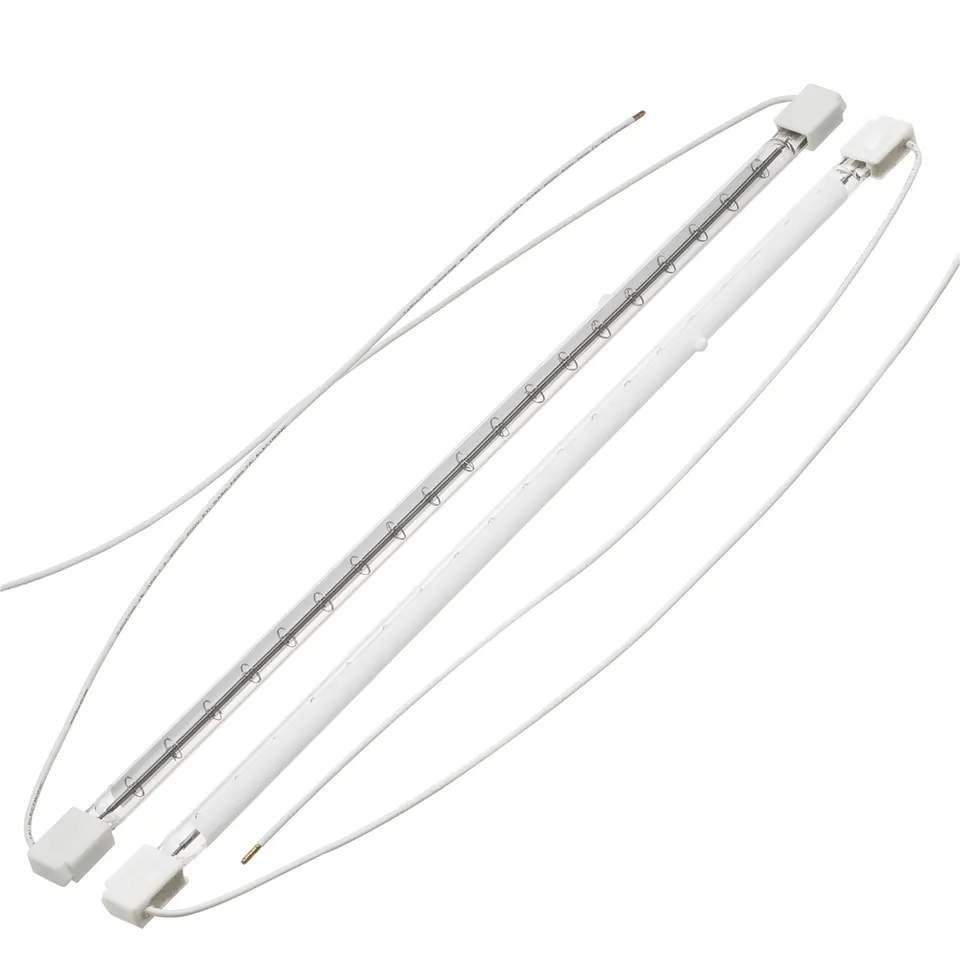
| Ceramic Half-White Short-Wave | 1.1 – 1.4 μm | < 1.5 seconds | ~90% diffuse flux | Rotogravure printing tunnels, abrasive solvent atmospheres | Heavy card, flexible packaging laminates |
| Carbon Fiber Medium-Wave (CIR) | 2.0 – 2.5 μm | 1.5 – 2.5 seconds | ~88% target absorption | High-speed industrial continuous inkjet, water-based flexo | Thin PE/PP films (12–25 μm), parchment, tissue paper |
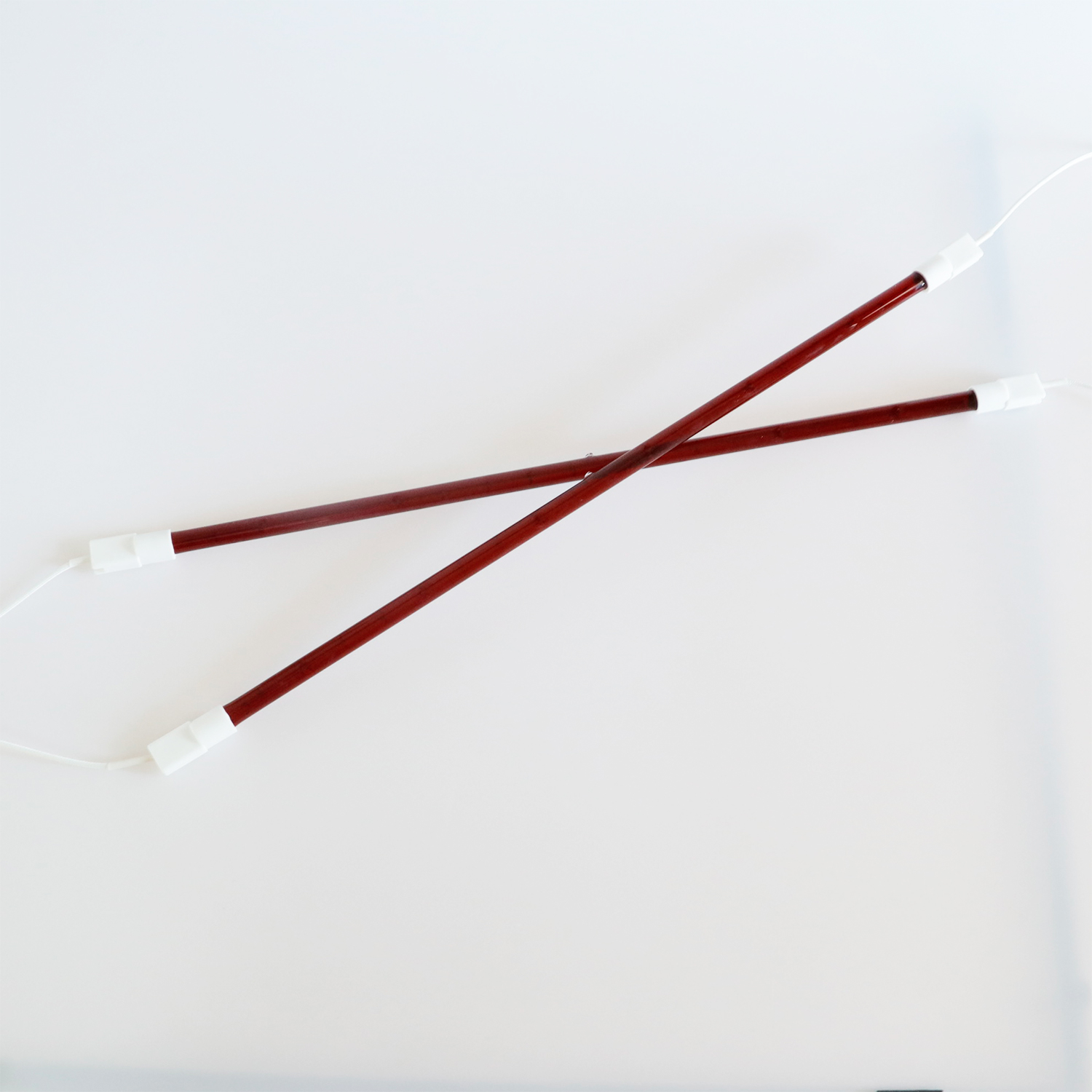
| Ruby Quartz Short-Wave | 1.2 – 1.5 μm | < 1.0 second | Glaring light cut by 80% | Specialized screen printing, manual inspection curing units | Textile banners, security inks, synthetic leather |
Local Application Scenarios Across the Bernese Machine Manufacturing Ecosystem
The Canton of Bern is a renowned hub of precision engineering, microtechnology, and graphic arts machinery. Our custom OEM infrared heating solutions are engineered to integrate seamlessly into Swiss industrial manufacturing systems.
Narrow-Web Flexographic Label Presses
Manufacturers in the Bern-Mittelland and Biel/Bienne industrial sectors build narrow-web label presses that process complex pharmaceutical and luxury packaging webs at speeds exceeding 200 m/min. Custom gold-coated twin-tube emitters provide uniform edge-to-edge drying of water-based inks without edge-curling delicate BOPP and synthetic liner stocks.
High-Security Document & Banknote Printing
Switzerland maintains strict global standards for high-security monetary and biometric document manufacturing. In dedicated gravure and intaglio production facilities, our custom ruby and twin-tube short-wave lamps provide rapid volatilization of high-viscosity carrier fluids while strictly safeguarding micro-optics and anti-counterfeiting polymer threads.
Industrial Continuous Inkjet & Web Converting
With the Swiss packaging sector transitioning rapidly toward decentralized digital printing lines, carbon medium-wave IR lamps are deployed in the post-inkjet station. Carbon emitters project energy matched precisely to water solvent evaporation, eliminating cockling on lightweight pharmaceutical package inserts.
Automated Screen Printing for Electronics & Dials
Within the Jura region and western Bern borders, precision horological and medical component manufacturers apply functional conductive and ceramic inks. Kavri custom halogen emitters ensure exact cross-linking of silver pastes and decorative layers on dials without dimensional thermal creep.
Corrugated Board & Folding Carton Post-Coating
High-throughput Swiss packaging converting lines require heavy water-barrier barrier coatings to dry before inline die-cutting. Short-wave twin emitters deliver high-density radiant flux, completing drying within an active web travel length under 1.2 meters at speeds exceeding 300 m/min.
Retrofit & Modernization of Legacy Print Ovens
Print facilities throughout Burgdorf, Thun, and Bern modernize aging presses to eliminate gas-fired convection burners. We manufacture drop-in custom dimensional emitters (identical clips, ceramics, wiring harnesses) enabling seamless transitions to electrically zoned IR arrays.
Technological and Regulatory Drivers Reshaping the Swiss Printing Sector
Swiss machine builders face strict regulatory and economic conditions. Investing in custom OEM infrared emitter engineering addresses these primary market forces.
Decarbonization & Swiss EnDK Energy Directives
Switzerland's stringent federal CO₂ reduction mandates and Cantonal Energy Directorates (EnDK) penalize high energy intensity. Moving from hot-air ovens to focused quartz infrared emitters cuts drying energy consumption by 35% to 50% through targeted photon transfer and sub-second cut-off times.
Rapid Phase-Out of VOC Solvent Formulations
In compliance with Swiss VOC tax (Lenkungsabgabe auf VOC), converters in the Swiss graphics sector are switching rapidly to water-based inks. These systems require higher latent heat of vaporization (2260 kJ/kg for water versus ~850 kJ/kg for typical solvents), necessitating precise carbon medium-wave infrared wavelengths.
Industry 4.0 Closed-Loop Thermal Automation
Modern presses manufactured around Bern incorporate integrated non-contact infrared pyrometer arrays tied via EtherCAT or PROFINET to solid-state thyristor power controllers. Our low-inductance tungsten filaments allow sub-cycle modulation, maintaining steady web temperatures within ±1.5°C.
Direct-from-Source Engineering: Kavri Quartz OEM & ODM Infrastructure
Based in Lianyungang, China—the epicenter of global high-purity silica glass production—Kavri Quartz Product Co., Ltd. blends raw material advantages with precision fabrication to supply machine builders worldwide.
Year Founded • Verified
Years OEM/ODM Expertise
Dedicated Production Lines
Inquiry Response Window
99.99% High-Purity Fused Quartz
Our facility in Donghai provides direct access to pure silica sand deposits. We draw quartz envelopes with negligible hydroxyl (OH) and metallic impurity levels, ensuring high optical transmittance from 200 nm to 4.5 μm without lamp devitrification under continuous 1100°C operation.
Bespoke OEM Customization
We manufacture from mechanical CAD drawings or physical client samples: single or twin-tube geometries (11×23mm, 15×33mm), custom heated lengths up to 3000mm, variable power density zoning, specialized ceramic caps (SK15, R7s, metal push-in clips), and PTFE or silicone-coated high-temp lead wires.
Export & Shockproof Crating
Exporting between 81% and 90% of our annual production to high-standard markets (Germany, Switzerland, Japan, USA), every emitter is packed in custom form-fitting shock-absorbing EPE foam and reinforced plywood crates. We provide reliable DDP, CIF, and express air freight straight to Swiss manufacturing plants.
Custom OEM Emitter Manufacturing Workflow
From technical CAD evaluation through optical validation and delivery to your machine assembly floor in Bern.
CAD & Thermal Audit
Client submits mechanical press drawings, voltage/wattage specifications, or sample lamps. Our engineering team confirms dimensional clearances, heated length, and optical target zones.
Filament & Coating Spec
We determine tungsten or carbon coil geometry, gas backfill chemistry (halogen cycle balance), and select gold versus ceramic diffuse reflector profiles to suit ink chemistry.
Precision Prototyping
Rapid prototyping of 3 to 10 sample pieces produced on our dedicated sampling line within 7–10 working days, complete with ceramic cap termination and custom leads.
Machine Bench Validation
Swiss OEM clients install prototype emitters into active test drying cassettes to measure web temperatures, surface ink curing speeds, and thyristor modulation accuracy.
Batch Run & 100% QC
Volume fabrication across 3 automated lines. Every emitter undergoes full-load electrical burn-in, insulation resistance verification, seal vacuum checks, and dimensional micrometer tests.
DDP Export & Support
Shock-resistant wooden crating shipped via air or consolidated seafreight with comprehensive documentation (CE, RoHS certificates of compliance) directly to your factory door.
Frequently Asked Questions by Swiss Printing Press Engineers
Clear, technically detailed answers regarding electrical compatibility, thermal longevity, wavelength choices, and ordering logistics for the Swiss manufacturing market.
Are Kavri infrared emitters fully compliant with Swiss SEV and EU CE safety standards?
Yes. All custom halogen and carbon emitters manufactured by Kavri Quartz for the European and Swiss markets comply strictly with low-voltage electrical safety standards (CE Mark) and the RoHS directive. Lead-free solder, high-grade steatite ceramic end-caps, and pure high-dielectric quartz glass protect machinery installations from breakdown under high working voltages.
How do we select between gold-coated and ceramic half-white reflectors for printing machine cassettes?
For maximum thermal transfer efficiency, 24K gold reflector coatings are preferred, providing >95% directional forward infrared reflectance across the short-wave and fast medium-wave spectra up to 600°C sheath temperatures. If operating in high-temperature ambient ovens exceeding 750°C, our fused half-white ceramic diffuse reflector is recommended, as ceramic will not oxidize or peel at extreme heat.
Can you replicate or drop-in replace existing emitters from European or Swiss brands?
Yes. Approximately 40% of our OEM business involves engineering replacement lamps for existing European drying systems. By providing us with a photo of the base markings, overall length, heated length, cross-sectional tube profile (single 10/12mm or twin 11×23mm / 15×33mm), and voltage/wattage rating, we reverse-engineer drop-in replacements that fit existing mounting brackets.
What is the typical operating life expectancy of your halogen and carbon emitters in industrial printing?
Our tungsten halogen short-wave emitters have an engineered design life of 5,000+ continuous operating hours when installed with adequate lamp cap ventilation (<350°C at pinch seals). Our carbon fiber medium-wave emitters deliver an operating life of 8,000 to 10,000 hours, benefiting from reduced operating temperatures and chemically inert carbon ribbons.
What is your Minimum Order Quantity (MOQ) for custom-engineered prototype lamps?
We support machinery engineering teams during prototyping and testing. For custom-tailored dimensions, our MOQ starts at just 8 to 10 pieces. Once design specifications are confirmed, scheduled production runs with scheduled deliveries and safety-stock warehousing agreements are available.
How does Kavri Quartz ensure zero transit damage to fragile quartz glass during delivery to Bern?
Every single lamp is enclosed in an individual shock-absorbing suspension sleeve, secured inside high-density expandable polyethylene (EPE) custom cavities, and packaged in structural multi-wall corrugated cardboard and fumigated export plywood cases. Our transit breakage rate to Western European industrial destinations is below 0.15%.
Upgrade Your Printing Machinery With Custom Thermal Engineering
Whether designing a brand-new high-speed digital inkjet platform, optimizing a narrow-web flexographic label press, or sourcing certified replacement emitters for clients in the Canton of Bern, our thermal engineering specialists provide responsive design assistance, rapid quoting, and high-purity quartz manufacturing.
Contact Us