Engineered Infrared Lamp Series for Precision Heating Operations
Explore our heavy-duty quartz glass heating assemblies, circular emitters, and precision twin-tube systems built directly for OEM machinery, continuous conversion lines, and industrial replacement across San Antonio industrial corridors.
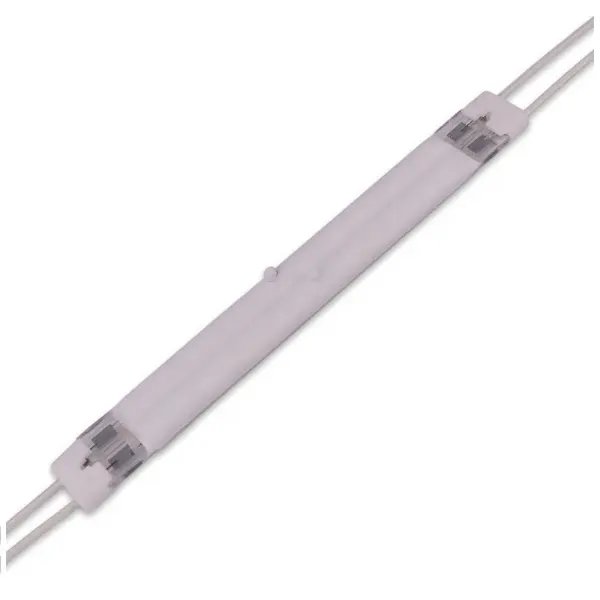
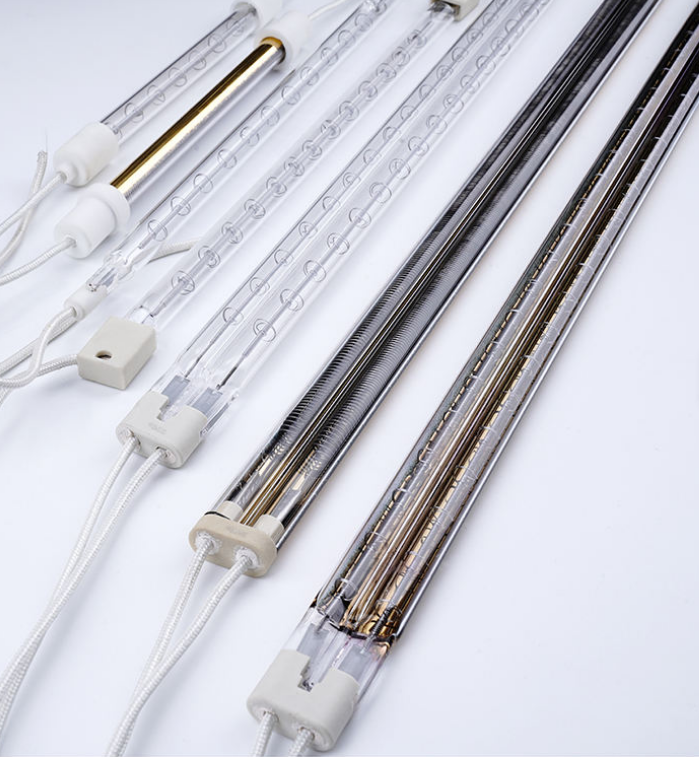
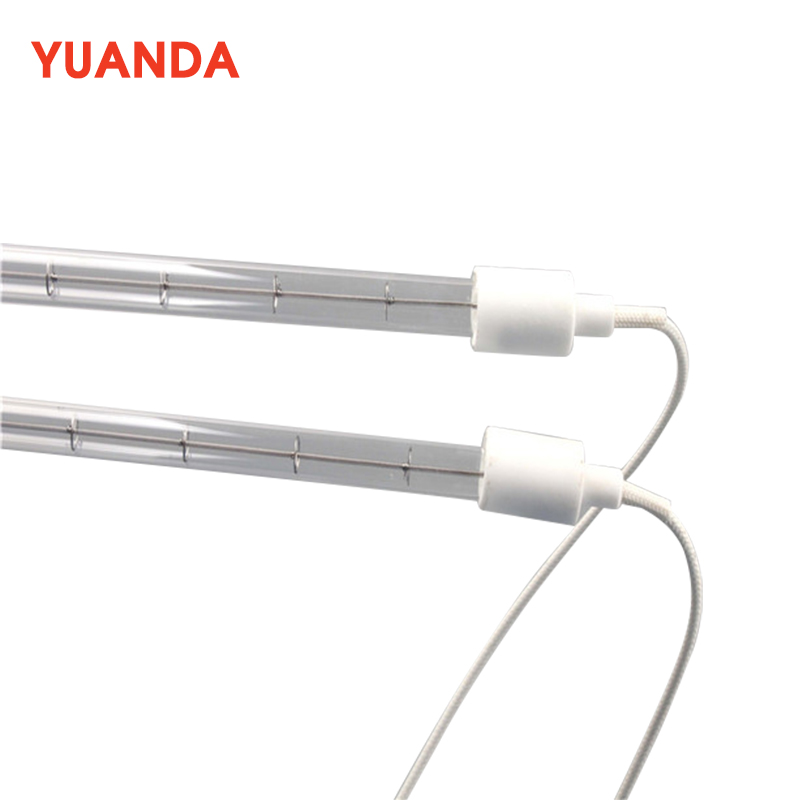
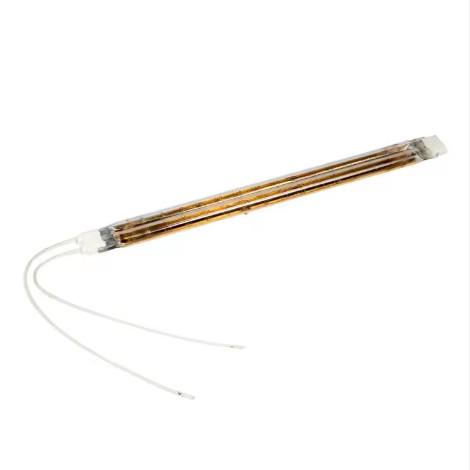
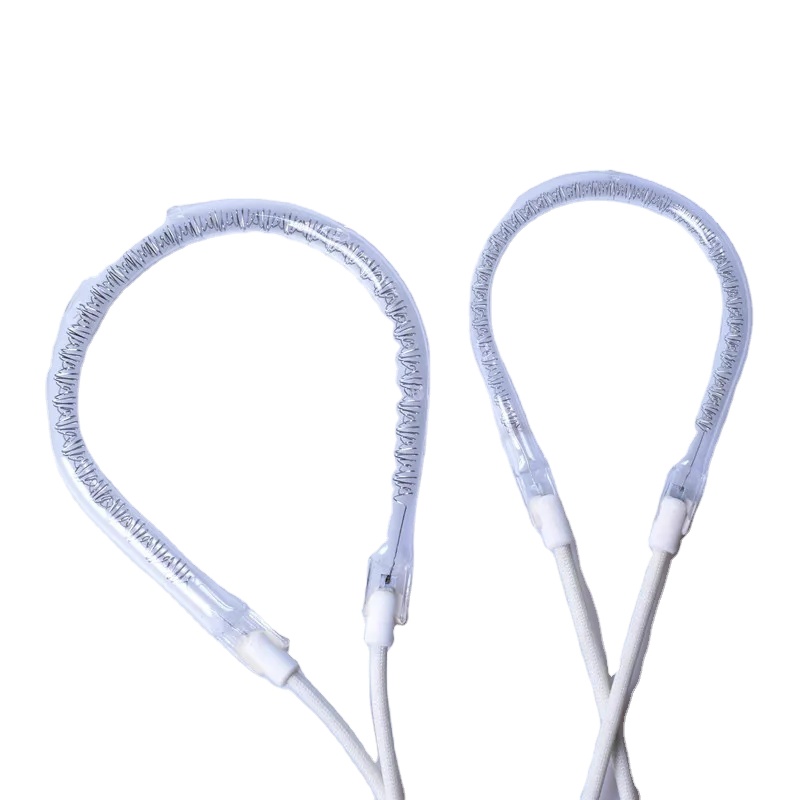
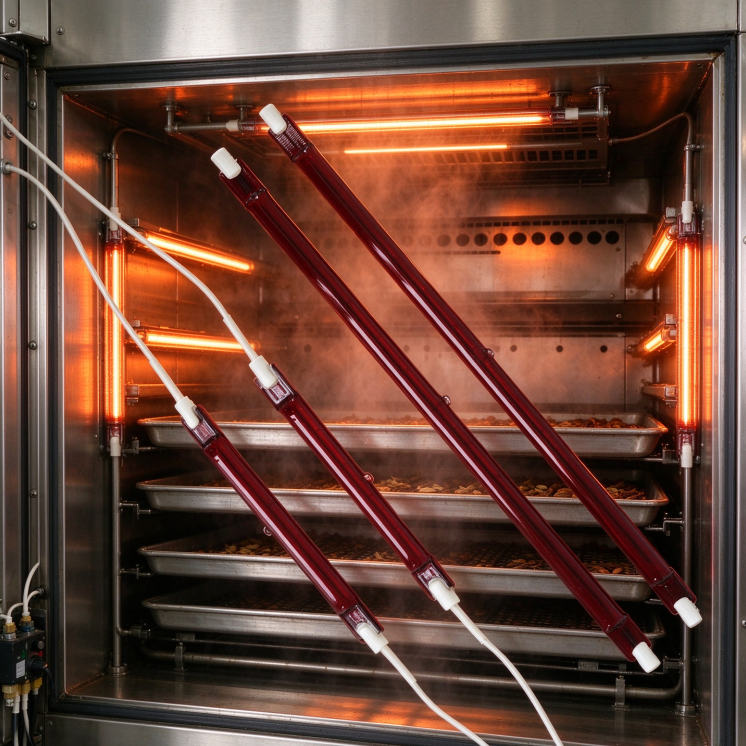
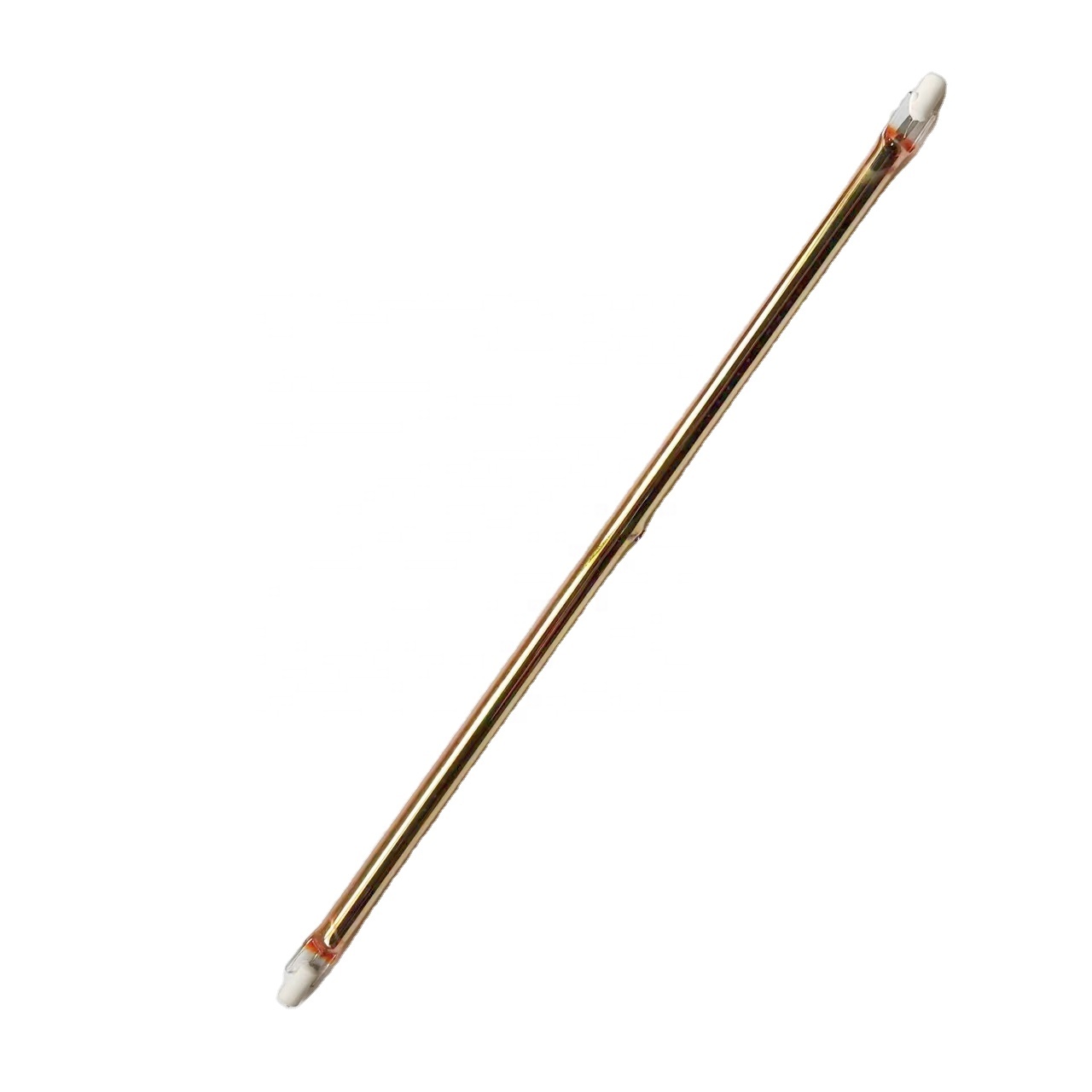
Thermodynamic Advantages of Annular Carbon Fiber Medium-Wave Infrared Emitters
In high-speed manufacturing environments, convective and conductive thermal transfer often fail to deliver precise temperature gradients across curvilinear, cylindrical, or rotating profiles. Circular carbon fiber heating lamps bridge this thermodynamic gap by providing concentrated radial irradiance tailored to the physical absorption bands of industrial polymers, water-based coatings, and composite matrices.
Molecular Resonance Matching
Unlike standard tungsten filaments operating at near-infrared wavelengths (0.8–1.4 μm), carbon fiber woven ribbons operate in the medium-wave band (peak 2.0–3.0 μm). This wavelength directly aligns with the fundamental vibrational resonance frequencies of C-H, O-H, and C-C molecular bonds.
- Accelerated surface crosslinking without blister formation
- Efficient absorption in semi-crystalline PET, ABS, and Polycarbonate
- Zero reliance on ambient air conductive transfer
360° Concentric Radial Heat Flux
Linear lamps configured in rectangular arrays inevitably generate cold spots and thermal shadowing when processing circular, cylindrical, or contoured parts. Circular (annular) carbon fiber lamps project an isotropic flux field inwards toward the focal centerline or outwards uniformly.
- Uniform cylindrical preheating for neck and bottle tooling
- Uniform circumferential cure for carbon aerospace composite struts
- Elimination of complex secondary mechanical rotation stages
Ultra-Fast Duty Cycle & Efficiency
Ceramic and cast-in metal heaters exhibit thermal lag ranging from 10 to 30 minutes, preventing nimble line changes and burning excess electricity during idle periods. Our carbon fiber quartz lamps achieve operational temperature in under 2 seconds.
- Instantaneous PID modulation via solid-state relays (SCRs)
- Zero standby electrical consumption during line halts
- Over 92% of electrical input converted into radiant energy
| Thermal Metric | Circular Carbon Fiber Quartz (Kavri) | Short-Wave Halogen (Tungsten) | Ceramic Hollow Radiator | Calrod Tubular Metal Element |
|---|---|---|---|---|
| Primary Emission Spectrum | Medium-Wave (2.0–3.0 μm) | Short-Wave (1.0–1.4 μm) | Long-Wave (3.0–10.0 μm) | Far-Infrared / Convective |
| Thermal Response Velocity | 1–2 Seconds | < 1 Second | 10–15 Minutes | 12–20 Minutes |
| Radiative Efficiency | > 92% Direc Flux | ~ 88% (High Glare) | ~ 65% (High Convective Loss) | ~ 50% (Predominantly Convection) |
| Color Sensitivity | Negligible (Heats transparent & colored) | High (Light colors reflect energy) | Low | Low |
| Filament Rigidity in Ring Config | Woven Carbon Ribbon (Zero Sag) | Tungsten Coil (Prone to creep) | Embedded Wire | Swaged Resistance Coil |
| Working Life Span | 8,000–10,000 Hours | 5,000 Hours | 10,000 Hours | 5,000 Hours |
Mission-Critical Applications Across San Antonio’s Manufacturing Hubs
From the high-volume Tier-1 automotive corridors along Southern Bexar County to aerospace composite skunkworks at Port San Antonio and rapid-cycle packaging plants across I-10 and I-35, precision annular infrared heating is an indispensable industrial enabler.
Automotive Tier-1 & Assembly (South Bexar / TMMTX Ecosystem)
San Antonio stands as an automotive powerhouse centered on Toyota Motor Manufacturing Texas (TMMTX) and its adjacent cluster of on-site parts suppliers. The manufacturing of fuel tank components, blow-molded HVAC ducting, instrument panel skins, and structural polymeric underbody covers requires exacting thermal uniformity.
Circular carbon fiber lamps provide concentric thermal fields that allow thermoforming operators to bring continuous polymer tubes and multi-layer parisons to their glass transition temperature (Tg) without overheating vulnerable perimeter edges. The rapid cycling ensures cycle times under 45 seconds while protecting structural resin properties.
Aerospace Structures & Defense Maintenance (Port San Antonio)
Port San Antonio (formerly Kelly Air Force Base) is globally recognized for defense maintenance, repair, and overhaul (MRO) and advanced aerospace manufacturing. Advanced turbine cowlings, structural composites, ductwork, and specialized carbon-epoxy repairs demand strict ramp-and-soak thermal profiles.
Ring-shaped carbon fiber quartz lamps allow composite technician teams to cure pre-preg sleeves, circumferential composite wraps, and resin infusion joints uniformly around cylindrical aviation structures. By emitting in the medium-wave band, the radiation permeates matrix plies evenly, preventing voids and resin washouts without the need to fit oversized parts into secondary autoclave runs.
Plastics, Blow Molding & Beverage Packaging (I-35 & I-10 Corridors)
The San Antonio-New Braunfels-Seguin industrial nexus hosts extensive bottling, rigid packaging, and consumer blow-molding operations. Precision heating of preform necks, base cups, and tamper-evident shrink bands demands spatial consistency.
Our circular carbon fiber emitters provide concentrated 360-degree heat directly onto shrink closures and bottle neck rings without transferring radiant energy into chilled neck threads. This precision avoids ovalization, thread distortion, and seal failures at line speeds exceeding 600 units per minute.
Biomedical Devices & Specialty Food Processing (Brooks City Base)
San Antonio’s biotechnology corridor and historic food processing plants rely on localized sanitation, seal drying, and sterile blister thermoforming. Moisture removal and organic adhesive curing require cleanroom-compatible heat sources.
Operating inside sealed ultra-pure fused quartz envelopes with zero particulate generation, Kavri carbon fiber lamps emit medium-wave energy that vaporizes water droplets and cures biological barrier coatings rapidly without blowing hot, turbulent air that can carry microbial contaminants.
San Antonio Industrial Trends: Decarbonization, CPS Rebates & Electrification
The industrial landscape in Central and South Texas is undergoing a fundamental structural transition driven by decarbonization benchmarks, grid resilience strategies, and aggressive machine automation.
Conversion from Gas Convection Ovens
Historically, San Antonio drying lines utilized open natural gas burners. With tightening municipal clean air standards and insurance liabilities in closed plant environments, plants are shifting to precision electric infrared. Converting to medium-wave quartz emitters eliminates nitrogen oxide (NOx) emissions and slashes floor footprint by up to 60%.
CPS Energy Incentive Optimization
CPS Energy (San Antonio’s municipal power utility) offers aggressive commercial efficiency rebate programs for manufacturers demonstrating reduced peak demand (kW) and overall consumption (kWh). Circular carbon fiber emitters deliver heat on-demand within 2 seconds, allowing continuous integration with automated shutoff sensors when conveyor lines stop.
Robotic Cell & Cobot Integration
Automated manufacturing facilities in Bexar County are adopting robotic manipulators that move hot components between presses. Circular carbon lamps mounted as localized ring preheaters allow robots to insert cylindrical workpieces directly into a 360-degree radiant bath, eliminating bulk oven dwell times and enabling streamlined single-piece continuous flow.
Kavri Quartz OEM/ODM Advantage: Direct Factory Engineering
Founded in 2014, Kavri Quartz Product Co., Ltd. is positioned directly in Lianyungang, Jiangsu — the world’s epicentral cluster for high-purity quartz refining and lamp component fabrication. We combine direct material sourcing with 10+ years of export engineering experience serving North American industrial partners.
Fused Silica Quality & Raw Material Cluster
Every envelope produced in our facility uses optical-grade fused silica with >99.99% SiO2 purity. Sourcing directly in the Donghai quartz corridor ensures pristine crystal matrices free from microscopic inclusions, bubbles, or trace contaminants. Our quartz offers an operating continuous temperature threshold of 1100°C (peak 1450°C) and near-zero coefficient of thermal expansion (5.5 × 10^-7 / K), rendering lamps completely immune to severe thermal shock.
Precision Custom Bending & Reflective Coatings
Producing reliable annular (circular) quartz lamps demands mastery over glass blowing and vacuum envelope stabilization. We manufacture continuous rings from 100 mm to over 800 mm outside diameter, configured with single-ended or dual-ended ceramic connections. Our specialized vacuum deposition systems apply genuine 24-karat gold reflectors or half-white ceramic layers directly onto the rear curve of the tube, redirecting up to 95% of rearward infrared emissions towards the work axis.
End-to-End Strict Quality Assurance Matrix
Each custom circular carbon fiber lamp destined for San Antonio facilities undergoes comprehensive multi-point validation to prevent line failures.
Frequently Asked Questions by San Antonio Engineering & Sourcing Teams
Clear, direct engineering answers addressing electrical matching, retrofit replacement, supply chain customs, and packaging durability for Texas manufacturing facilities.
Can you manufacture circular carbon fiber lamps matching standard US industrial line voltages (208V, 240V, 480V)?
Yes. While off-the-shelf catalog emitters are commonly wired for 220V or 230V, Kavri engineers custom weave the carbon fiber filament impedance to meet domestic US single-phase or three-phase supply lines, including 120V, 208V, 240V, 277V, and 480V. This ensures your heating system operates at its optimal design wattage without requiring downstream step-down transformers or auxiliary power gear.
How do we reverse engineer and cross-reference broken OEM lamps from European or Asian machinery?
We routinely replace legacy European and Asian lamps (including Heraeus, Ushio, TOSHIBA, and customized machinery brands) across San Antonio plants. You only need to share the key dimensions: outer ring diameter (OD), tube cross-section diameter (standard 10 mm, 12 mm, or 14 mm), rated voltage, total wattage, and termination style (ceramic end block, flying wire lead, or metal push connector). You can also ship a spent sample or photo of the nameplate for rapid cross-referencing within 4 hours.
What is the typical transit duration and Incoterm structure for shipments to Bexar County, TX?
We provide full flexibility: EXW, FOB, CIF, CFR, and turnkey DDP (Delivered Duty Paid) directly to your receiving dock in San Antonio, Schertz, Cibolo, or Seguin. Air express shipments (for urgent replacement spares or pilot line trials) reach San Antonio International Airport (SAT) or your facility in 5–7 business days via DHL/FedEx/UPS. Full pallet production runs travel via consolidated ocean freight to Houston (POH) and intermodal trucking to San Antonio within 22–28 days, with all customs documentation handled seamlessly.
How do you guarantee that fragile circular quartz envelopes survive transoceanic transit without breakage?
Fragile quartz logistics is our core competency. Over 85% of our annual production is exported across North America, Europe, and Asia. Circular lamps are packed in custom high-density molded EPE (expanded polyethylene) foam cradles that isolate each ring from multidirectional impact. These interiors are boxed in heavy-duty triple-wall corrugated sleeves and secured in reinforced wooden export crates with internal suspension buffers and tip-and-tell shock indicator labels.
What is the minimum order quantity (MOQ) for custom-dimension circular carbon lamps?
For standard circular ring configurations, our production run MOQ starts at just 8 to 10 units. For fully bespoke geometric bends, customized voltage/wattage combinations, or specialized ceramic end fittings, prototyping batches can be initiated at 2 to 5 units to allow mechanical and electrical validation on your line before ordering volume spare inventories.
Why is medium-wave carbon fiber superior to short-wave halogen for thermoforming and composite curing?
Short-wave halogen radiation passes straight through many clear or semi-translucent polymers, resulting in low heat capture at the sheet surface and overheating metal equipment behind the target. Furthermore, light pigments reflect short-wave energy. Carbon fiber medium-wave radiation matches the absorption bands of polymers, guaranteeing direct surface heating, uniform core penetration, reduced color sensitivity, and superior edge-to-edge thermal stability.
Upgrade Your Industrial Thermal Processing Infrastructure
Consult directly with Kavri Quartz OEM engineers. Provide your operating dimensions, voltage, target temperature profiles, or legacy lamp part numbers. We deliver technical proposals, thermal simulations, and quotation pricing within 4 hours.