Industrial Infrared & Quartz Components
Featured Quartzware & Precision Infrared Emitters
Factory-direct industrial quartz substrates and precision infrared emitter configurations manufactured under ISO-compliant process controls, available for consolidated freight into Baltimore's maritime and inland commercial corridors.
2014
Established Manufacturer
Verified by Bureau Veritas & Alibaba
Verified by Bureau Veritas & Alibaba
10+ Yrs
Direct OEM / ODM Engineering
Fused Silica Flat Glass Fabrication
Fused Silica Flat Glass Fabrication
≤ 4h
Prompt RFQ Turnaround
Engineering Drawing Review
Engineering Drawing Review
81-90%
Global Export Rate
US East Coast & Baltimore Deliveries
US East Coast & Baltimore Deliveries
Strategic Procurement of High-Purity Fused Silica Sheets for the Baltimore Industrial Corridor
As the greater Baltimore-Washington metropolitan industrial ecosystem accelerates its transition toward advanced manufacturing, photonics, and biopharmaceutical synthesis, engineering procurement teams face heightened requirements for optically pure, thermally resilient fused silica sheets (amorphous silicon dioxide, SiO₂). Sourcing fused silica flat stock directly from certified primary manufacturers in Lianyungang, China—the world’s leading hub for quartz processing—enables original equipment manufacturers (OEMs), diagnostic laboratory system fabricators, and maritime technology contractors across Maryland to overcome domestic supply bottlenecks while achieving significant cost efficiencies.
Fused silica sheets manufactured by Kavri Quartz are characterized by an exceptional purity level (typically ≥ 99.99% SiO₂ content), negligible bubble inclusions, virtually zero coefficient of thermal expansion (∼ 5.5 × 10⁻⁷ /K), and superior deep-ultraviolet (DUV) through mid-infrared optical transmission. Whether deployed as high-temperature inspection sight glasses in the heavy manufacturing nodes around Sparrows Point, vacuum viewports in University of Maryland cleanrooms, or spectroscopic sample slides in Johns Hopkins-affiliated clinical trials, our fused silica plates provide zero-distortion optical clarity under thermal stresses exceeding 1,100°C.
Comparative Material Physics: Fused Silica vs. Standard Borosilicate & Quartz Glass
A frequent point of friction in industrial purchasing specifications across the Mid-Atlantic market is the technical conflation between synthetic fused silica, natural fused quartz, and industrial borosilicate glass. While borosilicate offers adequate thermal resistance for basic domestic laboratory glassware, it softens around 820°C and undergoes structural failure under sudden thermal shocks. Conversely, Kavri fused silica sheets withstand operating temperatures up to 1,100°C continuously and short-term thermal excursions to 1,450°C, displaying near-complete immunity to thermal fracture when quenched from red heat into ice water.
1,100°C / 1,450°C
Continuous Working / Short-Term Strain Point
5.5 × 10⁻⁷ /K
Thermal Expansion (20°C – 320°C)
185 nm – 2,600 nm
High-Transmission Optical Spectrum (UV-Vis-NIR)
≥ 99.99% SiO₂
Ultra-Low Trace Metal & Hydroxyl (OH) Content
| Physical & Optical Metric | Optical Grade Fused Silica (JGS1) | UV-Vis Fused Quartz (JGS2) | Infrared Grade Silica (JGS3) | Commercial Borosilicate Float |
|---|---|---|---|---|
| Primary Spectral Transmission Range | 185 nm – 2,500 nm (Deep UV) | 220 nm – 2,500 nm (Standard Optical) | 260 nm – 3,500 nm (Low OH NIR) | 350 nm – 2,000 nm (Visible spectrum) |
| Continuous Maximum Working Temperature | 1,100°C (1,373 K) | 1,100°C (1,373 K) | 1,100°C (1,373 K) | ∼ 500°C (Softens at 820°C) |
| Coefficient of Thermal Expansion (CTE) | 5.5 × 10⁻⁷ /K | 5.5 × 10⁻⁷ /K | 5.5 × 10⁻⁷ /K | 32.5 × 10⁻⁷ /K (6× higher) |
| Surface Roughness (Polished Sheets) | Ra < 0.5 nm / Scratch-Dig 20/10 | Ra < 1.0 nm / Scratch-Dig 40/20 | Ra < 1.5 nm / Scratch-Dig 60/40 | Ra ∼ 5.0 nm commercial polish |
| Dielectric Strength (20°C, 1 MHz) | 25 – 40 kV/mm | 25 – 40 kV/mm | 25 – 40 kV/mm | ∼ 15 kV/mm |
| Chemical Resistance to Mineral Acids | Resistant to all except HF & Hot H₃PO₄ | Resistant to all except HF & Hot H₃PO₄ | Resistant to all except HF & Hot H₃PO₄ | Susceptible to alkaline attack & etching |
Localized Application Scenarios Across the Baltimore-Washington Industrial Corridor
The geographic position of Baltimore, Maryland—anchored by the Port of Baltimore, strategic railway access via CSX/Norfolk Southern, and proximity to the I-95 biotechnology and defense corridor—creates distinct engineering environments where high-performance fused silica sheet components are mission-critical. Our manufacturing facilities regularly fulfill OEM contracts tailored to the specific operating parameters of these regional industry segments.
Life Sciences & Diagnostic Flow Cells
Serving Maryland's thriving biopharmaceutical corridor along Route 270 and Baltimore's university medical laboratories. Fused silica sheets are CNC-milled and polished into microfluidic chips, UV absorbance windows, and custom flow cells for high-throughput automated DNA sequencing and blood biochemistry analyzers where optical fluorescence must be strictly zero-background.
Maritime Optics & Harbor Inspection
Deployed in naval sensor housings, harbor monitoring systems, and Chesapeake Bay maritime electronics. Fused silica viewing windows withstand high salinity corrosive exposure, sudden thermal gradients caused by freezing sea air and high-intensity internal arc-discharge illumination, without clouding or surface pitting.
Industrial Curing & Metallurgical Windows
Heavy fabrication clusters across Sparrows Point and Curtis Bay utilize our fused silica plates as thermal shields in vacuum induction furnaces, molten metal observation ports, and protective heat shields mounted ahead of high-intensity short-wave halogen infrared curing lamp arrays.
Mid-Atlantic Procurement Trends & Supply Chain Resilience for Fused Silica
Procurement directors and supply chain engineers across the Baltimore-Columbia-Towson metropolitan statistical area are navigating a rapidly shifting geopolitical and trade landscape. Securing an uncompromised supply of precision fused silica requires balancing competitive wholesale pricing with stringent dimensional tolerances and transparent logistics channels.
Three dominant procurement patterns are defining procurement strategies in Maryland today:
1. Direct Factory Sourcing to Counter Supply Chain Layering: Historically, smaller scientific fabrication machine shops in Baltimore purchased imported quartz plates via secondary domestic distributors in the Northeast. This tier-2 and tier-3 distribution model added 40% to 75% in price markups and introduced 12-to-16-week lead times. By partnering directly with Kavri Quartz Product Co., Ltd. in Lianyungang, local enterprises eliminate middlemen markup and obtain factory-certified mill test reports (MTRs) directly from the raw material origin.
2. Tightening of Cleanroom and Laser-Grade Surface Tolerances: With the expansion of semiconductor packaging, defense contracting around Aberdeen Proving Ground, and advanced photonics, buyers in the Baltimore region are shifting RFQ specifications from general commercial tolerance (±0.2 mm) to ultra-precision CNC tolerance (±0.02 mm) with flat surface lapping (λ/4 per inch) and bevel-finished chip-free edges. Achieving this level of mechanical repeatability requires automated five-axis diamond CNC grinding and laser-interferometric surface inspection prior to packing.
3. Resilience via Port of Baltimore Maritime Clearing: With the modernization of the Seagirt Marine Terminal at the Port of Baltimore, maritime container shipments and LCL (Less-than-Container Load) consignments routed directly into Baltimore avoid the congestion typically experienced at the Port of New York and New Jersey. Kavri Quartz offers standard export handling under FOB Qingdao/Shanghai, CIF Baltimore, or DDP (Delivered Duty Paid) terms to the client's manufacturing floor, complete with shock-absorbent multi-layer crating designed for fragile quartz freight.
Source Manufacturer Advantage
Direct Manufacturing Origin: Lianyungang, Donghai Quartz Cluster
Kavri Quartz Product Co., Ltd. operates out of Lianyungang, Jiangsu Province—home to China's famed Donghai mineral cluster. This location gives us immediate, high-volume access to ultra-high purity natural crystal silica sand and synthetic precursor materials, insulating our manufacturing pipeline from raw feedstock shortages.
Founded in 2014, our facility integrates 3 specialized production lines covering precision thermal tubing drawing, quartz flat sheet CNC laser cutting/lapping, and specialized infrared heat lamp assembly. Onsite verified by Alibaba.com and international auditing bodies, we engineer solutions directly to customer CAD files, technical drawings, or physical reference samples.
Kavri Quartz Product Co., Ltd.
No. 868 Jingdu Ave, Lianyungang
US$1.0M – US$2.5M
4.7 / 5.0 Verified Score
≤ 4 Hours Guaranteed
USA, Germany, Netherlands, Korea
Fabrication Excellence: Precision Cutting, Polishing, and Metallization
Transforming fused silica ingots into precision flat sheets for scientific and industrial instrumentation involves strict adherence to mechanical and thermodynamic protocols. At Kavri Quartz, each production sequence is subjected to in-line metrology to guarantee that components delivered to Baltimore meet or exceed ASTM C158 (flexural testing of glass) and MIL-PRF-13830B optical specifications.
1. Diamond Slicing and Waterjet Profiling: Raw fused silica blocks are sliced using high-precision multi-wire diamond saws with continuous deionized water coolant to prevent micro-fracturing along the grain boundary. For irregular geometries, custom hole cutouts, and viewport steps, we utilize multi-axis abrasive cold-waterjet cutting followed by thermal edge healing to eliminate micro-crack propagation under thermal cycling.
2. Optical Double-Sided Lapping and Chemical Mechanical Polishing (CMP): To achieve transmissive clarity in UV and laser optical paths, sheets undergo multi-stage planetary lapping using progressively finer cerium oxide and diamond slurries. We routinely provide optical finishes featuring scratch-dig parameters of 60/40 for industrial sight glasses, down to 20/10 laser-grade specifications with a surface roughness (Ra) under 0.5 nm.
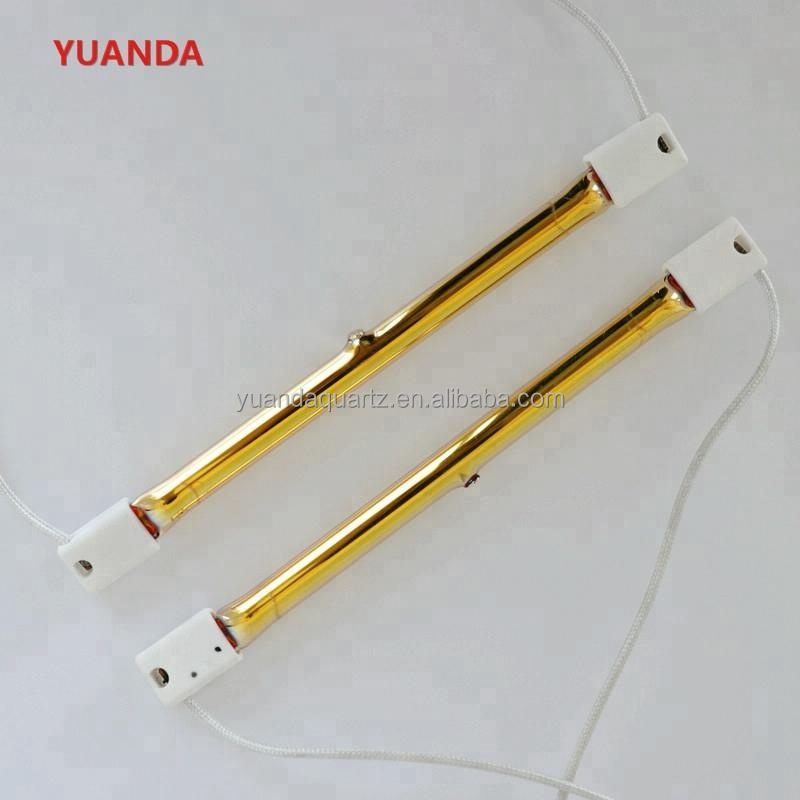
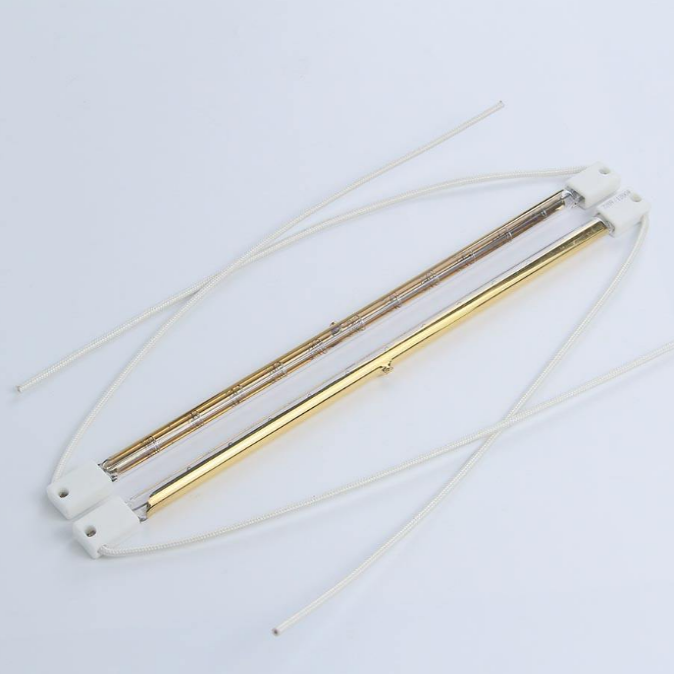
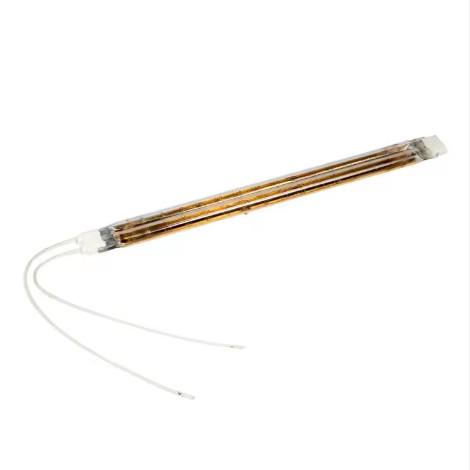
3. Reflector Metallization & Coatings: In addition to bare silica sheets, our thin-film coating department applies high-adhesion gold coatings, aluminum mirrors, and anti-reflective (AR) multilayer dielectric coatings. Our half-gold coated and ceramic white reflector lamps—frequently ordered in tandem with silica thermal plates—reflect >95% of infrared energy forward, drastically cutting thermal load on surrounding machinery housings.
Engineering & Logistics Resolution
Baltimore Buyer FAQ: Fused Silica Sourcing & Compliance
Clear technical answers addressing import clearance, dimensional tolerances, break-free packaging protocols, and custom OEM manufacturing.
What is the difference between JGS1, JGS2, and JGS3 fused silica sheets for optical systems?
JGS1 is synthetic fused silica synthesized from silicon tetrachloride (SiCl₄). It contains virtually no metallic impurities, offers zero bubble inclusions, and provides exceptional optical transmission in the deep-ultraviolet (DUV) band starting from 185 nm, making it the industry standard for excimer lasers, UV lithography, and medical fluorescence analysis. JGS2 is optical-grade fused quartz melted from high-purity natural quartz crystal sand; it transmits exceptionally well from 220 nm to 2,500 nm and is optimal for standard laboratory viewports, high-temperature windows, and spectroscopy. JGS3 is infrared-grade fused silica processed to eliminate hydroxyl (OH⁻) absorption bands, guaranteeing maximum transmission in the near-to-mid infrared band up to 3,500 nm, making it the premier choice for infrared heaters, IR sensing windows, and thermal pyrometry.
What mechanical dimensional tolerances and surface finishes can Kavri Quartz guarantee on custom sheets?
On CNC-machined fused silica sheets, plates, and discs, our standard linear tolerance is ±0.1 mm, with precision machining down to ±0.02 mm achievable upon request. Thickness tolerances are controlled to ±0.05 mm. Edge finishing options include ground edges, 45-degree protective chamfers, CNC polished C-edges, and pencil-polished profiles. Surface polish can be configured from standard mechanical fine-ground (translucent) to commercial fire-polished, up to optical dual-side pitch polished with scratch-dig ratings of 40/20 or 20/10 and parallelism < 30 arcseconds.
How does Kavri Quartz eliminate in-transit transit breakage on glass shipments to Baltimore?
Exporting fragile fused quartz and infrared glass emitters requires engineered cushioning. Each sheet is individually interleaved with lint-free acid-neutral protective paper or anti-static poly film to prevent surface scuffing. Parts are hermetically vacuum-sealed inside high-density polyethylene moisture barriers and nested in custom die-cut closed-cell polyethylene (EPE) shock foam. This primary assembly is packaged inside rigid corrugated cartons and secured within ISPM-15 compliant fumigated plywood export crates with external impact-indicator tilt sensors. Over the last decade of shipping to North America, our transit breakage rate has remained strictly below 0.1%.
What are the lead times and shipping logistics into the Baltimore / Mid-Atlantic region?
Standard prototype and custom sample production typically takes 7 to 10 working days following engineering drawing approval. Mass production batches ranging from 50 to 2,000 pieces are completed within 18 to 25 calendar days. For freight, express air delivery (DHL, FedEx, UPS) directly to facilities in Baltimore, Annapolis, or Rockville arrives within 4 to 6 business days. Ocean container loads entering through the Port of Baltimore (Seagirt Marine Terminal) typically have an ocean transit time of 28 to 35 days from Shanghai or Qingdao ports. We accommodate FOB, CIF, EXW, and comprehensive DDP (Delivered Duty Paid) commercial terms.
What is the Minimum Order Quantity (MOQ) for custom-cut fused silica plates or OEM infrared lamps?
To facilitate R&D development, initial trial fitments, and machine maintenance replacement runs, our standard minimum order quantity is just 8 to 10 pieces for infrared heating lamps and 2 to 5 pieces for customized fused silica sheets or plates depending on overall dimensional volume. Volume-tiered wholesale pricing automatically scales at order quantities of 50, 200, 500, and 1,000+ units.
Can Kavri Quartz reverse-engineer legacy quartz sheets or IR lamps from existing machine samples?
Yes. Many manufacturing plants in Maryland operate European, American, or Japanese machinery where original replacement quartz plates or IR emitters are obsolete or excessively expensive. You can provide an engineering blueprint, a high-resolution photograph of the equipment nameplate with technical ratings, or physically mail a worn sample to our engineering office. Our metrology team will identify the base material purity, measure optical transmission, map electrical characteristics (wattage, filament geometry, operating voltage), and deliver an exact OEM/ODM replacement guaranteed to fit your existing mounting brackets and electrical terminals.
Ready to Streamline Your Fused Silica Supply Chain in Baltimore?
Submit your CAD blueprints, dimensional specifications, or infrared emitter requirements directly to our factory engineering team. We guarantee comprehensive technical reviews and competitive wholesale quotations within 4 hours.