Automotive / Paint
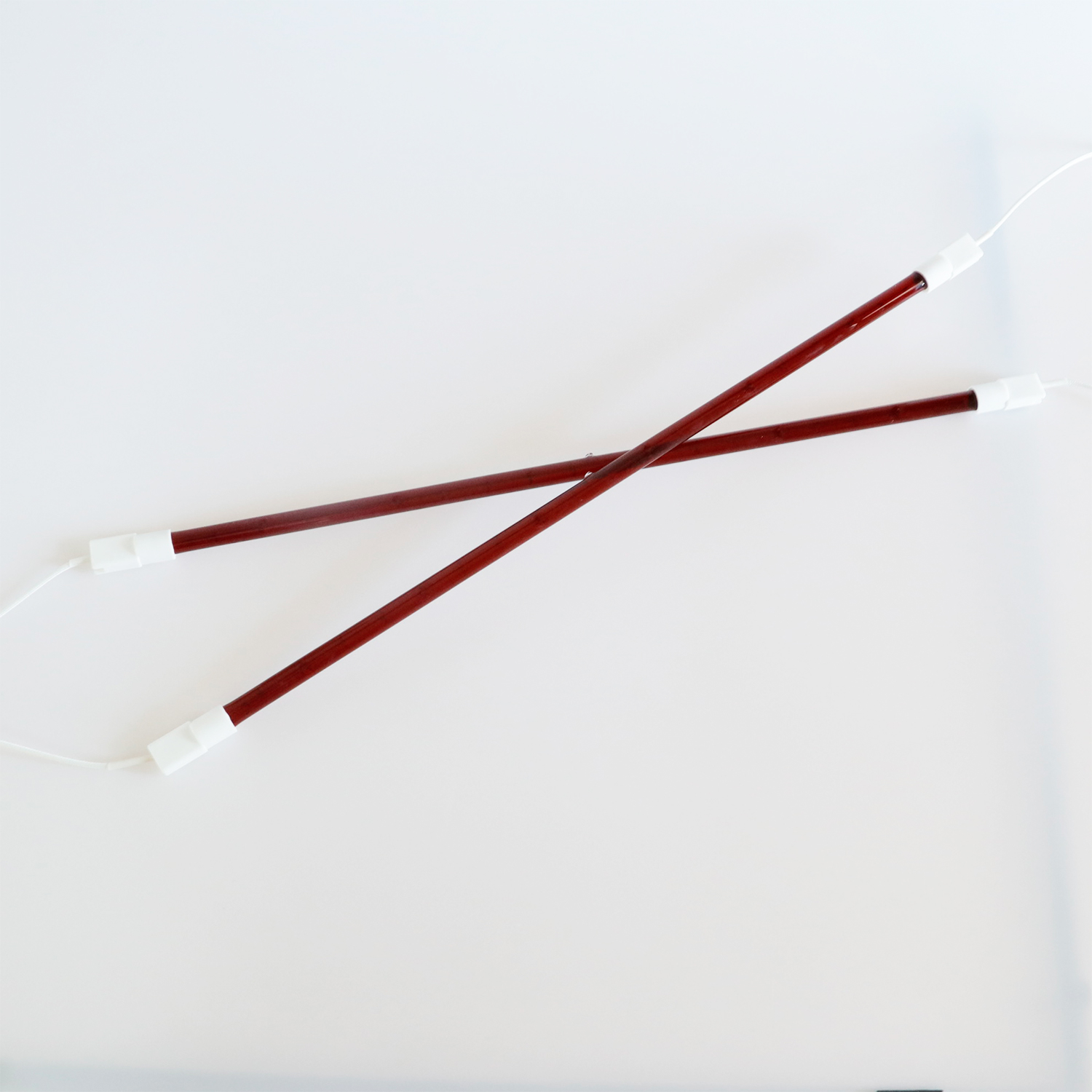
Factory Directly Ruby Short Wave Quartz Tube 1000W Halogen Infrared Heating Lamp for Auto Car Paint Drying
- 1000W Output
- Ruby Doped Quartz
- Glare Reduction
Engineered to exact geometric tolerances with vacuum-sealed filament cores and specialized optical reflective coatings for maximum spectral efficiency in industrial automation lines.
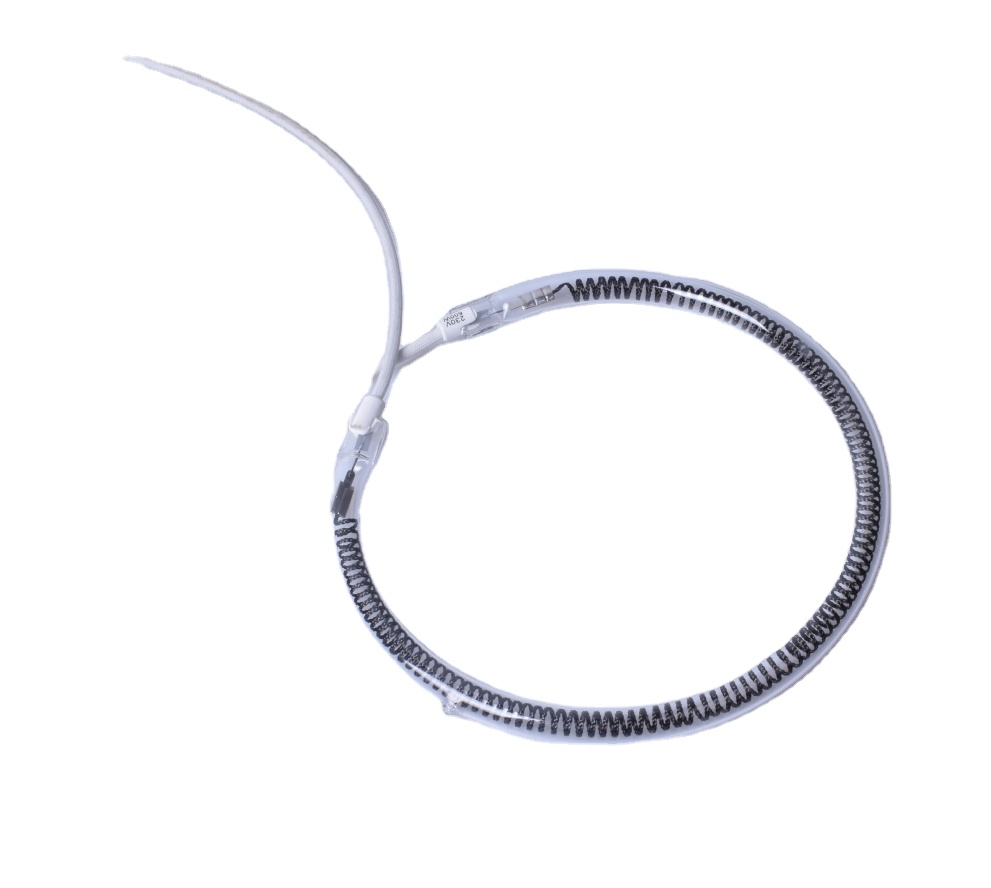
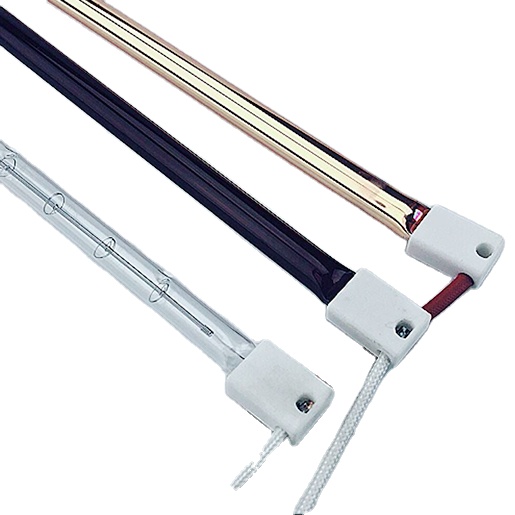
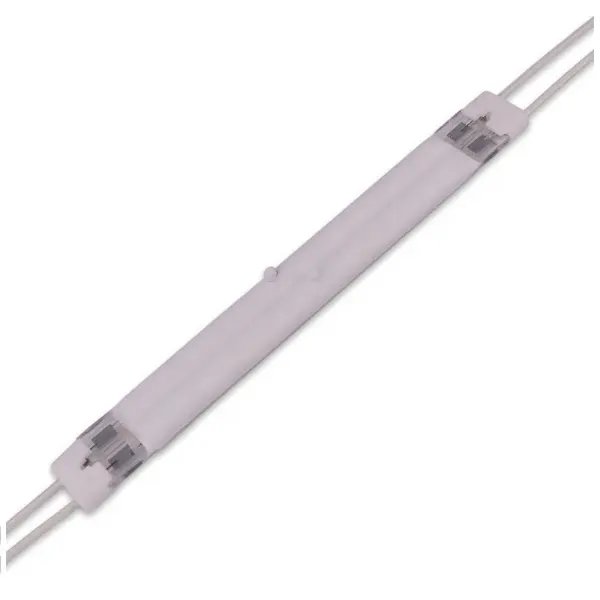
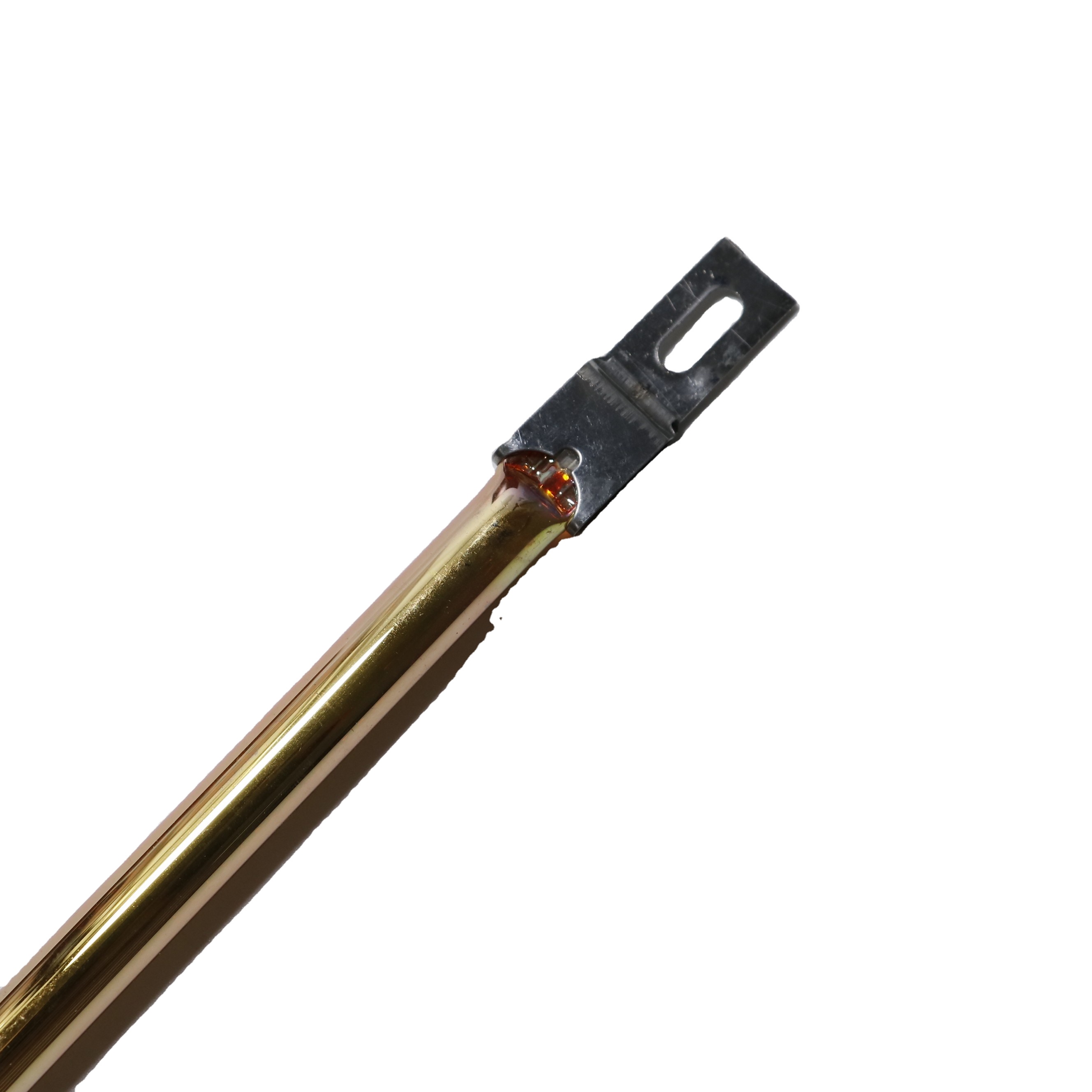
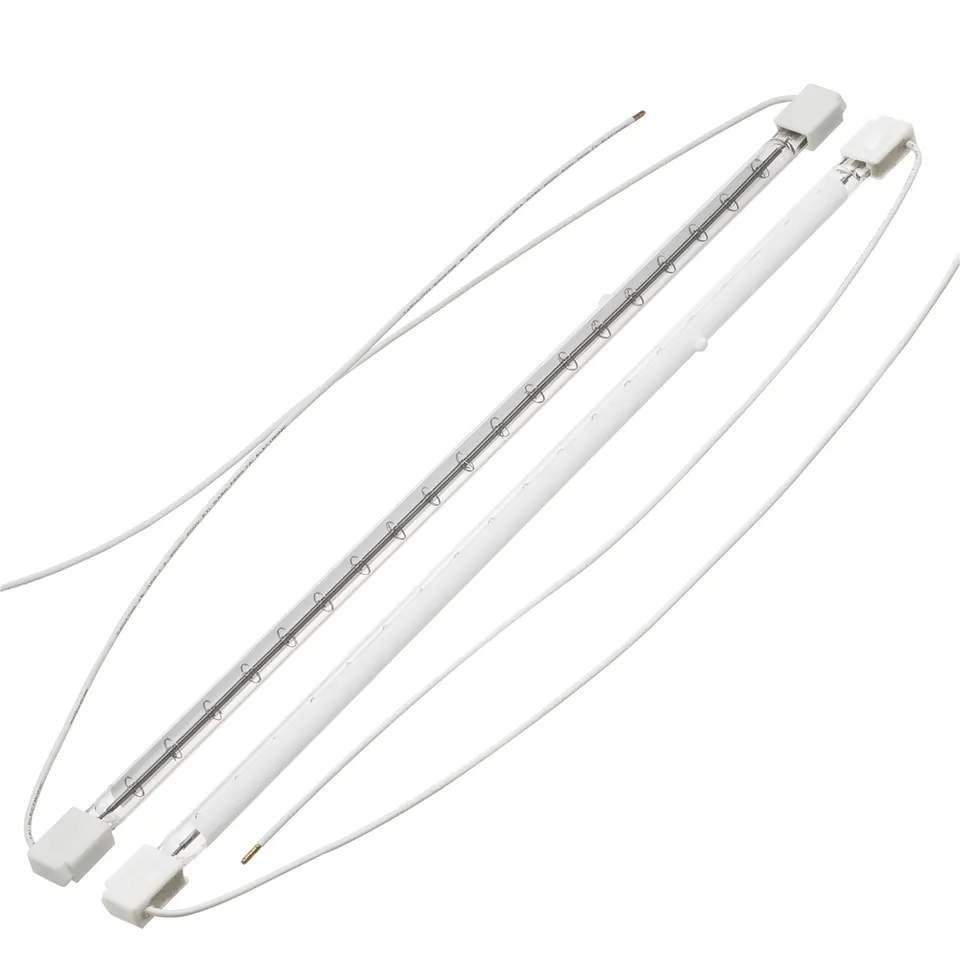
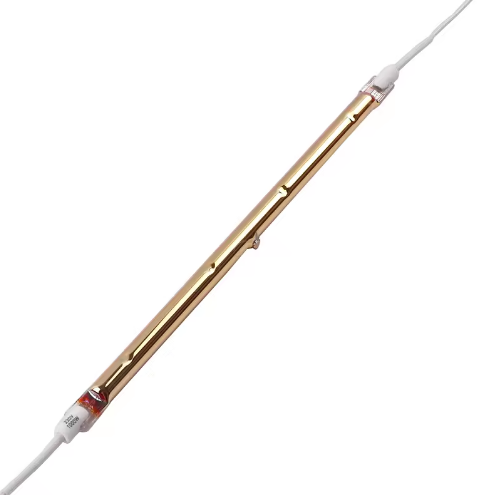
Clear quartz glass tubes (fused silica, amorphous silicon dioxide, SiO₂ ≥ 99.99%) serve as an irreplaceable material backbone across state-of-the-art European automation lines, chemical photolysis arrays, and precision infrared processing. Engineered through either continuous electric resistance fusion or high-temperature oxy-hydrogen gas flame fusion from natural high-grade crystal sand, clear quartz tubes exhibit an extraordinary synthesis of thermal stability, mechanical rigidity, and broad-spectrum electromagnetic transmittance extending from the vacuum ultraviolet (VUV ~190 nm) through visible wavelengths and out past deep infrared (~3.5 µm).
Unlike standard soda-lime or borosilicate glasses, clear quartz contains virtually zero fluxing agents (such as Na₂O, K₂O, CaO, or B₂O₃). The absence of network-disrupting alkali ions translates into an ultra-low linear thermal expansion coefficient ($\alpha \approx 5.5 \times 10^{-7}\ \text{K}^{-1}$ between 20°C and 320°C). This gives the material its legendary immunity to thermal shock—allowing an operator to heat a 10 mm wall quartz tube to red heat ($1100^\circ\text{C}$) and immediately immerse it into ice water ($0^\circ\text{C}$) without catastrophic mechanical fracture or micro-fracture propagation. For process engineers in Faro and the Southern Iberian corridor, choosing the right tube envelope profile, OH content, and thermal processing methodology directly dictates line continuity, batch yields, and energy consumption.
| Physical / Thermal Parameter | Kavri Clear Quartz (Fused Silica) | Borosilicate Glass 3.3 (DIN ISO 3585) | Aluminosilicate Glass |
|---|---|---|---|
| Chemical Composition | SiO₂ > 99.99% (Low Alkali < 20 ppm) | SiO₂ ~81%, B₂O₃ ~13%, Na₂O+K₂O ~4% | SiO₂ ~60%, Al₂O₃ ~17%, RO/R₂O fluxes |
| Max Continuous Operating Temp | 1100°C (1200°C inert / vacuum) | 450°C (Stress limit) | 650°C |
| Peak Short-Term Excursion Limit | 1450°C (Softening point 1683°C) | 500°C (Softening point 820°C) | 800°C (Softening point 910°C) |
| Thermal Expansion Coeff. (20–300°C) | 5.5 × 10⁻⁷ / K (Near zero expansion) | 3.3 × 10⁻⁶ / K | 4.5 × 10⁻⁶ / K |
| Thermal Shock Resistance ($\Delta T$) | > 1000°C sudden drop to ice water | Approx. 150°C sudden drop | Approx. 220°C sudden drop |
| UV-Vis-IR Optical Window | 190 nm – 3500 nm (JGS1 / JGS2 grades) | Cutoff at ~310 nm (Blocks UV-C/B) | Cutoff at ~330 nm |
| Dielectric Breakdown Voltage (20°C) | 25–40 kV/mm (Exceptional insulator) | 15–20 kV/mm | 18–25 kV/mm |
Hydroxyl ($\text{OH}^-$) radical concentrations within the silicon-oxygen tetrahedra are precisely modulated during production at our Lianyungang facility. For specialized infrared heating elements, low-OH quartz (< 5 ppm) is synthesized via electric vacuum melting to completely eliminate the deep optical absorption dip around $2.73\ \mu\text{m}$. This guarantees uninterrupted transmission of radiant heat from tungsten or carbon filaments directly to downstream substrate surfaces without heating the quartz sleeve itself. Conversely, for UV disinfection sleeves operating at 253.7 nm or 185 nm ozone generation lines, high-purity synthetic quartz is used to achieve > 90% internal transmittance without solarization or darkening over thousands of hours in harsh saline or chlorinated ambient atmospheres.
While world-renowned for tourism, Faro and the surrounding Algarve region form a specialized innovation hub in marine biotechnology, advanced solar research, agricultural drying, and coastal desalination where precision clear quartz glass plays a mission-critical role.
Marine biotechnology laboratories and microalgae farming facilities along the Ria Formosa barrier lagoon require large-diameter, highly transparent quartz glass reaction tubes. Fused quartz permits unhindered transmission of photosynthetically active radiation (PAR) and specific UV wavelengths without bio-fouling leaching, resisting constant hyper-saline Atlantic sea breezes and intense ambient sunlight without clouding or surface pitting.
With Faro boasting over 3,100 hours of direct sunlight annually, solar research institutes affiliated with the University of Algarve (UAlg) utilize high-transmission quartz vacuum tubes as protective receiver sleeves in parabolic trough concentrators and thermal storage heat exchangers. The near-zero thermal expansion ensures vacuum-tight sealing across wide daily temperature swings ($15^\circ\text{C}$ dawn to $650^\circ\text{C}$ focal zone).
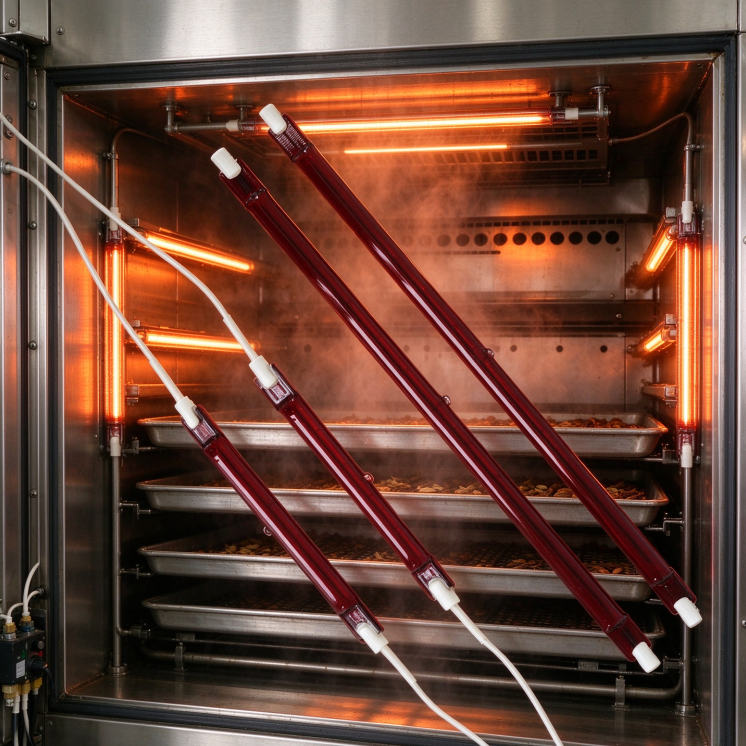
Algarve’s regional agricultural exporters rely on automated continuous tunnel dryers for dehydrated fruit products, citrus peel extracts, and specialized cork stoppers. Custom short-wave and carbon fiber infrared quartz heaters provide direct, non-contact thermal transfer. Because quartz tubes emit medium-to-short wavelengths that penetrate water molecules efficiently, energy use drops by over 38% compared to traditional hot-air convection.
Desalination plants and marina greywater treatment facilities across the Port of Faro and Portimão implement Advanced Oxidation Processes (AOP). Pure fused quartz sleeves envelope high-output amalgam UV lamps, isolating the electrical discharge from high-salinity water while transferring 254 nm germicidal rays with minimal attenuation (< 0.05% absorption loss per mm thickness).
Faro’s leisure boat shipyards and dry-dock repair centers utilize portable and rail-mounted short-wave ruby quartz halogen heaters for localized epoxy curing, fiberglass laminate post-curing, and automotive-grade marine gel-coat baking. The low-glare ruby quartz prevents surface boiling, driving solvent evaporation outward from the substrate to ensure bubble-free structural bonding.
Regional clinical testing and analytical chemical laboratories in the Algarve Biomedical Center (ABC) rely on precision quartz test tubes, flow-through cuvettes, and micro-reaction tubes for spectrophotometry and chromatography. Fused quartz provides non-reactive surface inertness against corrosive reagents, volatile acids, and prolonged autoclave sterilization cycles at elevated steam temperatures.
Industrial procurement paradigms across Portugal and the broader Iberian peninsula are experiencing structural transformations catalyzed by European Union climate mandates, supply chain resilience initiatives, and technical standardization. In Faro, three prominent macro trends govern how plant engineers source and deploy clear quartz glass products:
Under Portugal’s National Energy and Climate Plan (PNEC 2030), manufacturing facilities are actively decommissioning diesel-fired and bottled LPG drying tunnels in favor of 100% electrified, sensor-driven infrared quartz arrays. Fused quartz halogen and carbon emitters reach operating temperatures within 1 to 2 seconds, eliminating the 45-minute pre-heat cycles typical of convection ovens. When integrated with solid-state relays (SSRs) and optical pyrometers, heating zones dynamically throttle based on real-time line speed, reducing line-idle electrical loads by up to 60%.
Portuguese industrial buyers can no longer risk importing generic, uncertified quartz tubing containing hazardous heavy metal contaminants or poorly bonded ceramic reflectors. Clear quartz heating elements must strictly comply with the EU Low Voltage Directive (LVD 2014/35/EU), demonstrating dielectric breakdown isolation exceeding 2,500V test thresholds. Furthermore, compliance with RoHS 2011/65/EU and REACH (EC 1907/2006) guarantees that gold-reflector thin films, ceramic bases, terminal pins, and silicone lead insulations are completely free of lead, cadmium, mercury, and polybrominated diphenyl ethers.
Procurement teams at major packaging and beverage bottling plants near Faro prioritize Mean Time Between Failures (MTBF) and geometric tolerance fidelity over bottom-dollar per-unit prices. A sub-standard quartz tube exhibiting dimensional eccentricity or wall thickness variation (> ±0.5 mm) causes uneven heat dissipation, early molybdenum foil seal oxidation, and costly unscheduled downtime on PET stretch blow molding machines. Verified tier-1 manufacturers guaranteeing > 5,000 hours of continuous emitter filament life at strict dimensional tolerances are increasingly capturing exclusive long-term supply agreements.
Upload your technical CAD drawings (.DWG, .DXF, .STP) or old lamp nameplate specifications. Our thermal and optical engineers deliver validated proposals within 4 hours.
Combining natural high-grade silica reserves in Lianyungang with 10+ years of rigorous export-driven OEM/ODM production standards.
Located in Niushan Street, Donghai, Lianyungang—the global capital of raw crystal quartz processing. Direct raw material access enables strict purity control from silica sand batching to final flame polishing.
Operating 3 precision hot-draw and continuous vacuum furnace lines capable of custom round, twin-tube, capillary, and heavy-wall tubes spanning OD 1.5 mm to 300 mm with lengths up to 3,000 mm.
Every production batch undergoes spectrophotometric transmission verification, polariscopic internal stress testing, helium leak detection on sealed pins, and dimensional laser micrometer inspection.
81%–90% global export footprint across Germany, Netherlands, USA, and Portugal. Shock-resistant foam suspension and plywood crate packaging ensure zero breakage delivery right to your facility door.
In-depth technical and commercial answers addressing shipping, customs clearance, CE compliance, and installation criteria for plant engineers in Southern Portugal.
Upgrade your process efficiency, stabilize your supply chain with certified direct-factory manufacturing, and lower downtime costs across Portugal and Europe. Connect directly with our engineering team today.
Inquire Now