Featured Infrared Heating Lamps & Optical Quartz Components
Factory-direct halogen, carbon filament, and precision fused silica emitters calibrated for thermal stability, high spectral precision, and heavy industrial duty cycles in Nordic environments.
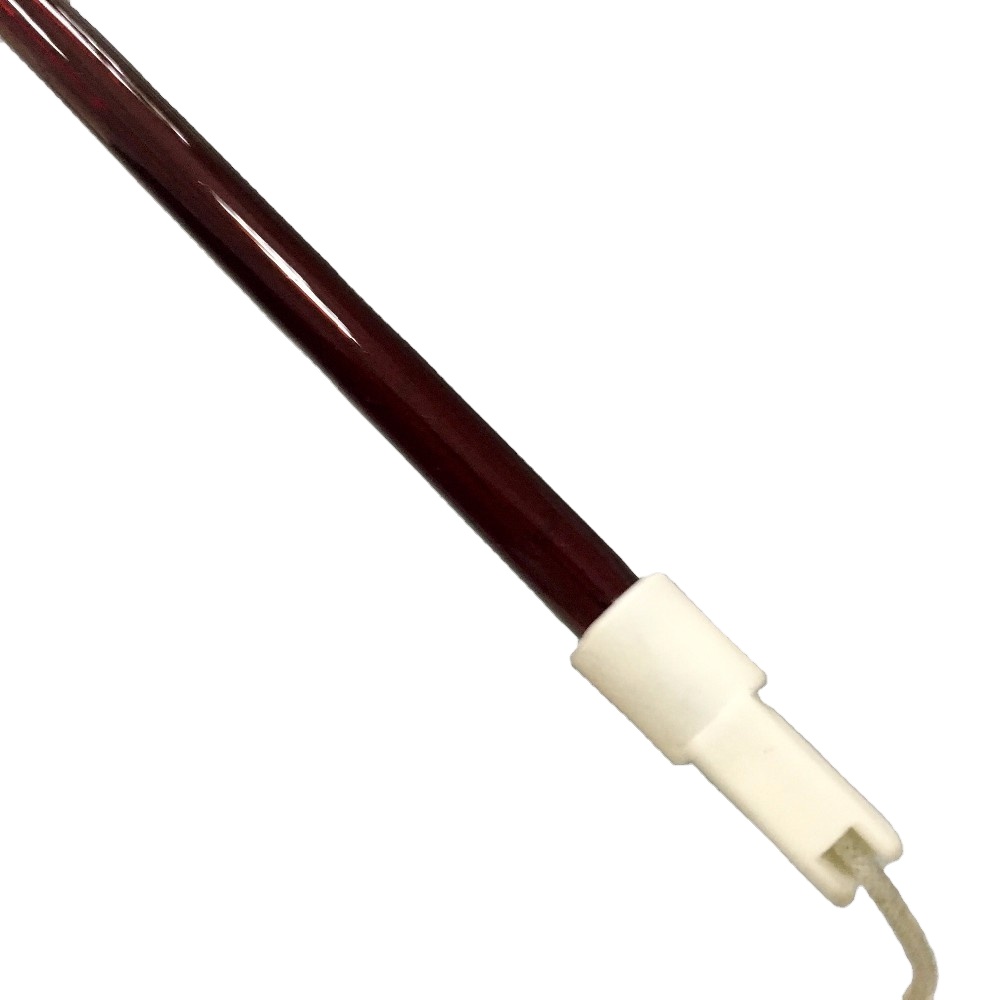
High Quality Ruby Infrared Heating Lamp for Poultry Chicken and Duck Farm Heating
Low-glare quartz ruby sleeve filtering visible illumination while channeling penetrative short-wave radiation for livestock brooding and sub-zero agricultural shelters.
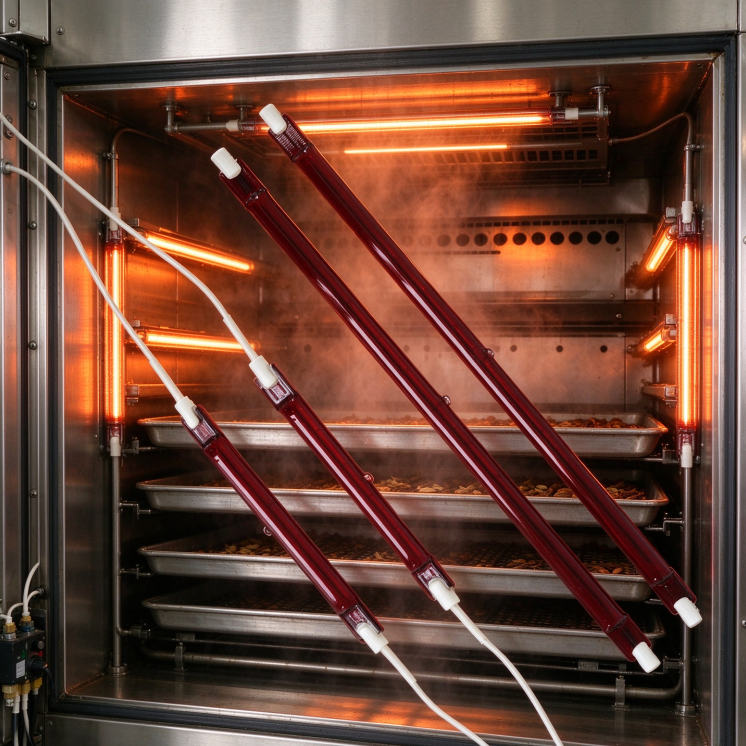
Wholesale Infra Red IR Quartz Glass Infrared Heater Lamp for Infrared Drying Oven
Fused silica clear envelope engineered for convective-drying bypass, delivering rapid surface evaporation in multi-deck industrial curing tunnels.
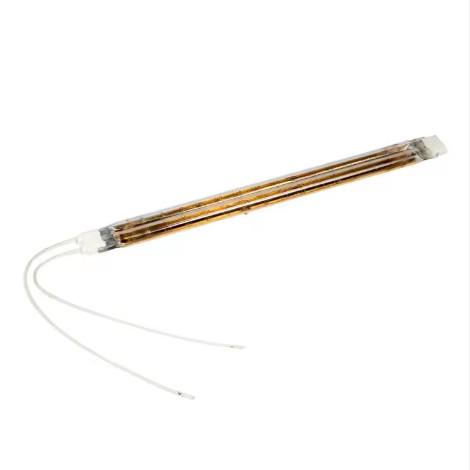
Halogen Double Tube Half Gold Infrared Heating Lamp for Blowing Machine
Twin-tube 23x11mm cross-section with a 24K gold mirror reflector that focuses more than 90% of short-wave IR output directly into PET polymer preforms.
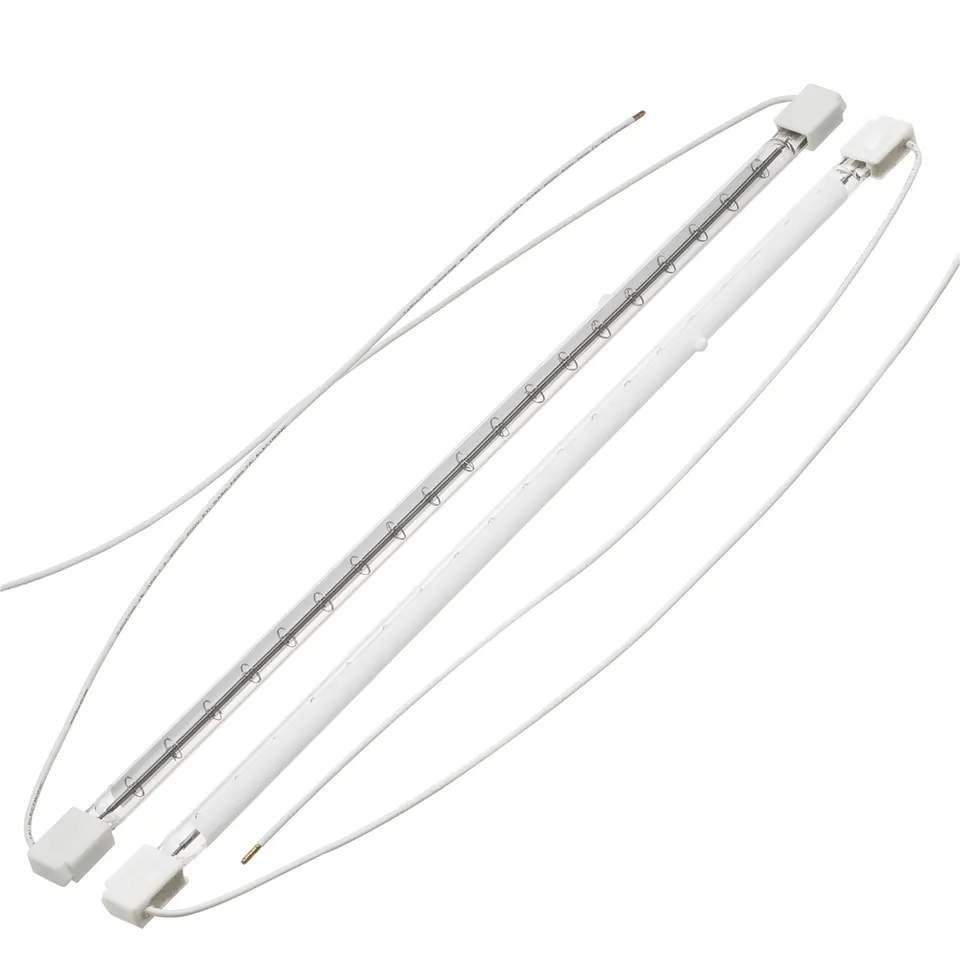
High Quality Shortwave Half White Infrared Heating Radiant Emitter for Outdoor Sport
Ceramic diffuse reflector back-layer resistant to oxidative degradation in humid conditions; immediate thermal response for outdoor athletic spectator enclosures.
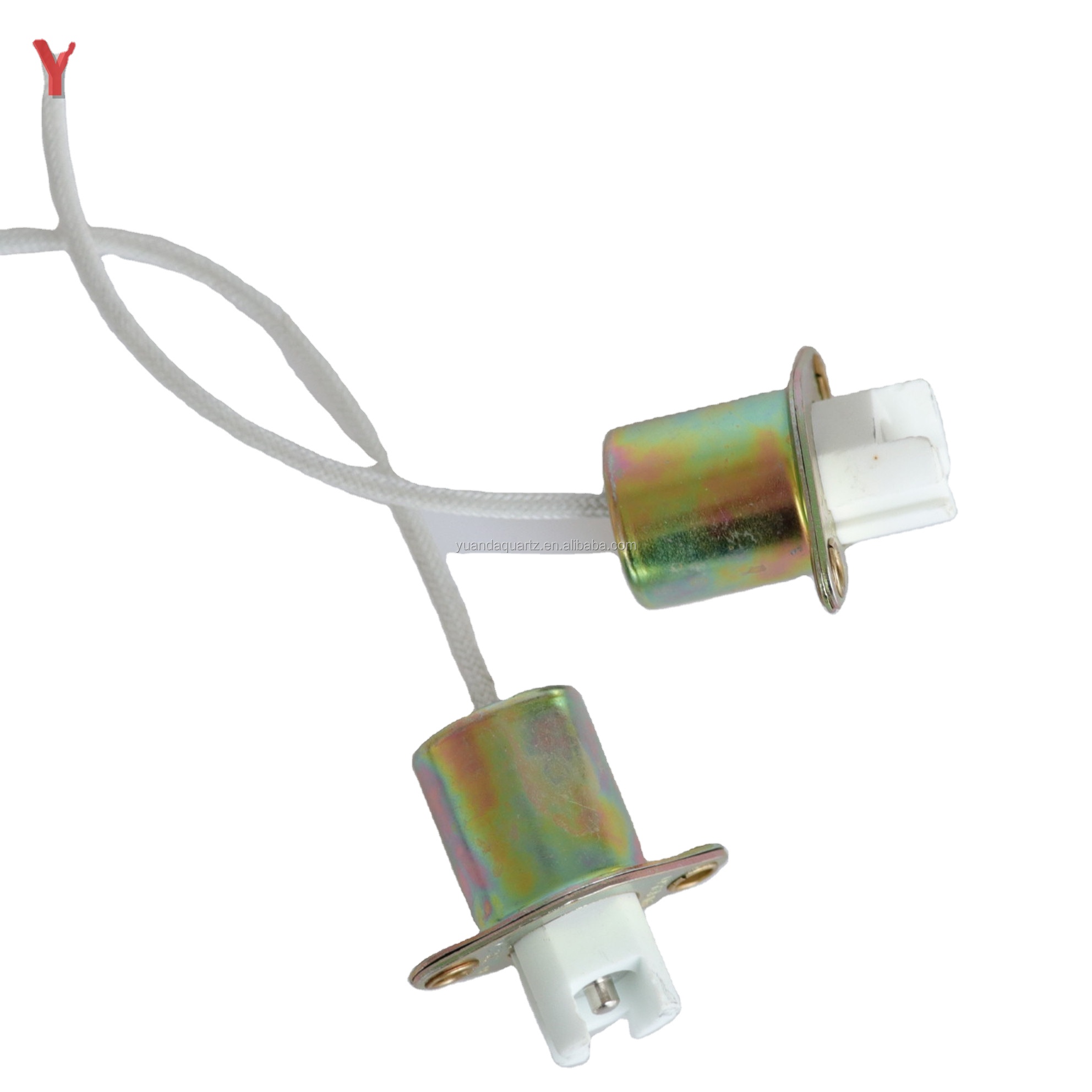
R7S Halogen Infrared Lamp Ceramic Lamp Holder
High-dielectric steatite ceramic contact block matched to standard R7s and push-in emitter terminals, tested to resist continual thermal cycling up to 450°C.
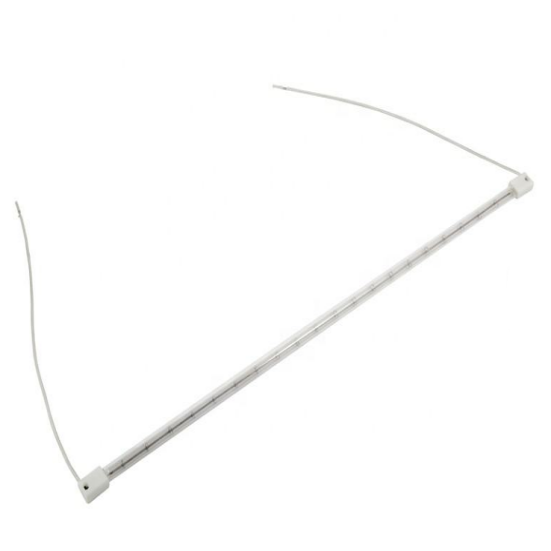
Low Price Infrared Heater Halogen Lamp Supports Customization for Textile Industry
Uniform cross-web thermal emission tailored for non-woven drying, screen printing fixation, and technical polymer coating without localized hot spots.
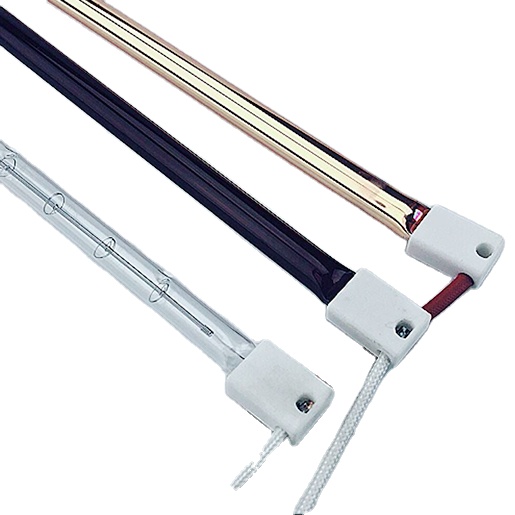
Wholesale Ceramic Linear Quartz Infrared Heating Lamp for Flash Dryers
Fast-acting linear quartz emitter capable of pulse control, designed for automated flash-curing carousels and selective heat exposure zones.
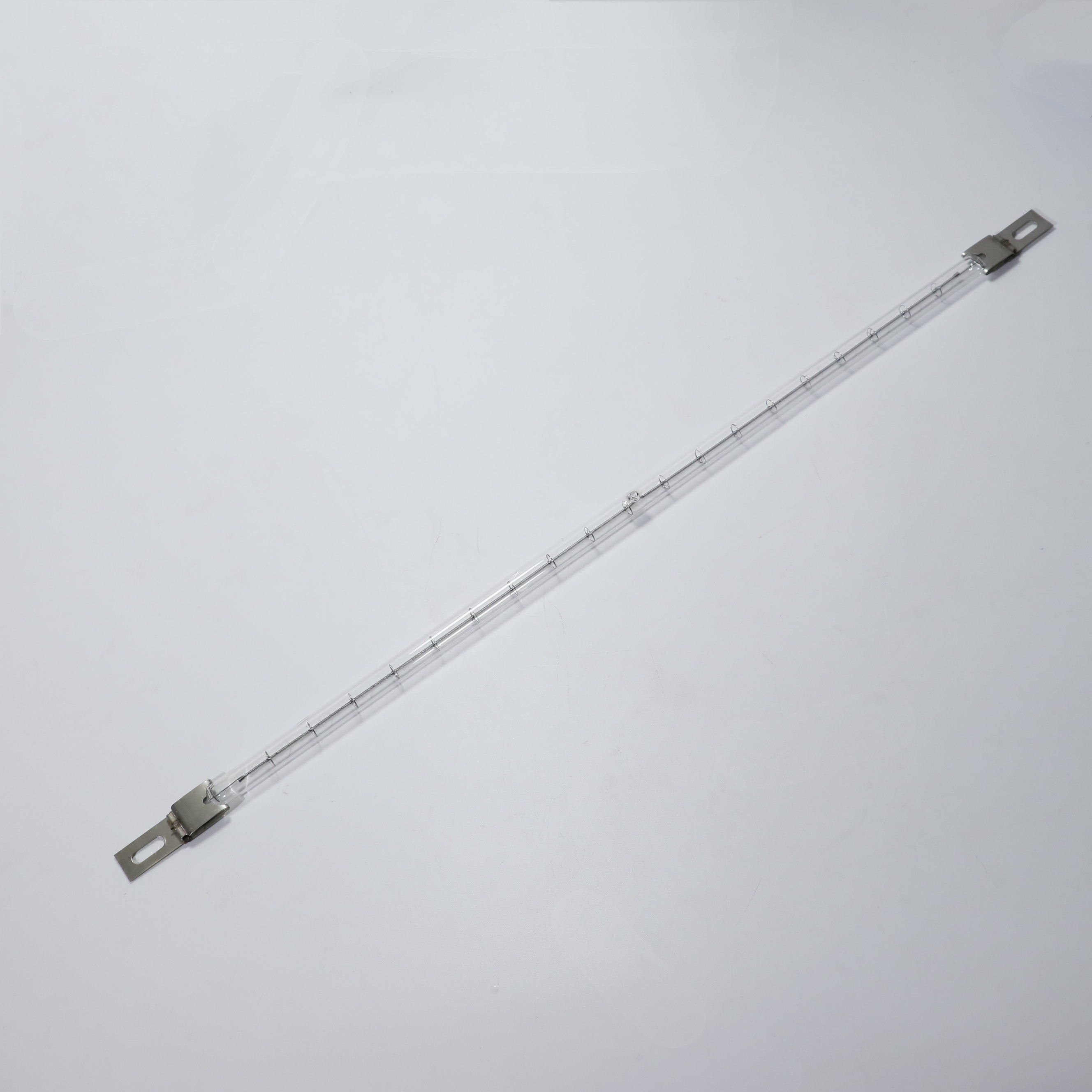
Best Selling 220V 1000W Quartz Infrared Heat Lamp for Processing Industrial
Standard replacement industrial heat tube delivering balanced wavelength distribution for thermoplastic softening, shrink wrapping, and food dehydration lines.
The Physics of Thermal Conversion: Optimizing Carbon Fiber Medium-Wave Emitters
In modern process engineering, electromagnetic thermal transfer represents a major technological leap beyond traditional convection and conduction heating. For engineering teams and plant managers in Kópavogur and the wider Capital Region (Höfuðborgarsvæðið), process efficiency relies on selecting an emitter that matches the spectral absorption bands of target substrates.
While short-wave halogen lamps utilize high-temperature tungsten filaments operating between 2,200°C and 2,600°C (emitting radiation peaking around 1.0–1.2 μm), carbon fiber infrared lamps employ braided woven carbon ribbons operating at filament temperatures between 800°C and 1,200°C. This physical difference shifts the spectral distribution into the medium-wave infrared spectrum, typically peaking between 2.0 μm and 2.5 μm. Water, high-performance industrial coatings, technical textiles, and structural composite matrices exhibit fundamental molecular vibration resonances precisely within this medium-wave window.
| Thermal Technology | Filament / Core Substrate | Peak Spectral Band (μm) | Thermal Response Cycle | Absorption Profile (Water / Polymers) |
|---|---|---|---|---|
| Short-Wave Halogen | Tungsten Spiral in Halogen Gas | 1.0 – 1.2 μm | < 1 Second | Low to Moderate (Deep penetration, surface bleed) |
| Carbon Fiber Medium-Wave | Woven Pyrolytic Carbon Filament | 2.0 – 2.5 μm | 1 – 2 Seconds | Exceptionally High (Immediate molecular excitation) |
| Standard Ceramic / Metal Sheath | Nickel-Chromium (NiCr) Resistance Wire | 3.0 – 6.0 μm | 8 – 15 Minutes | High surface absorption, severe convective loss |
Optical Efficiency and Reflector Metallurgy
The primary quartz envelope serves as both an atmospheric barrier protecting the pyrolytic carbon core from oxygen exposure and an optical conduit. Uncoated cylindrical emitters distribute thermal energy in an isotropic 360-degree cylindrical dispersion, allowing half of the emitted flux to radiate away from the target material. Kavri Quartz implements two distinct back-reflective geometries:
- Nanometer 24K Gold Coating: Sputtered directly onto the reverse side of the fused quartz tube, gold provides an infrared reflectance coefficient exceeding 95% across the medium-wave spectrum. This optical coating redirects the rear radiation forward, lowering back-panel operating temperatures and reducing overall process energy consumption.
- Sintered Ceramic Half-White Coating: Tailored for high-temperature operating tunnels where furnace ambient temperatures exceed the oxidation thresholds of thin metal films. Sintered diffuse ceramic layers withstand ambient environments above 800°C without flaking, blistering, or optical degradation.
Targeted Industrial Processing Across Kópavogur's Commercial Sectors
Kópavogur stands as Iceland's second-largest municipality, blending major commercial transport links, maritime support operations, and light manufacturing clusters like Smárinn and Smiðjuhverfi.
Marine Composite & Hull Repair
Southwestern Iceland's marine infrastructure demands rapid epoxy and vinyl-ester curing during vessel overhauls. Carbon fiber emitters deliver medium-wave radiation that penetrates composite layers uniformly, avoiding surface skinning, bubble entrapment, and premature thermal quenching caused by ambient North Atlantic humidity.
Fish Processing & Packaging Automation
Food production and packaging operations in the Capital Region rely on accurate, contamination-free heating for thermal shrink-wrapping, tray sealing, and surface sanitization. Our cleanroom-fabricated quartz emitters produce no particulate emissions or toxic byproducts, complying with international food contact processing standards.
Fleet Refinishing & Polyurethane Curing
Cold, sub-arctic atmospheric air makes automotive spray booth operation energy-intensive. Medium-wave carbon emitters heat both the paint layer and the metal substrate simultaneously, curing waterborne primers and topcoats from the inside out in minutes while avoiding the blistering common with forced-air blowers.
Macroeconomic and Thermal Engineering Trends in Southwest Iceland
Iceland's industrial and municipal sectors operate within a unique energy ecosystem. Powered nearly entirely by hydro and geothermal resources, industrial operations in Kópavogur do not face the fuel cost barriers that challenge continental Europe. However, regional industrial heating presents distinct operational challenges:
Electrification of Industrial Thermal Processes
Driven by national carbon neutrality initiatives, municipal planning frameworks across the Capital Area actively discourage legacy fossil fuel heating and oil burners in retrofitted facilities. Transitioning to direct electric infrared heating provides clean alignment with Iceland's green grid. Because carbon fiber emitters convert 90% or more of electrical input into direct radiant heat without chimney losses or heat exchanger drops, processing plants reduce operational overhead while lowering carbon footprints.
Condensation Control in Cold-Chain Logistics
Kópavogur acts as a central logistics spine between the Suðurnes industrial peninsula and downtown Reykjavík. High-throughput transshipment hubs experience recurring moisture condensation when moving chilled or frozen seafood containers into unheated transfer docks. Direct radiant carbon emitters dry packing boxes and shipping pallets without heating ambient air, preventing moisture buildup and keeping corrugated packaging structurally sound.
The Donghai Quartz Advantage & Kavri Manufacturing Precision
Operating from Lianyungang, Jiangsu Province—adjacent to Donghai, the world's most renowned quartz and silica purification hub—Kavri Quartz Product Co., Ltd. oversees the entire thermal emitter manufacturing process from raw natural silica to finished carbon lamps.
Since our formal incorporation in 2014, we have provided direct OEM/ODM lamp manufacturing services to machine builders, processing facilities, and automation engineers across North America, the EU, and East Asia. With an established export footprint accounting for 81% to 90% of our annual production, our logistics and engineering teams ensure safe transit, reliable mechanical tolerances, and full electrical parameter matching for overseas operations.
- Material Purity
- > 99.99% SiO2 High-Purity Fused Quartz Glass Tubing
- Thermal Shock Resistance
- Zero Thermal Failure up to 1100°C; Ultra-Low Expansion (5.5 × 10⁻⁷ / K)
- Engineering Flexibility
- Fully Custom Single & Twin Tubes, Diameters, Voltages, and Gold/White Finishes
- Verified Export Footprint
- Onsite Audited Facilities; Worldwide Safe Transit Packaging with Wood Crate Crating
Frequently Asked Questions by Industrial Buyers in Kópavogur
Detailed answers regarding technical integration, electrical specifications, shipping logistics, and custom emitter engineering.
How do carbon fiber medium-wave lamps compare with short-wave halogen lamps for composite curing in coastal climates?
Can Kavri Quartz manufacture custom lamps matching our existing Icelandic machine voltages (e.g., 230V or 400V 3-phase circuits)?
What is the standard lead time, packaging method, and sea/air freight path to Kópavogur?
What is the minimum order quantity (MOQ) for custom-engineered carbon fiber infrared emitters?
How does thermal shock affect the quartz envelope during extreme temperature cycles?
Ready to Engineer Your Infrared System for Maximum Efficiency?
Whether you are replacing worn emitters in an existing drying line or designing a new industrial heating system in Kópavogur, our thermal engineering specialists provide responsive support, precise CAD parameter matching, and dependable OEM supply.