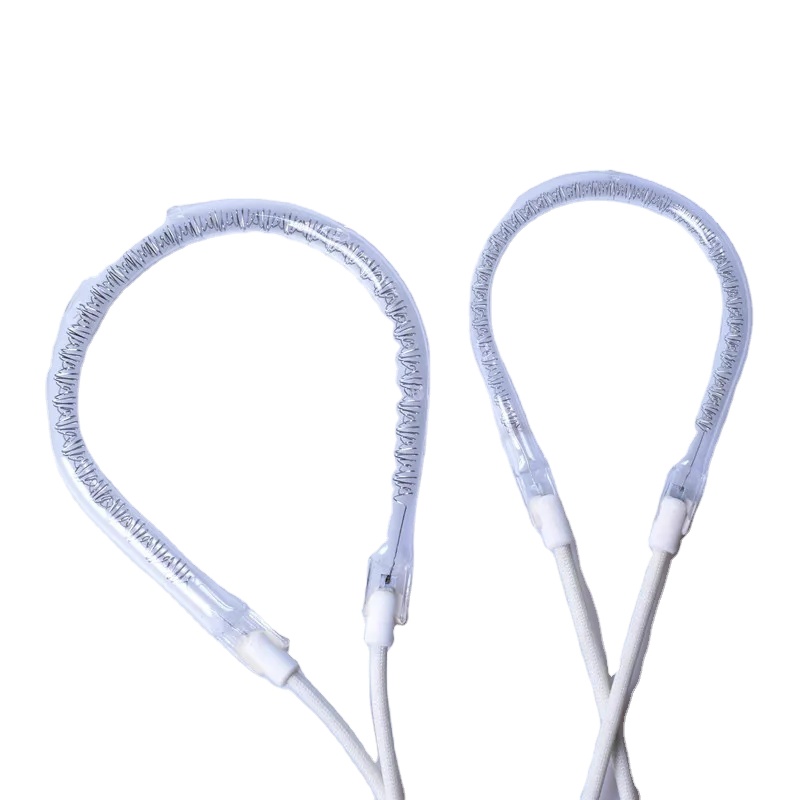
Global Industrial Quartz & Infrared Heating Overview
State of the market: how high-purity fused silica (SiO₂ > 99.99%) underpins mission-critical thermal processing in microelectronics, photovoltaics, and advanced industrial automation.
In modern high-temperature thermodynamic manufacturing, industrial quartz glass remains irreplaceable due to its virtually zero coefficient of thermal expansion, extreme chemical inertness, and exceptional optical transmittance spanning from deep ultraviolet (UV: 185 nm) through mid-infrared (IR: ~4.5 μm). Procuring industrial quartz elements—ranging from double-ended tungsten halogen emitters and carbon ribbon lamps to fused silica reactor tubes, optical quartz plates, and precision biochemical flow cells—requires profound technical scrutiny of material purity, hydroxyl (OH⁻) content, dimensional tolerances, and mechanical seal integrity.
Leading global buyers and original equipment manufacturers (OEMs) prioritize high geometric stability, thermal shock resistance capable of surviving instantaneous cooling from 1100°C to ambient water quench, and directional reflection techniques such as fused ceramic half-coatings or nano-gold reflectors. This engineering white paper evaluates the technical parameters, next-generation procurement benchmarks, and manufacturing competencies required to optimize thermal radiation systems and optical equipment lines.
99.99%
Fused Silica Purity Level
1100°C
Continuous Working Temp
< 1.0s
Short-Wave IR Thermal Rise
90%+
Export Reliability Rate
Recommended Industrial Infrared Emitters & Quartz Components
Engineered quartz glass thermal components tailored for continuous automated manufacturing lines, paint curing facilities, and laboratory equipment.
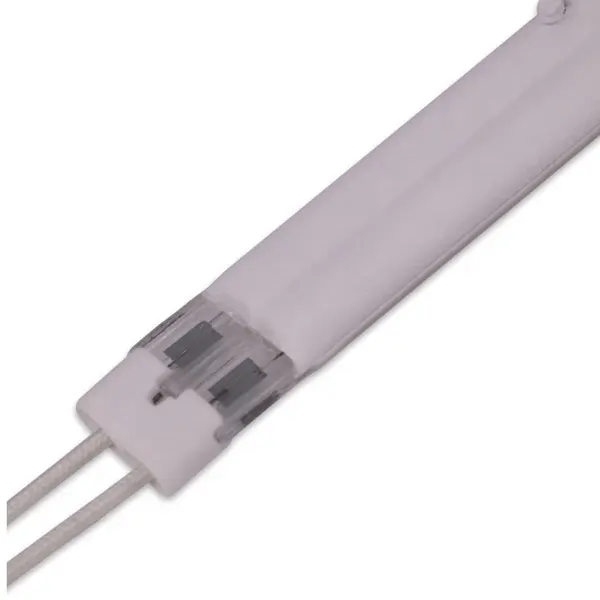
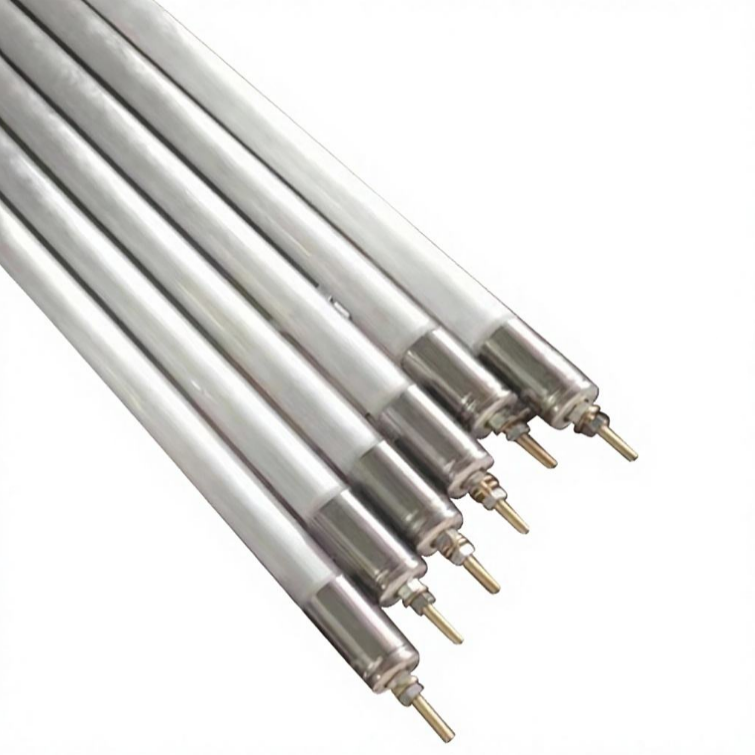
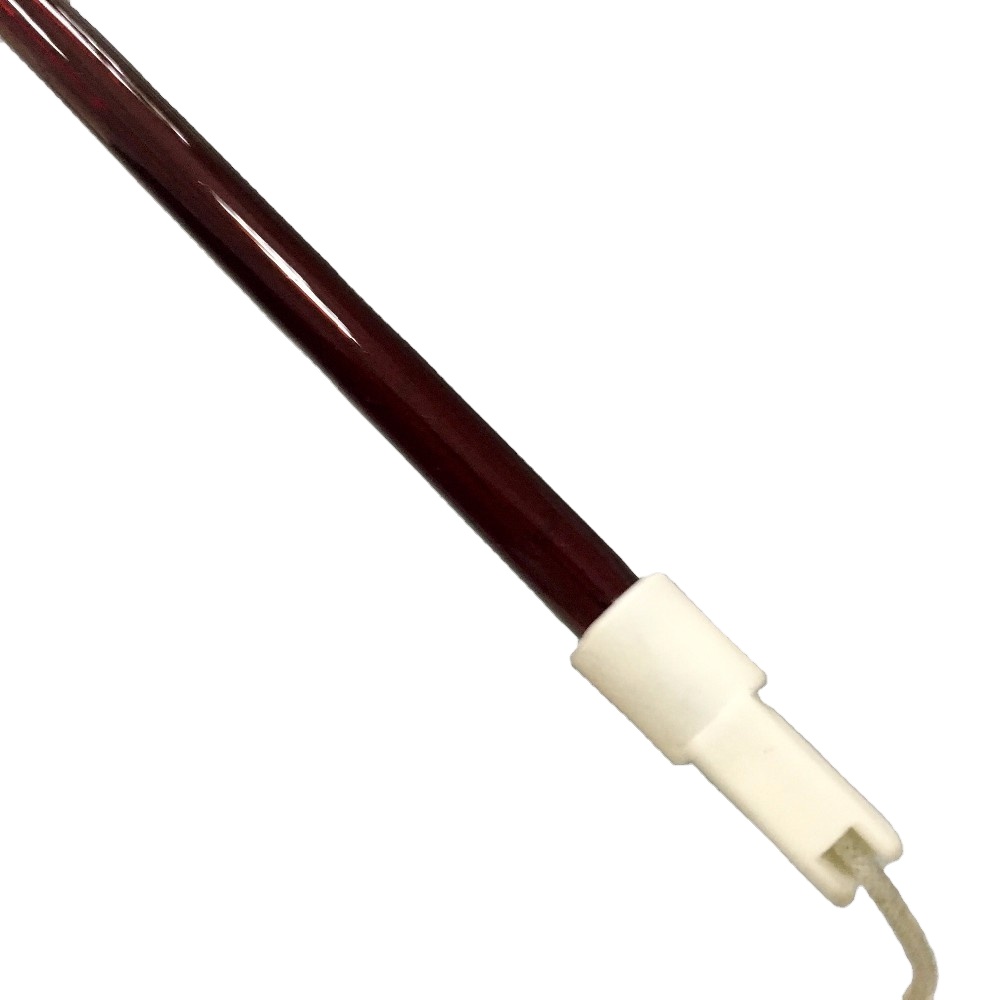
Standard R7S Fitting
Low Prices R7S Short Wave Halogen Infrared Heating Lamp for Bread Toaster
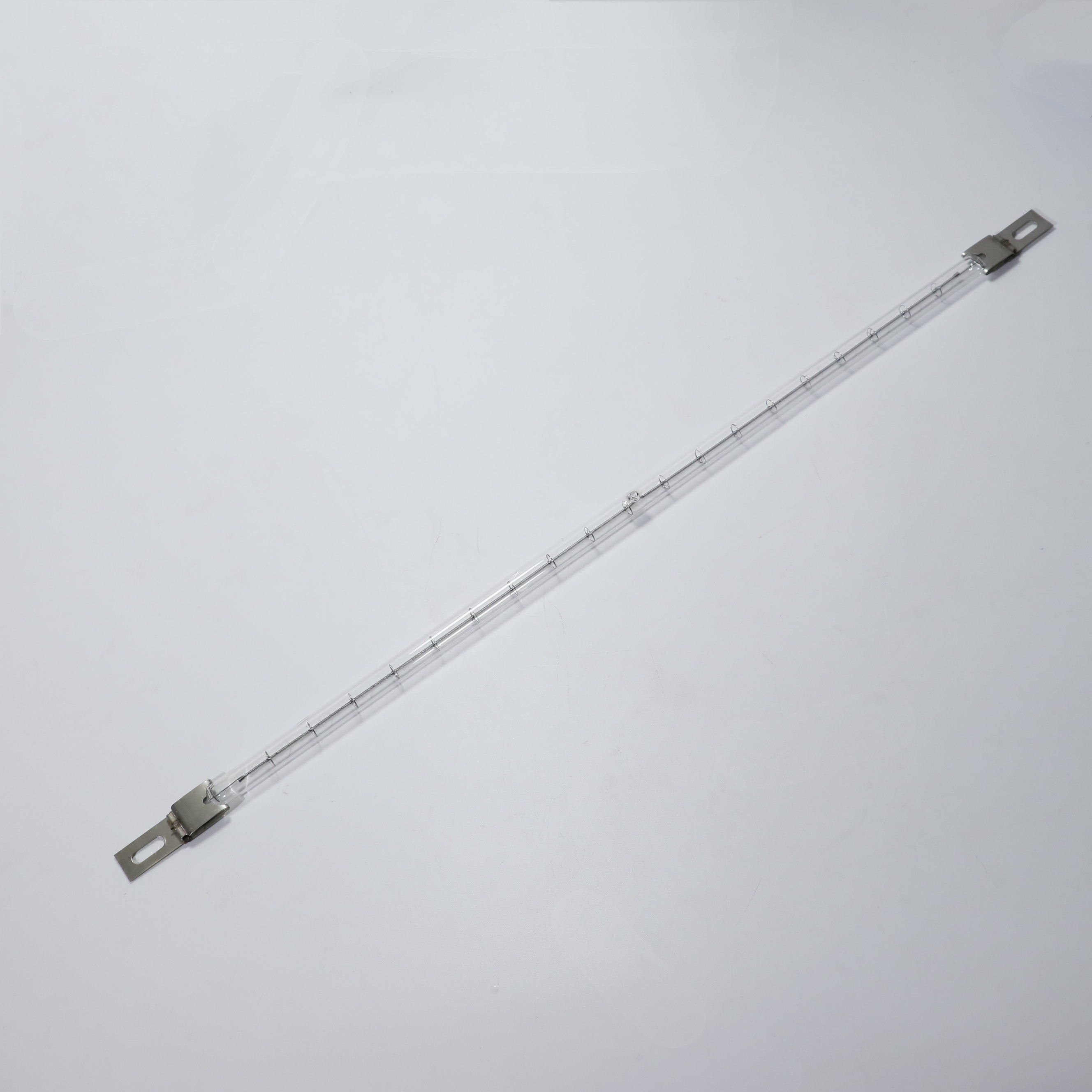
Agricultural & Brooding
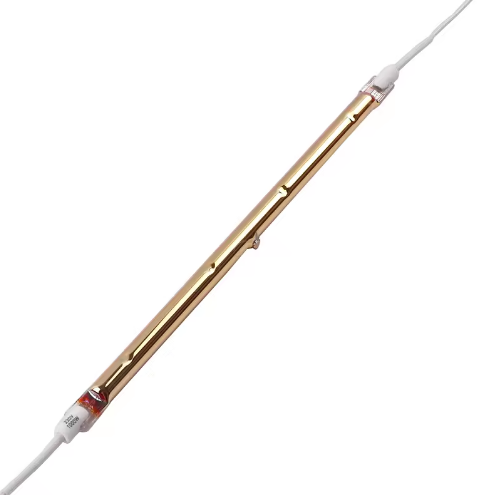
High Quality Ruby Infrared Heating Lamp for Poultry Chicken and Duck Farm Heating
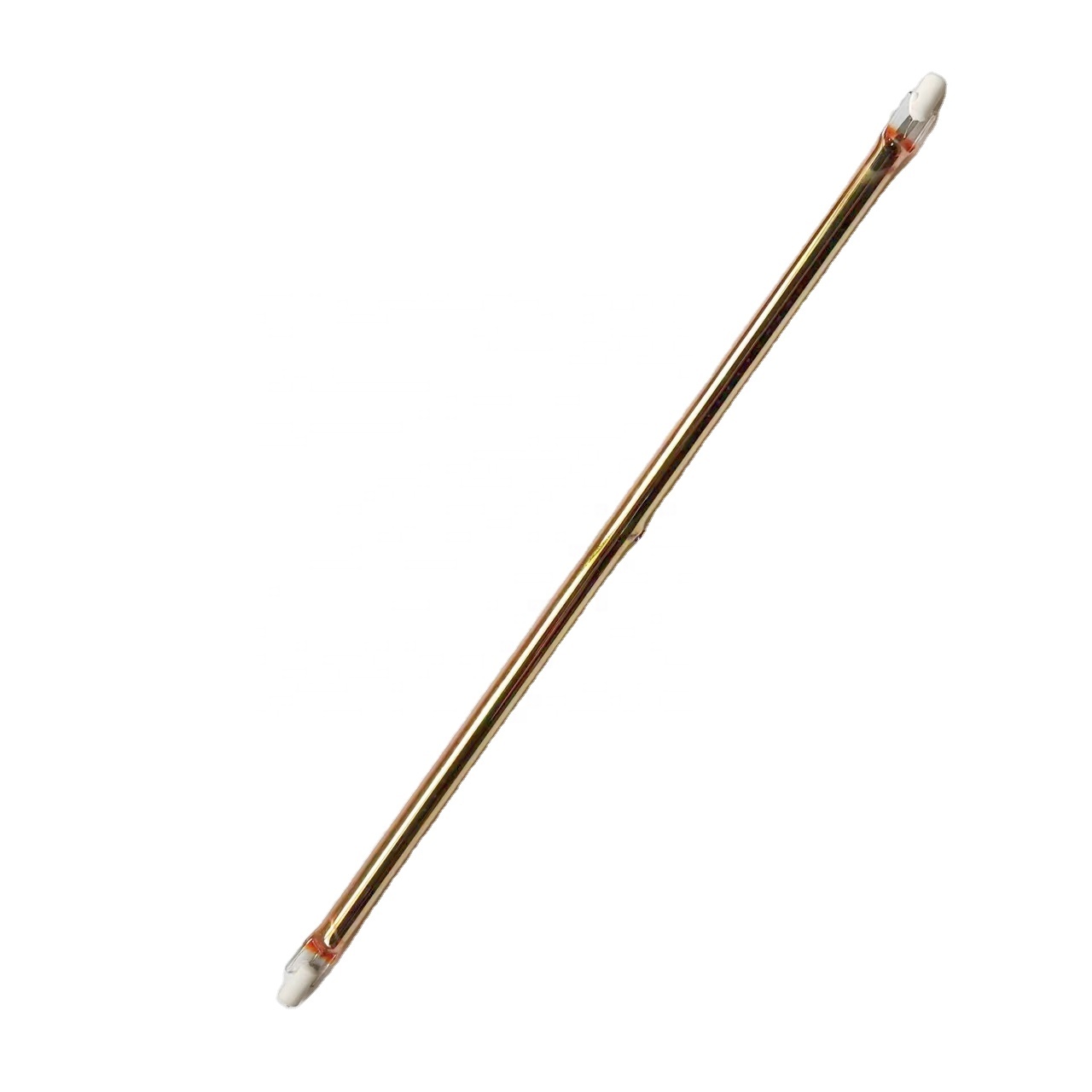
Industrial Drying Oven
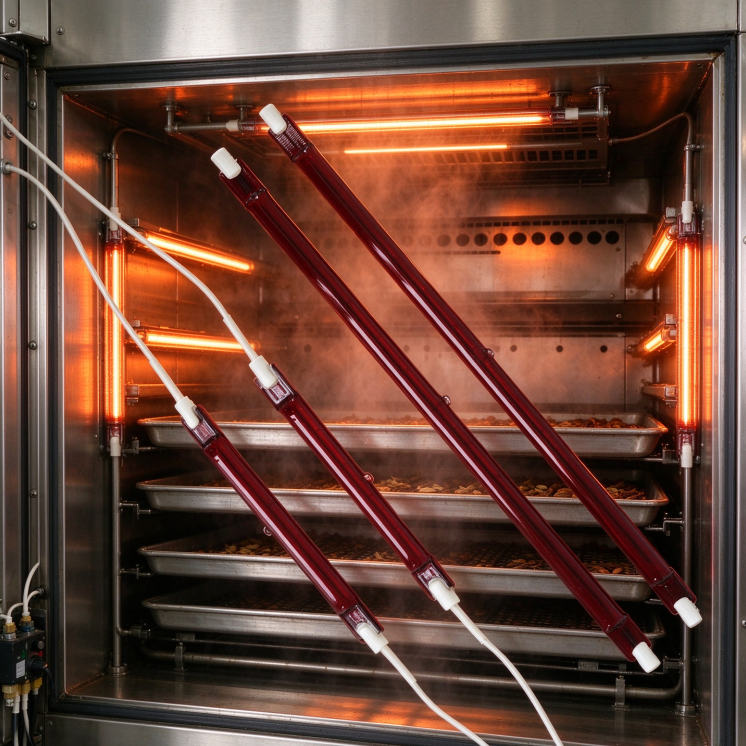
Wholesale Infra Red IR Quartz Glass Infrared Heater Lamp for Infrared Drying Oven
Engineering Guide: Spectral Selection & Material Matrix
Selecting the optimal quartz emitter type based on molecular absorption curves, rise times, and operational substrate profiles.
| Quartz Emitter Technology | Spectral Peak (μm) | Thermal Response Time | Efficiency to Substrate | Primary Industrial Applications |
|---|---|---|---|---|
| Short-Wave Halogen (Clear) | 1.0 – 1.2 μm | ≤ 1.0 second | High penetration depth | PET blowing, automotive paint curing, metal preheating |
| Gold-Reflector Coated Lamp | 1.1 – 1.4 μm | ≤ 1.0 second | Up to 95% directional flux | High-speed automotive spray booths, electronics drying |
| Carbon Fiber (Medium-Wave) | 2.0 – 2.5 μm | 1.0 – 2.5 seconds | Optimal water/resin resonance | Waterborne inks, textile drying, plastics thermoforming |
| Ceramic Half-White Coated | 1.2 – 1.6 μm | ≤ 1.5 seconds | Diffuse directional scatter | High-ambient continuous annealing, oven conversions |
| Ruby Low-Glare Quartz | 1.2 – 1.8 μm | ≤ 1.0 second | Glared-filtered comfort heating | Agricultural brooding, industrial work cells, wellness |
Future Procurement Trends in the Quartz & Emitter Industry
Key technological shifts reshaping procurement criteria for procurement officers and engineering directors over the next decade.
Energy Decarbonization & Direct Radiance
Industrial heating is rapidly moving away from fossil-fueled convection ovens toward clean, instantly modulated electric infrared radiation. Modern lines require emitters that transition between standby and peak output in milliseconds, preventing scrap during conveyor stoppages and cutting net kilowatt-hour consumption by up to 38% across production cycles.
Ultra-Low OH⁻ Purity Standardization
Trace hydroxyl groups (OH⁻) inside quartz envelopes create structural absorption bands in the infrared spectrum (~2.72 μm), causing envelope overheating, premature bubble growth, and devitrification. Procurement contracts now mandate low hydroxyl concentrations (< 20 ppm) to ensure prolonged lamp service life and geometric integrity in high-temperature environments.
Twin-Tube Mechanical Integrity & Automation
As continuous processing conveyor widths expand beyond 2000 mm, standard single quartz tubes experience mechanical sagging under intense gravitational and thermal stress. The industrial market is increasingly consolidating on 8-shaped twin-bore quartz geometry, which provides structural rigidity, internal reflector containment, and dual-independent power circuit flexibility.
Technological Evolution of Fused Silica Glass
Key advances in optical machining, plasma flame polishing, and composite surface coatings.
The manufacturing threshold for industrial quartz has risen significantly. Traditional manual tube bending has been superseded by CNC automated thermal-forming and laser-guided cutting systems. Precision laboratory instruments, including quartz micro-cuvettes and 32 μL flow cells used in biochemistry analyzers, demand optical polishing with surface finishes below 20/10 scratch-dig, alongside optical parallelisms evaluated under laser interferometry.
Simultaneously, thin-film reflector technology has evolved. While earlier generations relied on external metal reflectors prone to oxidation and dust accumulation, modern processes fuse ceramic-oxide white reflectors directly onto the outer wall of the quartz envelope. Capable of surviving temperatures exceeding 900°C without peeling, these integral coatings direct radiant energy straight into target substrates, maintaining consistent optical transmission over thousands of operating hours.
Why Partner With Us: Direct Factory Advantages
Leveraging deep industrial heritage in Lianyungang (Donghai), the premier quartz and fused silica manufacturing cluster in China.
Direct Factory in Lianyungang
Situated at the center of the world's most concentrated quartz processing hub. Direct raw silica sourcing lowers material costs while providing exceptional supply stability.
10+ Years of OEM/ODM Focus
Specialized in producing custom emitters based on client drawings, samples, or photos. Full flexibility across voltage, wattage, heated lengths, reflector coatings, and cable terminations.
Onsite-Verified & High Rating
Onsite-inspected production facilities with an average buyer rating of 4.7/5.0 and rapid inquiry response times under 4 hours, verified through 13 years of platform operation.
Global Export Footprint
Exporting 81-90% of capacity to Germany, the Netherlands, Japan, South Korea, the USA, and worldwide under flexible FOB, CIF, CFR, EXW, and DDP terms with shock-proof packaging.
Dedicated Production Lines & Precision Laboratory Quartzware
Three dedicated production facilities with comprehensive batch inspection covering electrical resistance, geometric concentricity, seal integrity, and flame-worked finishes. Capable of delivering standard industrial runs as well as high-precision analytical flow cells, quartz boats, and specialized furnace tubes.
Industrial Buyer FAQ: Engineering & Procurement
Clear, practical answers addressing common technical and operational questions encountered by engineering and procurement teams.
What are the exact technical specifications required for custom infrared emitter production?
To generate a reliable CAD drawing and production quote, our engineering team needs: rated voltage (e.g., 110V, 220V, 230V, 380V, 480V), target wattage, total overall length (OAL), heated/effective emission length, tube configuration (single tube circular OD Φ10, Φ12, Φ14, Φ18mm or twin tube 23x11mm / 33x15mm), internal filament construction (tungsten halogen vs. woven carbon ribbon), reflector coating requirements (uncoated clear, ceramic half-white, or gold plated), ceramic base type, and lead wire length with connection terminal styles. A physical sample, machine photograph, or technical sketch helps confirm details quickly.
How do short-wave halogen lamps compare to carbon fiber medium-wave lamps in industrial drying?
Short-wave halogen lamps emit with a peak wavelength between 1.0 and 1.2 micrometers (μm), delivering high photon energy that penetrates deeper into thick, dense substrates such as plastics, automotive clear coats, and PET preforms within a 1-second warm-up window. In contrast, carbon fiber medium-wave emitters peak around 2.0 to 2.5 μm, matching the fundamental resonant vibration frequency of water molecules and organic polymer chains. This makes medium-wave carbon lamps especially effective for drying water-based paints, textile inks, and adhesive laminations, often achieving complete cures at lower surface temperatures with less overall energy consumption.
What is the minimum order quantity (MOQ) and production turnaround for custom quartz parts?
For standard heating lamps and stock quartz tube or plate dimensions, our minimum order quantity starts at just 8 to 10 pieces, making trial runs, machine rebuilds, and replacement stocking straightforward. For fully custom OEM projects or specialized laboratory quartz components, MOQ is determined after technical drawing evaluation. Prototyping typically takes 5 to 9 business days, with full container-load production usually completed within 15 to 25 business days.
How do you protect fragile quartz products from damage during international transport?
With 81% to 90% of our production exported globally, we use a proven multi-tier packaging process for delicate glass components: (1) each quartz tube is individually encased in a cushioned PE/EPE sleeve, (2) individual units are packed into shock-absorbing inner cartons, (3) units are nested within impact-resistant honeycomb outer cartons with generous foam padding, and (4) final shipments are placed in reinforced export plywood cases with corner protectors. Every international shipment is covered by transit logistics insurance under CIF/DDP terms.
Can your facility manufacture high-precision biochemical flow cells and optical laboratory quartzware?
Yes. Beyond industrial heating envelopes, our skilled glassblowing and optical workshops produce high-precision laboratory quartzware. This includes micro-aperture quartz flow cells (such as standard 32 μL cells used in biochemistry analyzers), custom-machined fused silica cuvettes, reaction crucibles, semiconductor boats, distillation apparatuses, and optically ground inspection windows with custom chamfering and drilling.
Ready to Engineer Your Industrial Quartz & Infrared Solution?
Submit your specifications, OEM equipment part numbers, or CAD drawings. Our applications engineering team in Lianyungang will review your requirements and provide a full technical evaluation and pricing quote within 4 hours.