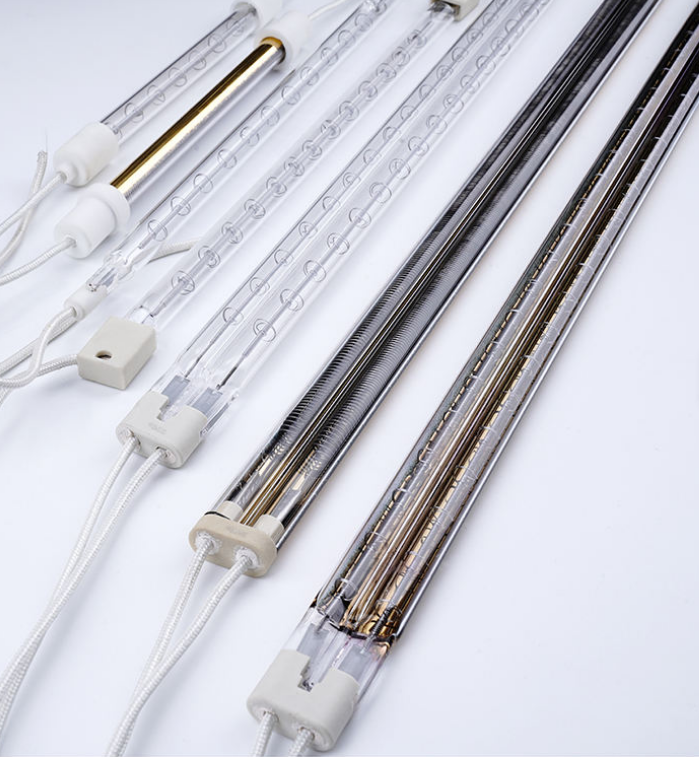
99.999%
SiO2 Synthetic Purity
1100°C
Continuous Working Temp
≤ 4 Hours
Engineering Response
90%+
Export Volume Ratio
Recommended Thermal & High-Purity Quartz Glass Products
Engineered for mission-critical semiconductors, rapid thermal processing (RTP), PET blow molding machinery, and UV curing arrays.
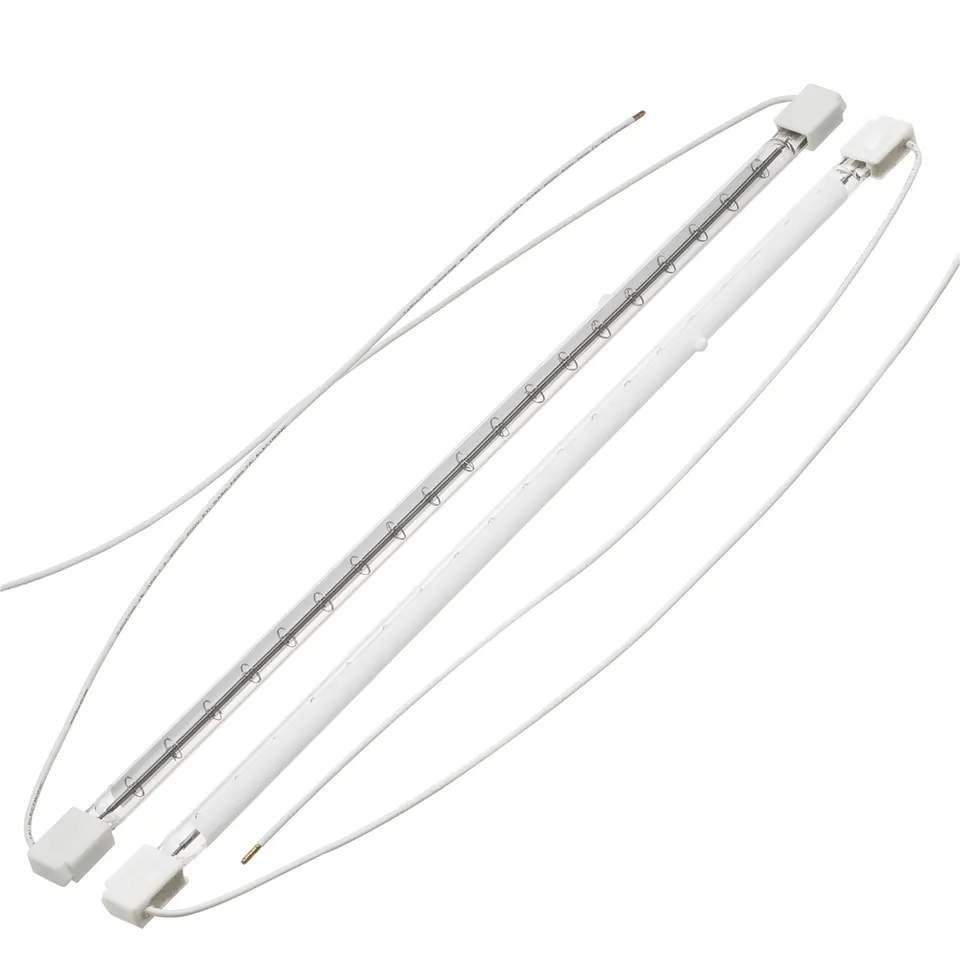
Factory Supply 220v Infrared Heater Lamp for PET Blowing Machines
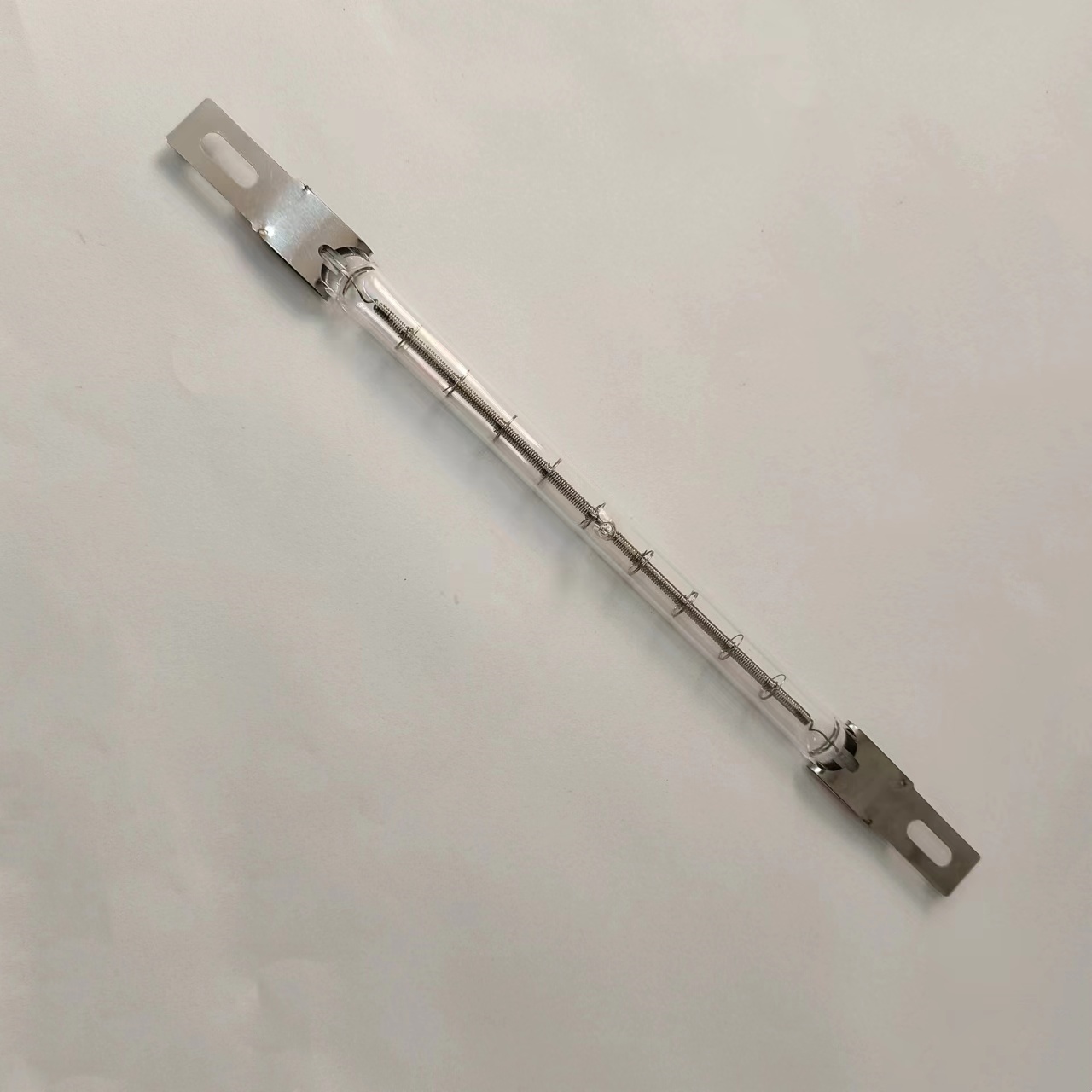
13195X Metal Clip 480mm 220v 1000w clear Infrared Heat Lamp for Printer Drying Machine
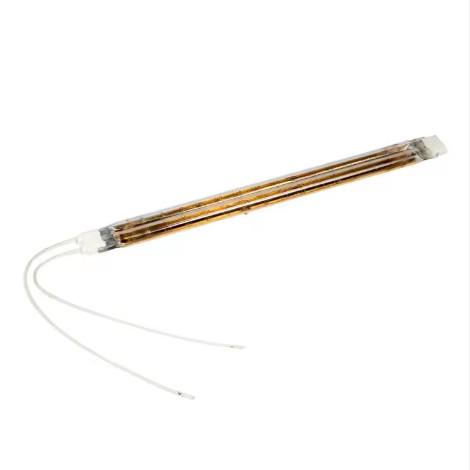
Halogen Double Tube Half Gold Infrared Heating Lamp for Blowing Machine
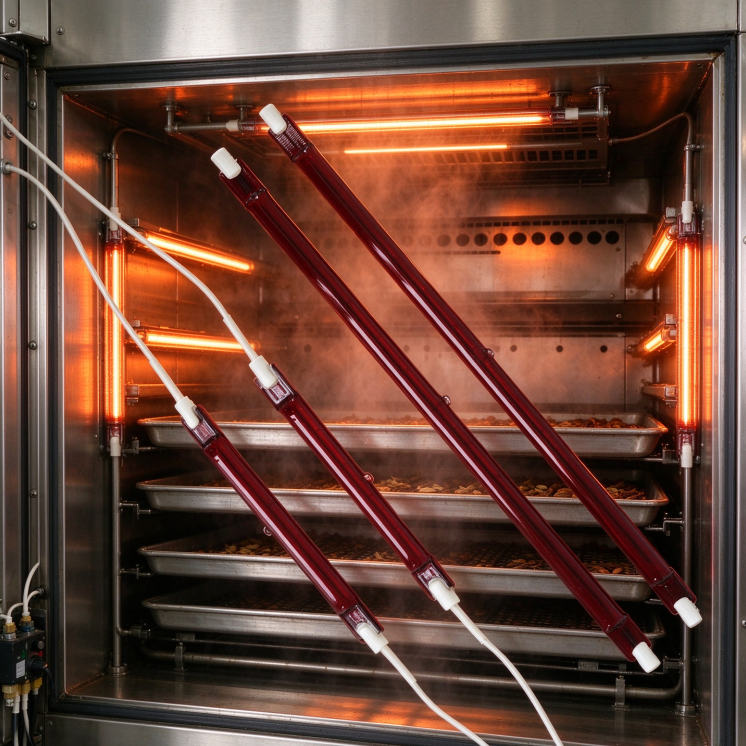
Wholesale Infra Red IR Quartz Glass Infrared Heater Lamp for Infrared Drying Oven
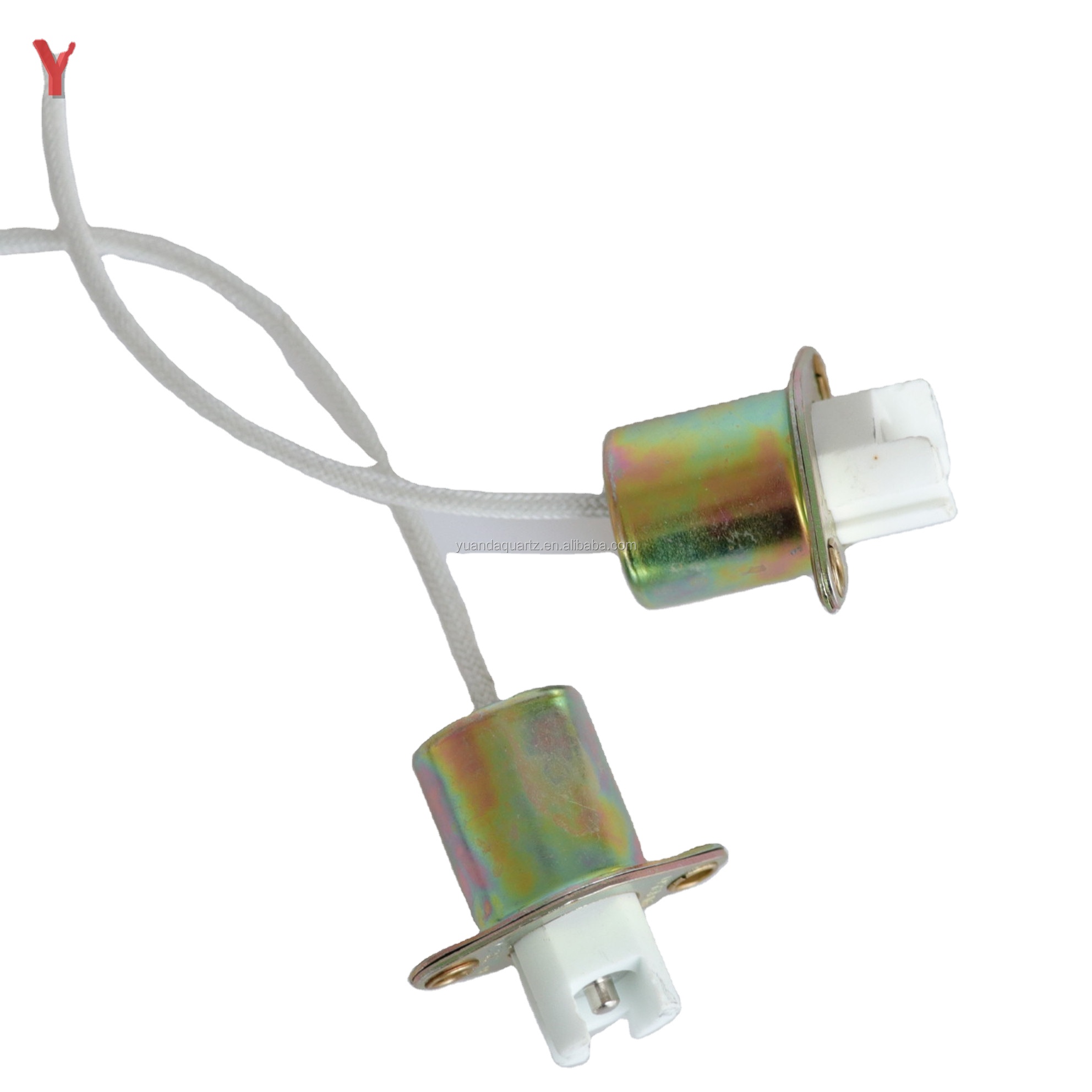
R7S Halogen Infrared Lamp Ceramic Lamp Holder Emitter Assembly
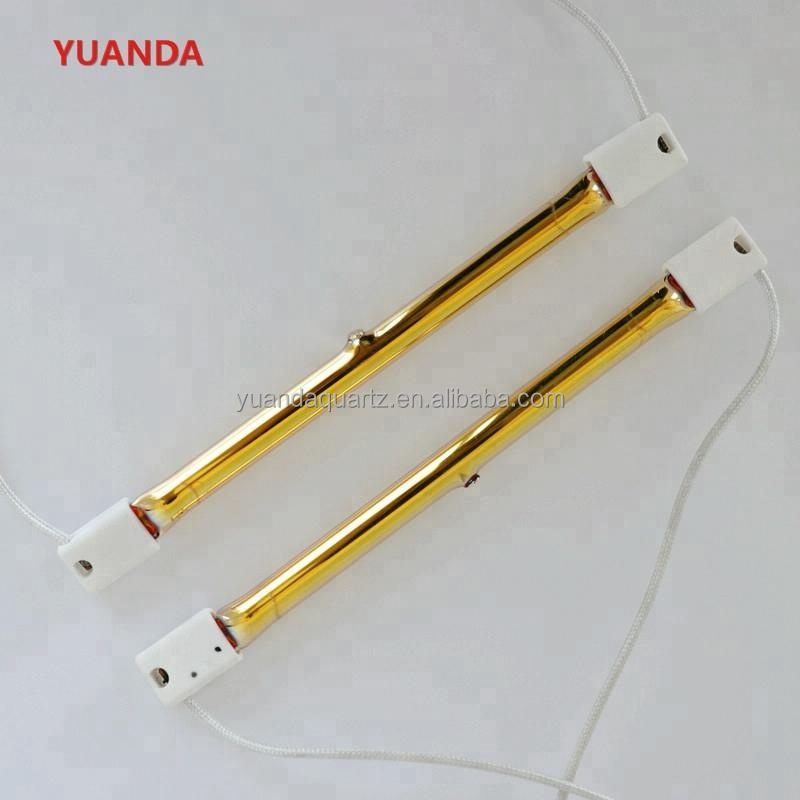
Infrared Heater Halogen Lamp Supports Customization for Drying Systems
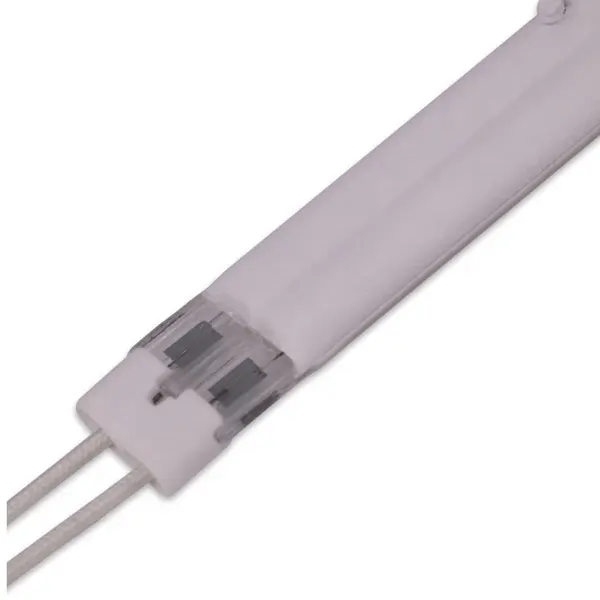
Low Prices Twin Tube Halogen IR Heating Lamp for Paint Drying Curing
Global Top 10 Fused Quartz Plate Manufacturers & Processing Hubs
Evaluating primary quartz synthesis infrastructure, thermal tolerance bounds, bubble classes, and OEM manufacturing reliability.
Procurement engineers operating across aerospace observation, semiconductor fabrication, and high-intensity infrared heating require vitreous silica and fused quartz plates that satisfy stringent standards for micro-defect density, thermal shock durability, and optical transmittance. While global tier-1 chemical conglomerates dominate base ingot synthesis, precision down-stream conversion, CNC polishing, and direct integration into emitter envelopes rely on specialized manufacturing clusters. Below is an exhaustive industry ranking of the top 10 fused quartz manufacturers and fabrication ecosystems serving modern industry.
1. Heraeus Conamic (Germany)
Widely acknowledged as the global benchmark for synthetic fused silica (Suprasil) and natural fused quartz (Herasil). Known for ultra-low bubble classes, exceptional homogeneity, and deep ultraviolet lithography transmission substrates.
2. Momentive Technologies (USA)
Formerly GE Quartz, Momentive excels in high-purity natural fused quartz plates and crucible raw materials. Their Type 214 fused quartz serves as the standard for semiconductor diffusion and high-temperature furnace tubes.
3. Kavri Quartz Product Co., Ltd. (China)
Located in Lianyungang (Donghai cluster), Kavri Quartz merges direct quartz raw material supply with dedicated downstream manufacturing. Specializes in customized fused silica plates, heat-resistant sight glasses, and turnkey halogen/carbon IR heating tubes.
4. Tosoh Quartz Corporation (Japan)
A premier supplier to the global microelectronics industry, focusing on ultra-clean quartz substrates, etching chamber plates, and high-flatness quartz windows that resist aggressive fluorinated plasma erosion.
5. Corning Incorporated (USA)
Renowned for HPFS (High Purity Fused Silica) glasses. Provides flawless optical transmission ranging from deep UV through the near-infrared spectrum, widely utilized in photomask blanks, space-borne windows, and laser metrology.
6. Saint-Gobain Quartz (France)
Manufactures specialized fused silica materials under the Quartzel trade name. Excels in high-frequency radar transparency, thermal protection tiles, and optical window panels requiring chemical stability.
7. Shin-Etsu Quartz Products (Japan)
A joint-venture enterprise offering high-purity synthetic and natural fused quartz products. Dominates large-format substrate fabrication for flat panel displays and silicon wafer process boats.
8. QSIL GmbH (Germany)
Pioneers in plasma-melted fused quartz cylinders, tubes, and fabricated sheets. Their materials feature high viscosity profiles and minimal heavy-metal contamination for high-temperature metallurgy.
9. Feilihua Quartz Co. (China)
The largest publicly listed quartz fabricator in central China, certified by major global semiconductor equipment makers for etch rings, quartz diffusion plates, and aerospace composites.
10. Swift Glass Company (USA)
An established custom fabricator specializing in high-precision grinding, edge profiling, chemical tempering, and CNC waterjet shaping of fused silica plate windows for military and industrial sight-ports.
Fused Quartz vs. Fused Silica vs. Borosilicate: Engineering Reference
Critical metallurgical and optical parameters for selecting sight-glass plates, IR lamp envelopes, and UV curing windows.
| Property Parameter | Natural Fused Quartz | Synthetic Fused Silica | Borosilicate Glass (3.3) |
|---|---|---|---|
| Raw Material Base | Purified Natural Quartz Sand | Chemical Precursor (SiCl4) | Silica, Boron Trioxide, Soda |
| Typical Purity (SiO2 %) | > 99.99% | > 99.9999% | ~ 81% |
| Continuous Operating Temp | 1100°C | 1150°C | 450°C - 500°C |
| Softening Point | ~ 1680°C | ~ 1730°C | ~ 820°C |
| Thermal Expansion (CTE) | 5.5 × 10⁻⁷ / K | 5.0 × 10⁻⁷ / K | 33 × 10-7 / K |
| UV Cut-off Wavelength | ~ 220 nm - 260 nm | ~ 160 nm - 180 nm (Deep UV) | ~ 310 nm |
| Thermal Shock Resistance | Drop 1100°C into water: Intact | Drop 1150°C into water: Intact | Delta T max ~ 150°C |
| Typical Procurement Cost | Moderate (Optimal for IR & Furnaces) | High (Optical & Lithography Grade) | Low (Commercial & Cookware) |
Engineering Note: For radiant emitters, PET blow molding heater modules, and thermal processing ovens, Natural Fused Quartz represents the optimum balance between commercial viability and extreme structural stability. Because its coefficient of thermal expansion is roughly one-sixth that of borosilicate, it withstands immediate temperature swings without thermal micro-fracturing.
Future Procurement Trends in Industrial Fused Quartz (2025–2030)
Market intelligence for global procurement managers navigating supply chain resilience, carbon neutrality, and rapid precision prototyping.
1. Directional Coating Integration
Rather than deploying external metallic reflectors that oxidize and degrade over time, high-efficiency lines increasingly mandate fused-on ceramic white or nano-gold reflective coatings applied directly to the quartz tube surface, redirecting >95% of radiation forward while reducing parasitic cabinet heat.
2. Direct Donghai Sourcing & Decoupling
International buyers are transitioning away from high-markup regional distribution intermediaries, establishing direct factory connections with audited producers in primary industrial clusters like Lianyungang/Donghai to secure customized dimensional tolerances within 7–10 days.
3. Transition to Carbon Medium-Wave
While tungsten short-wave emitters dominate dense preform reheat steps, lines processing sensitive barrier films, waterborne automotive paints, and thin-gauge coatings are pivoting to vacuum-sealed carbon fiber emitters (~2.0 µm peak) to maximize material absorption and curtail electricity waste by 18–30%.
Enterprise Strengths & Factory Verification
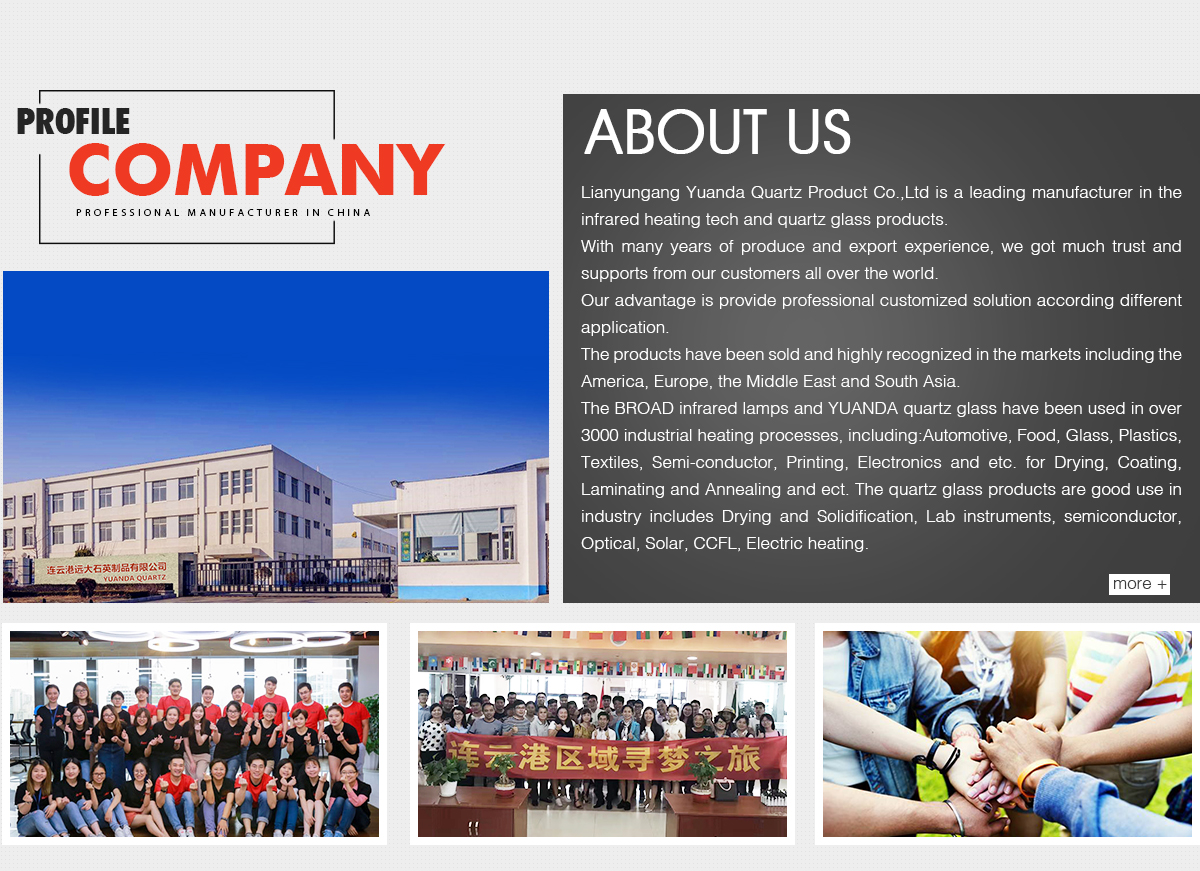
Founded in 2014, Kavri Quartz Product Co., Ltd. operates direct processing workshops in Niushan Street, Lianyungang, right at the epicenter of China's quartz production zone. With 3 dedicated production lines, onsite verification by Alibaba.com, and rigorous quality inspection on every shipment, we deliver end-to-end reliability.
From bespoke rectangular fused quartz viewports to precision twin-tube IR emitters, we bridge custom CAD drawings to finished components within 8 to 15 days, providing verified export compliance across FOB, CIF, EXW, and DDP terms.
✓ 10+ Years OEM/ODM Experience
✓ 81% - 90% Global Export Share
✓ Drop-test Shockproof Packaging
✓ Rapid In-house Prototyping
Frequently Asked Questions: Industrial Fused Quartz Sourcing
Clear, direct answers for factory engineers, maintenance directors, and procurement specialists.
What is the fundamental difference between Fused Quartz and Fused Silica?
Fused Quartz is manufactured by melting naturally occurring high-purity crystalline quartz sand (SiO2 > 99.99%). It features stellar high-temperature stability, low thermal expansion, and excellent infrared-to-visible transmission at a practical price point. Fused Silica, on the other hand, is synthetically produced via the vapor oxidation of silicon tetrachloride (SiCl4), delivering ultra-pure chemical purity (> 99.9999%) and transmission down into deep ultraviolet (UV) spectra, but at significantly higher cost.
How can I prevent thermal devitrification (hazing) on quartz plates and heating tubes?
Devitrification is the phase transformation from amorphous vitreous silica into crystalline cristobalite, which generally begins above 1000°C in the presence of alkali metal surface contaminants (such as sodium, potassium, or finger oils). To eliminate premature devitrification: 1) Never handle quartz glass with bare hands; 2) Clean the glass surface using alcohol or deionized water prior to operating at temperature; and 3) Ensure continuous ventilation around the electrical terminal pinch seals to keep them below 350°C.
What geometric and electrical details are needed for custom OEM lamp replacements?
To fabricate an exact match for obsolete or existing machinery, provide: 1) Total overall length (OAL) and heated length (HL); 2) Operating voltage and rated wattage; 3) Envelope cross-section (single round tube diameter or twin-tube profile like 23x11mm or 33x15mm); 4) Reflector coating requirement (clear, half-white ceramic, or gold); and 5) Terminal cap style (ceramic R7S, metal sleeve, insulated leads, or push-in clips).
What are the standard tolerances and bubble standards available for quartz plates?
Standard industrial ground-and-polished fused quartz plates maintain dimensional tolerances of ±0.1mm to ±0.2mm on length/width, and ±0.05mm to ±0.1mm on thickness. Optical parallelism can be processed down to < 3 arc minutes with surface roughness Ra < 0.5 nm upon request. Bubble classes comply with DIN 58927 / ISO 12123 Class 0 through Class 2 depending on your critical aperture application.
How are fragile fused quartz parts and long IR lamps secured against transport breakage?
Export orders utilize an engineered multi-stage packaging methodology: each lamp or quartz plate is enveloped in high-density EPE foam sleeves, individually boxed inside reinforced fluted carton sleeves, and subsequently floated within heavy multi-wall master cases or plywood export crates with internal shock absorption cushioning, resulting in a < 0.2% transit damage rate over global ocean and air routes.
Request Custom Engineering & B2B Pricing
Have an existing machine drawing, an obsolete emitter part number, or custom quartz plate specifications? Connect directly with our engineering team in Lianyungang for technical validation and prompt quotes.