Engineered Quartz Glassware & Thermal Emitter Portfolio
Direct factory supply of short-wave, medium-wave, fast-response infrared radiators, quartz components, and analytical glassware customized to OEM mechanical envelopes.
High-Purity Raw Material
Sourcing optical-grade SiO2 (>99.99%) ensures zero micro-bubble occlusion, low hydroxyl ion concentration, and unyielding resistance against severe thermal crystallization.
Micron-Scale CNC Machining
Ultra-precision cold-working, flame-polishing, CNC grinding, and laser-drilling capabilities enable complex laboratory quartz instrumentation with tolerances within ±0.05 mm.
100% Quality Verification
Every single batch undergoes spectral transmission testing, vacuum leak detection, filament tension profiling, thermal-shock resistance trials, and dimensional verification.
Fully Customized Coatings
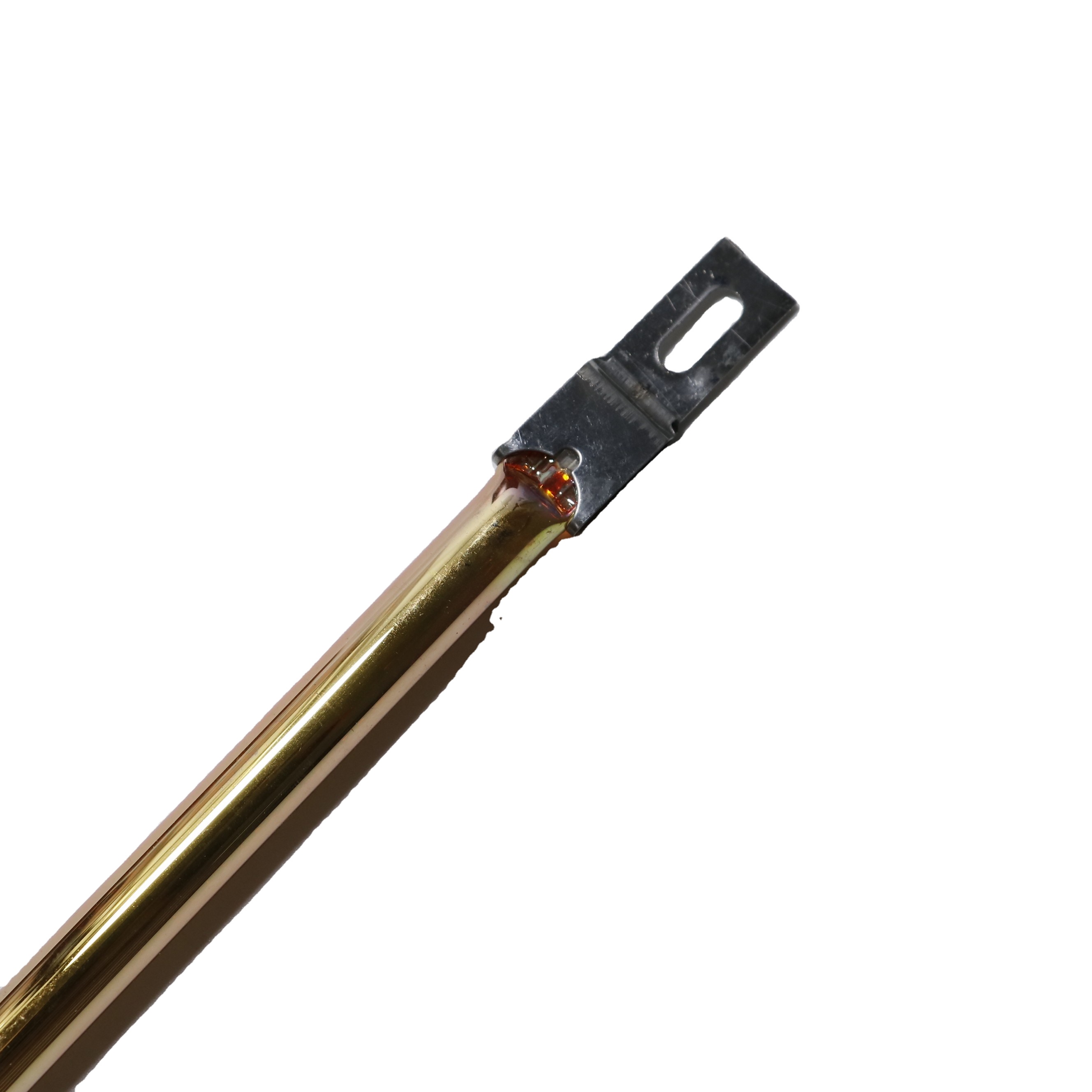
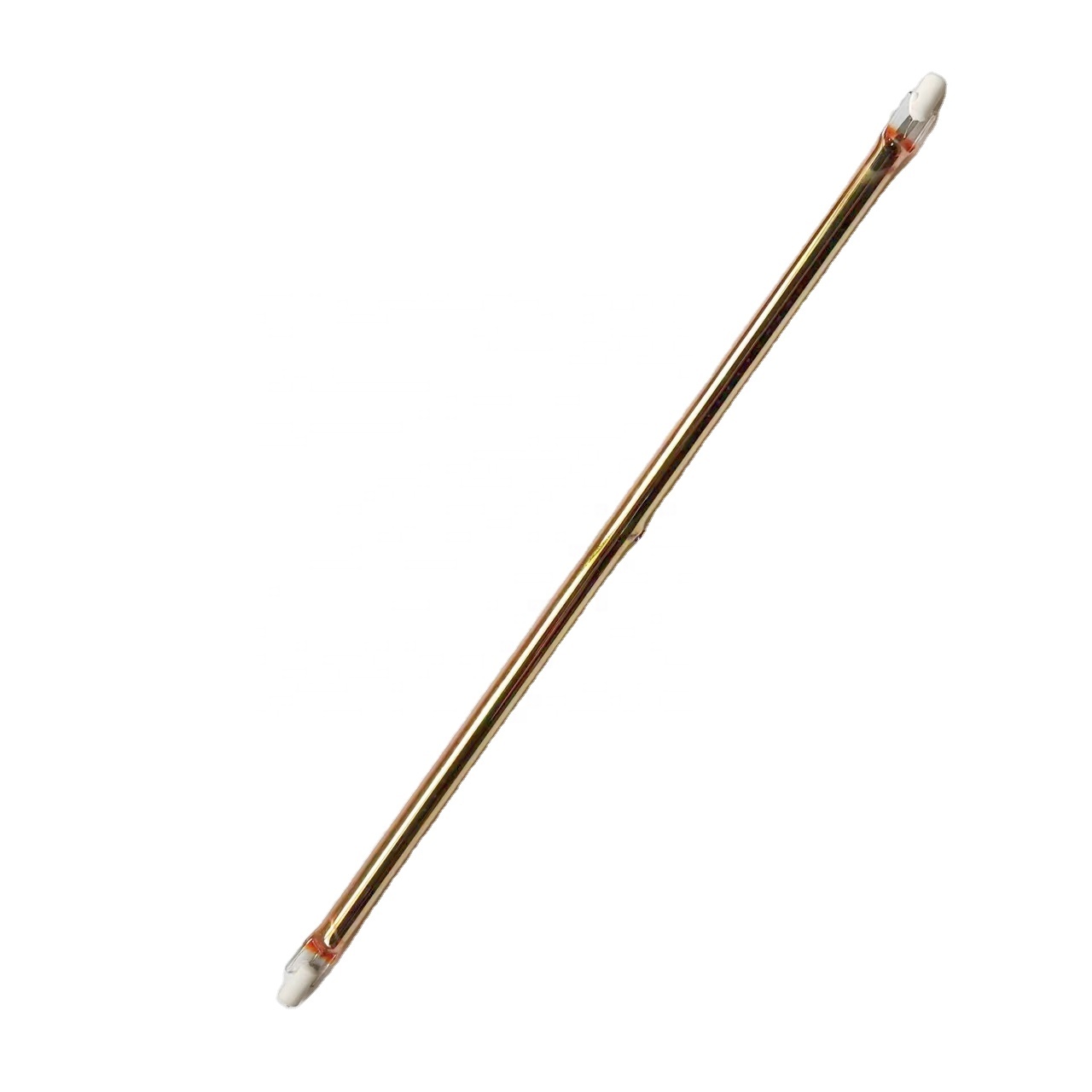
Proprietary 24K gold vacuum reflective coatings and high-temperature white ceramic backings increase directional efficiency by redirecting >90% of emitted energy towards target substrates.
Whitepaper: Engineered Thermal Physics and Optical Glassware Integrity
In modern industrial thermal operations—ranging from semiconductor silicon wafer processing and photovoltaic manufacturing to ultra-high-speed PET stretch blow molding—thermal efficiency is governed by the optical interface. Low-grade borosilicate or poorly fused silica glasses suffer from fatal chemical expansion, internal devitrification, and structural sag when cycled through extreme temperatures. Fused quartz stands unique with a thermal expansion coefficient of approximately 5.5 × 10⁻⁷ / K, enabling it to withstand instant thermal drops from 1100°C directly into cold water without micro-fracturing.
"Thermal matching between the infrared emitter wavelength and the targeted substrate's spectral absorption band is the primary metric for operational efficiency. Unsynchronized spectral power output yields up to 45% net parasitic energy loss in drying and curing ovens."
Kavri Quartz integrates vertical fabrication starting from refined natural quartz sands and high-purity synthetic silica. Our manufacturing facility in Lianyungang operates standardized furnace environments yielding raw tubing, polished quartz discs, and custom blown quartz instruments. By controlling hydroxyl (OH) levels down to custom specifications (<30 ppm to <5 ppm for infrared emitter envelopes), we eliminate water-absorption dips within the mid-infrared spectra, securing optimum photon flux efficiency.
Comparative Specifications: Fused Quartz vs Technical Glass Substrates
| Physical / Optical Parameter |
High-Purity Fused Quartz (Kavri) |
Borosilicate Glass 3.3 |
Soda-Lime Standard Glass |
| Maximum Working Temp (Continuous) |
1100 °C |
450 °C |
120 °C |
| Softening Point |
1683 °C |
820 °C |
720 °C |
| Coefficient of Thermal Expansion (0-300°C) |
5.5 × 10⁻⁷ / K |
3.3 × 10⁻⁶ / K |
9.0 × 10⁻⁶ / K |
| Spectral Transmission Window |
190 nm (Deep UV) to 3.5 µm (IR) |
320 nm to 2.5 µm |
380 nm to 2.2 µm |
| Resistance to Thermal Shock |
Instant ΔT of 1000 °C |
Instant ΔT of 150 °C |
Instant ΔT of 60 °C |
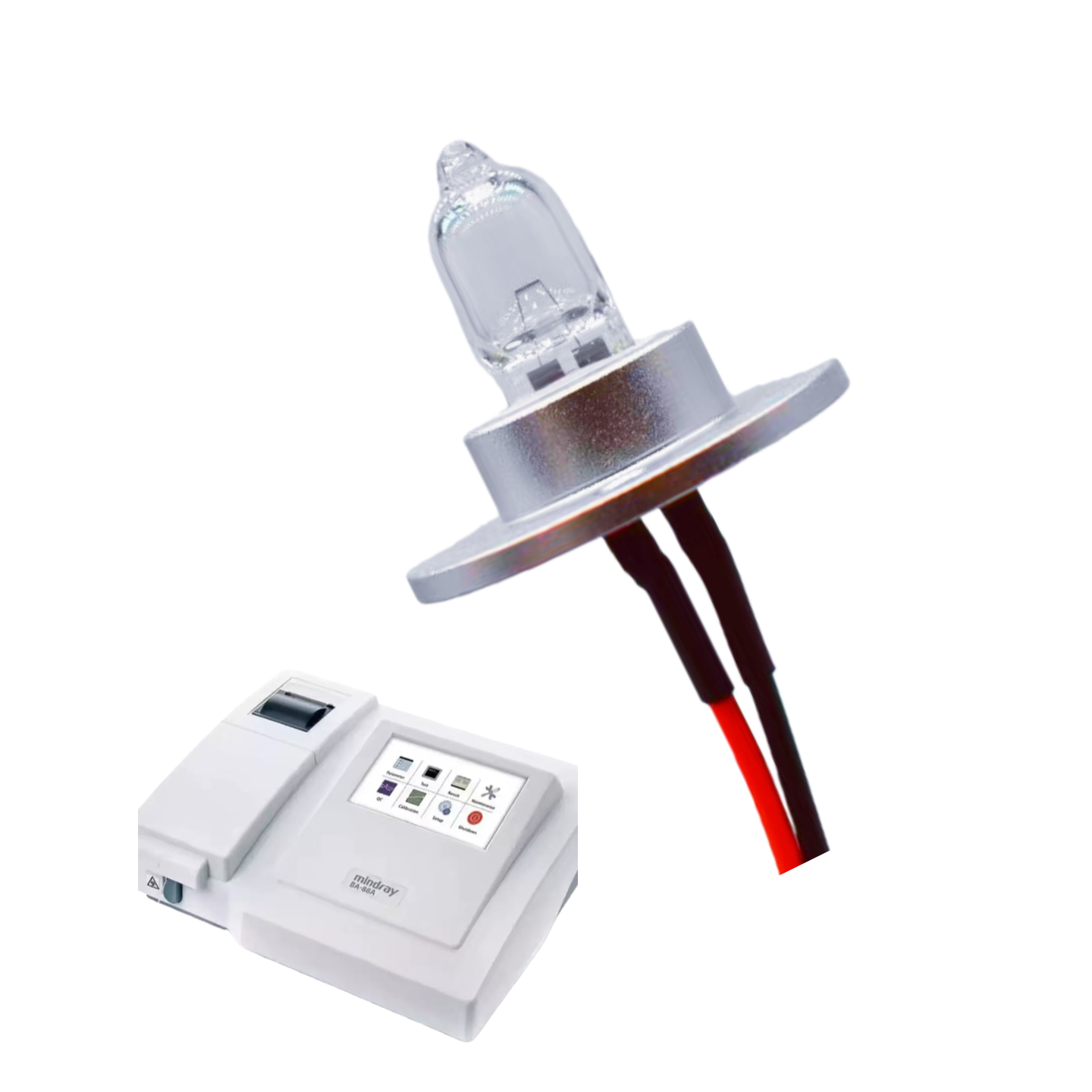
Whether producing medical flow cells for automated biochemistry analyzers like the Mindray BA-88A, heavy-wall quartz diffusion tubes for photovoltaic wafer doping, or gold-coated twin-tube infrared heaters for automotive continuous-paint lines, Kavri operates as an end-to-end original equipment development partner.
Rapid-Modulation Carbon Emitters
Industrial systems are shifting from convective hot-air tunnels to carbon-fiber medium-wave IR (peak ~2.0 µm). The instant on/off capability (under 2 seconds) eliminates preheating idle times, cutting plant electrical overhead by up to 38% in continuous thermoforming and composite curing operations.
Directional Gold Reflector Fusion
Modern machine builders demand internal or fused external 24-karat gold and ceramic reflectors directly applied on quartz glassware envelopes. This focuses 90% of forward-scattered radiant energy, protecting sensitive mechanical chassis from parasitic heat absorption.
Near-Zero Impurity Synthesis for Labs
With analytical biochemistry and semiconductor production demanding ever-lower metal ion contamination (Fe, Al, Ti < 0.1 ppm), cleanroom quartz fabrication and fire-polished optical cells have emerged as non-negotiable procurement prerequisites for tier-1 instrumentation manufacturers.
Procurement Insights: How Strategic Buyers Mitigate Quartz Glass Risks
Sourcing quartz glassware and precision thermal emitters from China involves far more than comparing baseline quotes. For international engineering leads and corporate procurement directors, product downtime costs routinely eclipse the unit savings of low-cost components. A structural filament collapse or poor vacuum seal inside an IR tube can halt an automated bottling line, costing upwards of $10,000 per hour of downtime.
Leading sourcing organizations adhere to a strict qualification matrix:
- Raw Ingot Origin and Purity Certificate: Verify silica purity levels. Industrial applications require clear quartz free of devitrification seeds (cristobalite nucleation centers).
- Pinch-Seal Integrity and Molybdenum Ribbon Welding: The metal-to-glass seal is the single most failure-prone point in any quartz halogen emitter. Molybdenum foil must undergo oxidation treatment to survive thermal expansions at temperatures above 350°C at the tube terminal.
- Spectral Calibration: Match targeted solvent, resin, or plastic preform absorption bands with the appropriate short-wave (1.0–1.4 µm), fast medium-wave (1.4–2.0 µm), or medium-wave (2.0–2.6 µm) emitter. Sourcing mismatched emitters leads directly to thermal surface boiling or incomplete inner curing.
- Protective Packaging for High-Aspect Tubes: Quartz tubes exceeding 1000 mm in length are susceptible to flexural snap during maritime shipping. Standard bubble wrapping is inadequate. Kavri engineers custom suspended-air channel cartons and reinforced wooden shipping crates, reducing international breakage rates below 0.2%.
Q: What engineering specifications are required to replicate an OEM quartz heater?
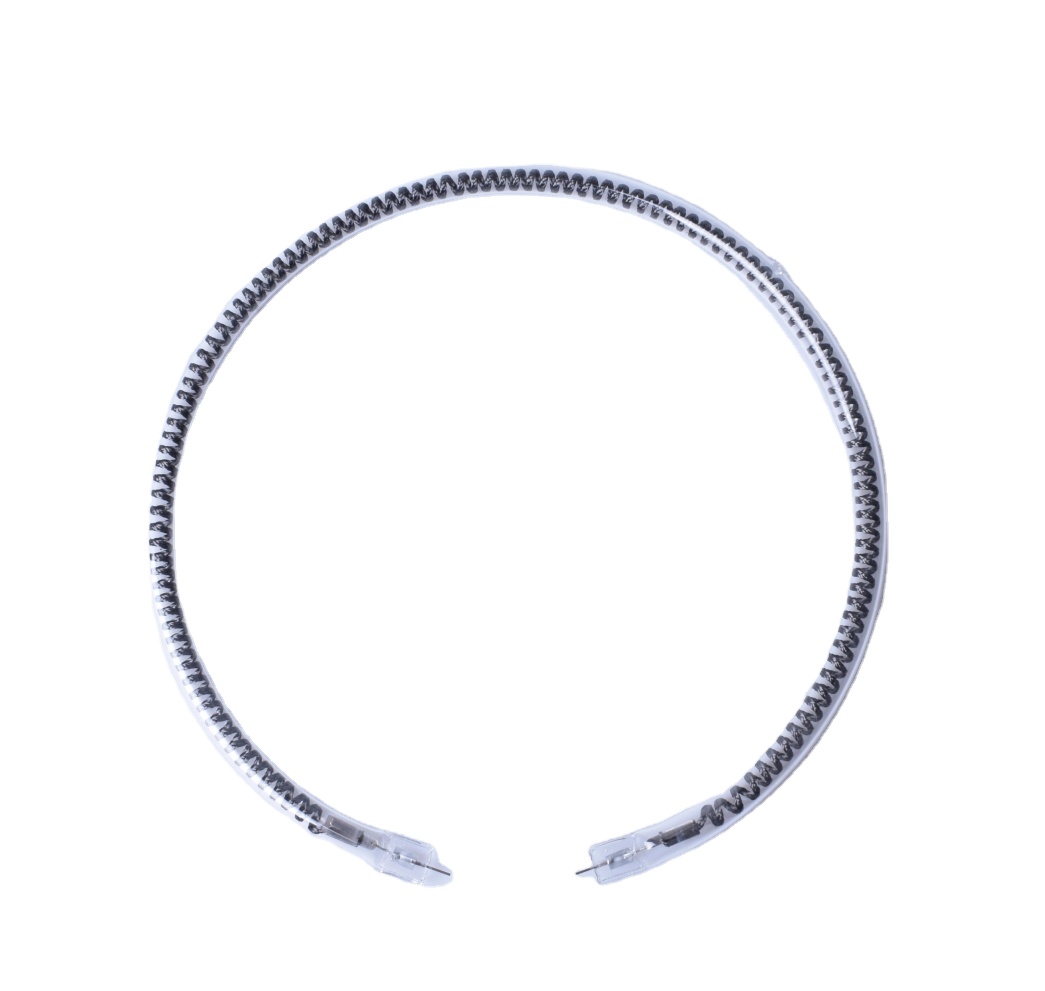
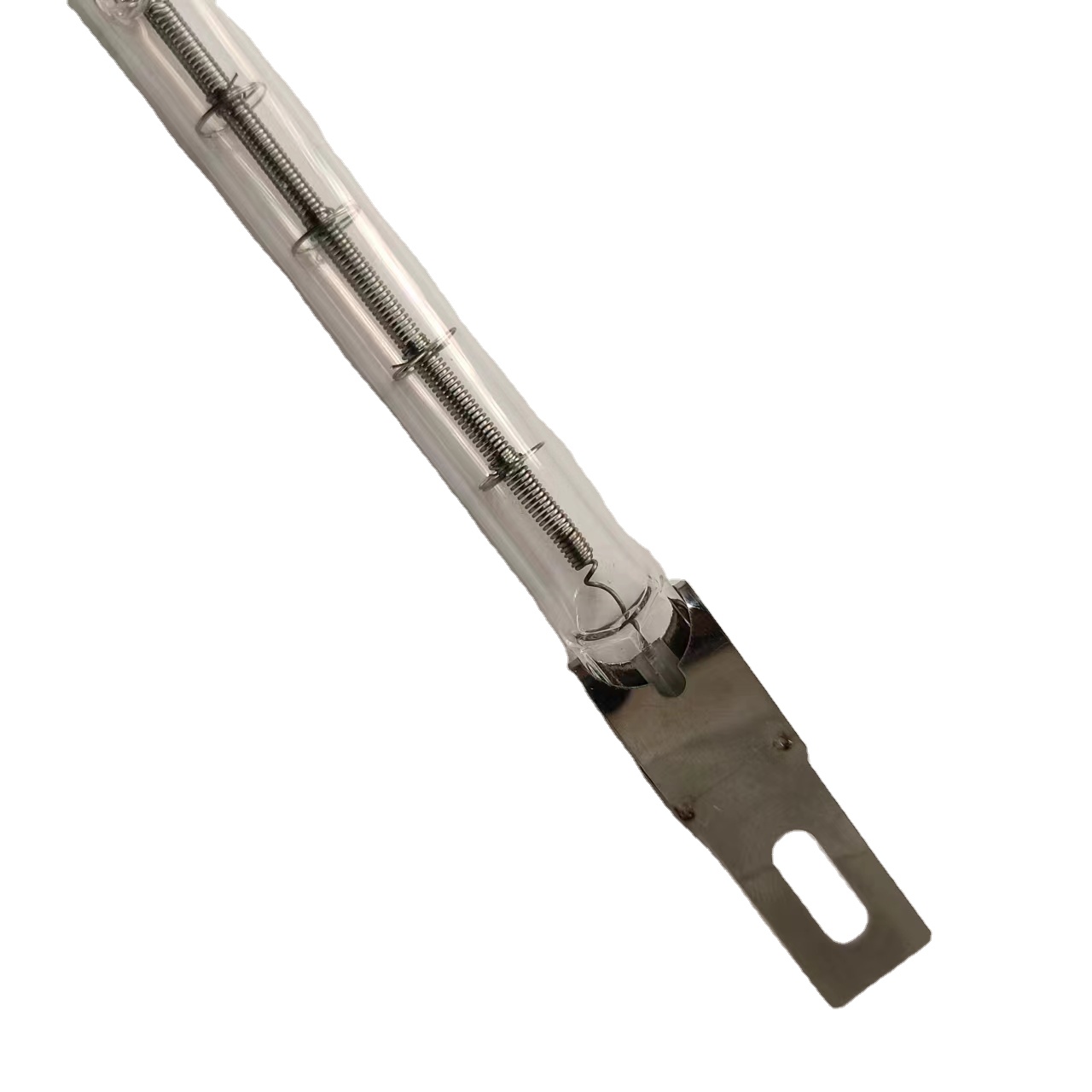
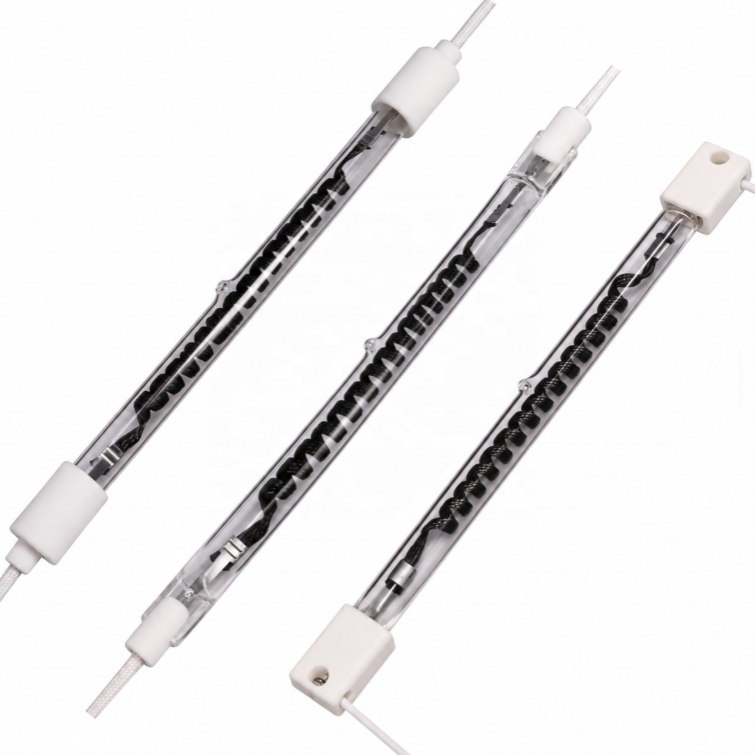
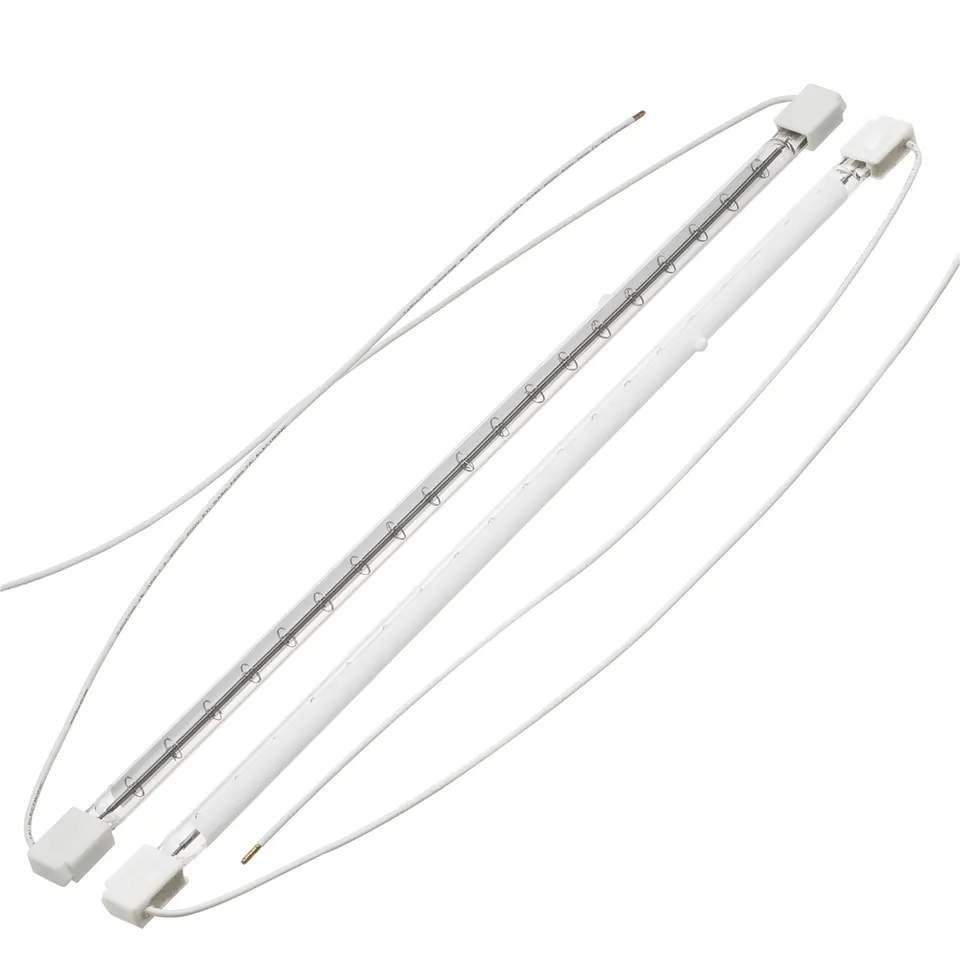
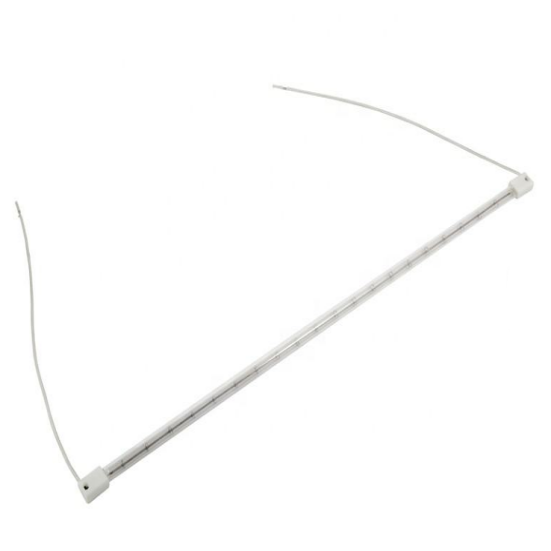
To fabricate an exact replacement or OEM equivalent, provide operating voltage, total wattage, overall length (OAL), heated/effective length, envelope diameter (standard single round tube or twin-tube 11x23 mm / 15x33 mm), reflector style (bare, gold, ceramic white), and end-cap terminal configuration (ceramic base, R7S, metal sleeve, or insulated silicone leads).
Q: What defines the service lifetime of high-power halogen quartz emitters?
Average service life ranges between 5,000 hours for high-temperature tungsten-halogen emitters to over 10,000–20,000 hours for carbon-fiber medium-wave elements. Longevity is determined by envelope seal temperature (which must stay below 350°C via adequate exhaust cooling), voltage stability, and contamination-free handling (preventing finger oils from initiating high-temperature devitrification).
Q: How does directional gold coating affect thermal transfer efficiency?
A bare quartz tube emits infrared radiation omnidirectionally (360 degrees). By depositing a thin film of 24K gold on one hemisphere (180 degrees), over 90% of the radiant heat is redirected toward the target process plane. This nearly doubles the effective frontal irradiance while keeping adjacent machine framing cooler.
Q: Can Kavri manufacture specialized quartz laboratory glassware to custom CAD blueprints?
Yes. Our glassblowing and CNC machining floor manufactures analytical quartz flow cells, flat-bottom quartz crucibles, combustion boats, diffusion furnace tubes, coiled condensation tubes, and multi-neck flasks. Custom tolerances can be maintained to ±0.05 mm upon technical review.
Q: What are your minimum order quantities (MOQ) and sample lead times?
Standard quartz components and replacement emitters have an entry MOQ of just 8–10 units. Custom prototyping typically takes 7–10 working days from drawing sign-off. High-volume container production runs are supported by our three dedicated lines with monthly capacity reaching tens of thousands of units.
Q: How do you handle trade compliance, Incoterms, and fragile export transport?
We export to more than 30 countries under FOB, CFR, CIF, EXW, and DDP terms. Products are protected using custom-formed EPE foam inserts, rigid structural inner cartons, shock-absorbing desiccants, and fumigated maritime/air export wooden crates, guaranteeing unbroken delivery to your facility.
Request Custom Engineering Drawings & Full Product Catalog
Connect with our technical design team in Lianyungang. Whether you require custom-built twin-tube halogen emitters, carbon fiber heating modules, or custom fused silica laboratory glassware, our application engineers respond within 4 hours.
Get Catalog