Featured Industrial Quartz Emitters & Tubing Components
Explore our top-tier precision-drawn quartz envelopes, industrial infrared halogen radiators, and custom carbon fiber thermal emitters engineered for photovoltaic, semiconductor, textile, automotive, and biochemical instrumentation.
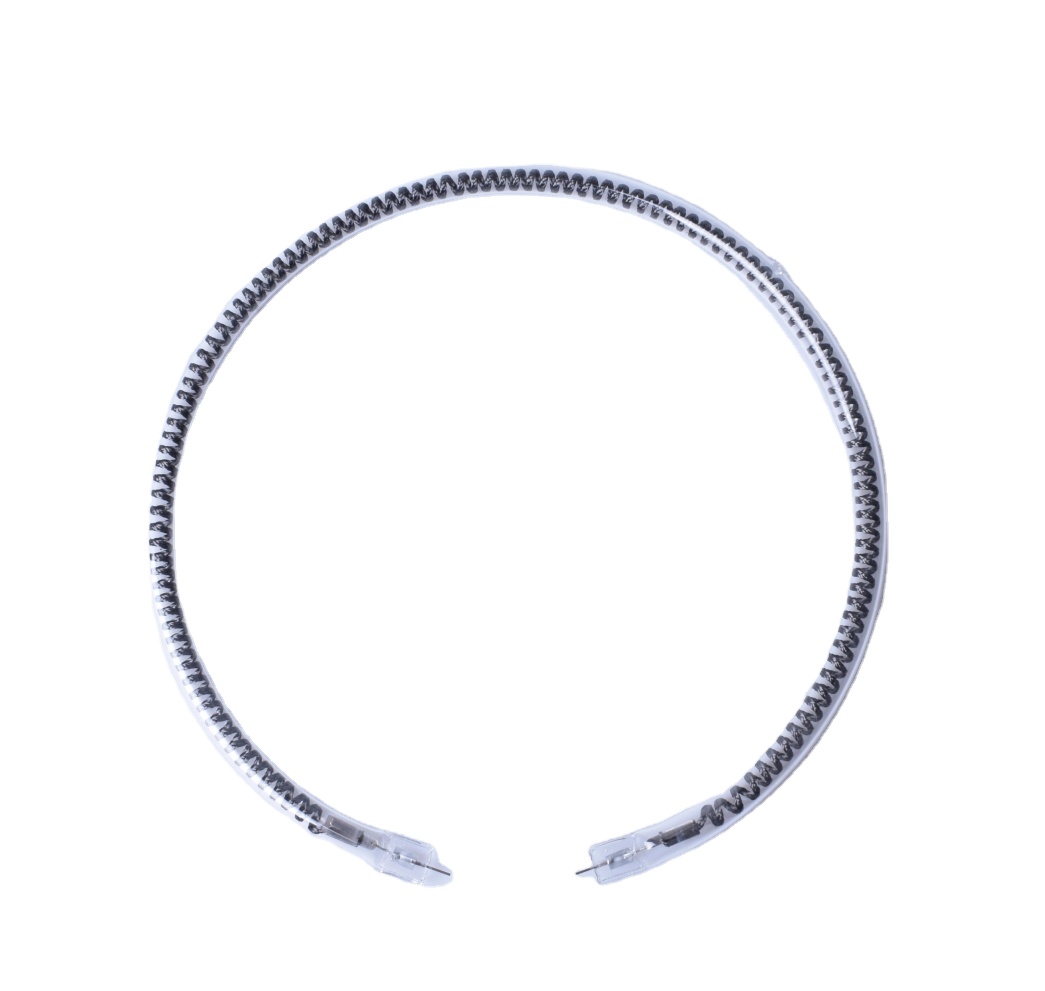
120V 1000W Medium Wave Clear Infrared Heat Lamp for Photovoltaic
Designed specifically for silicon wafer drying, stringer soldering, and solar cell metallization sintering with uniform thermal distribution and instant-response thermal stabilization.
Get a Quote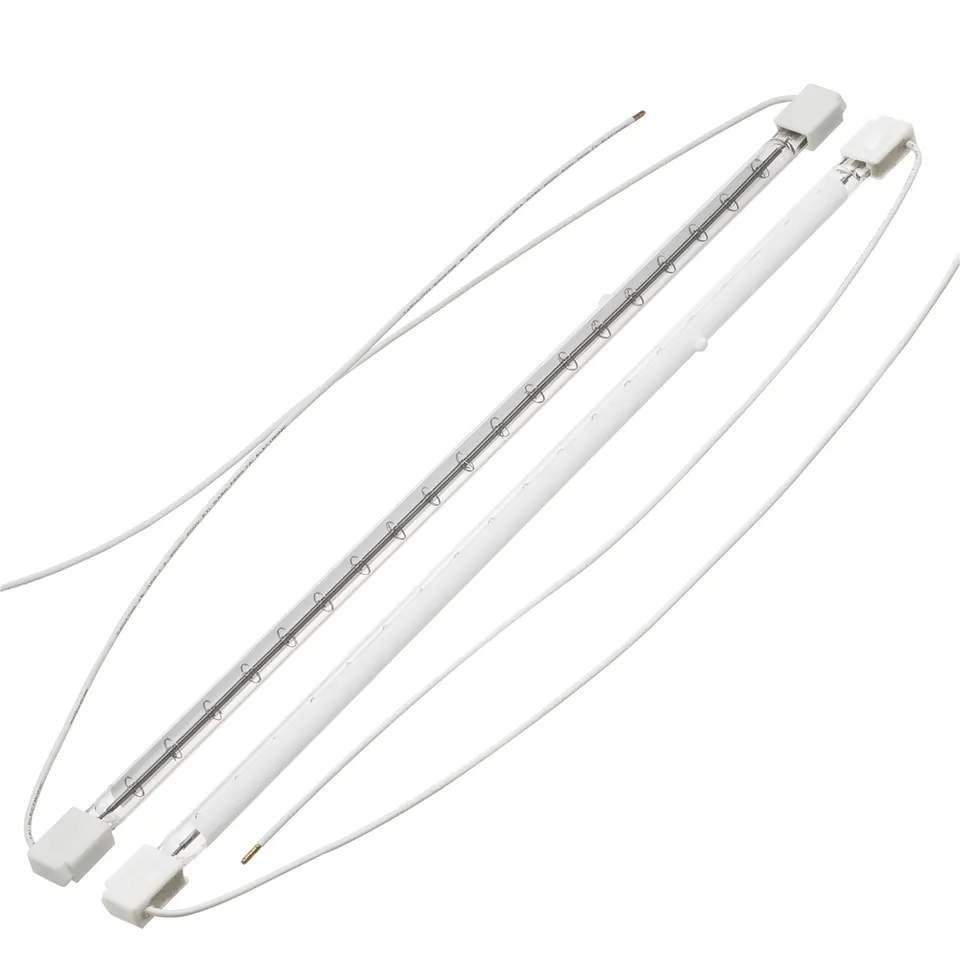
Shortwave Half-White Infrared Radiant Emitter for Outdoor Applications
Integrated ceramic back-reflector directs 90%+ of radiant flux toward target surfaces. Optimized for space heating, technical textiles, and moisture vapor dissipation.
Get a Quote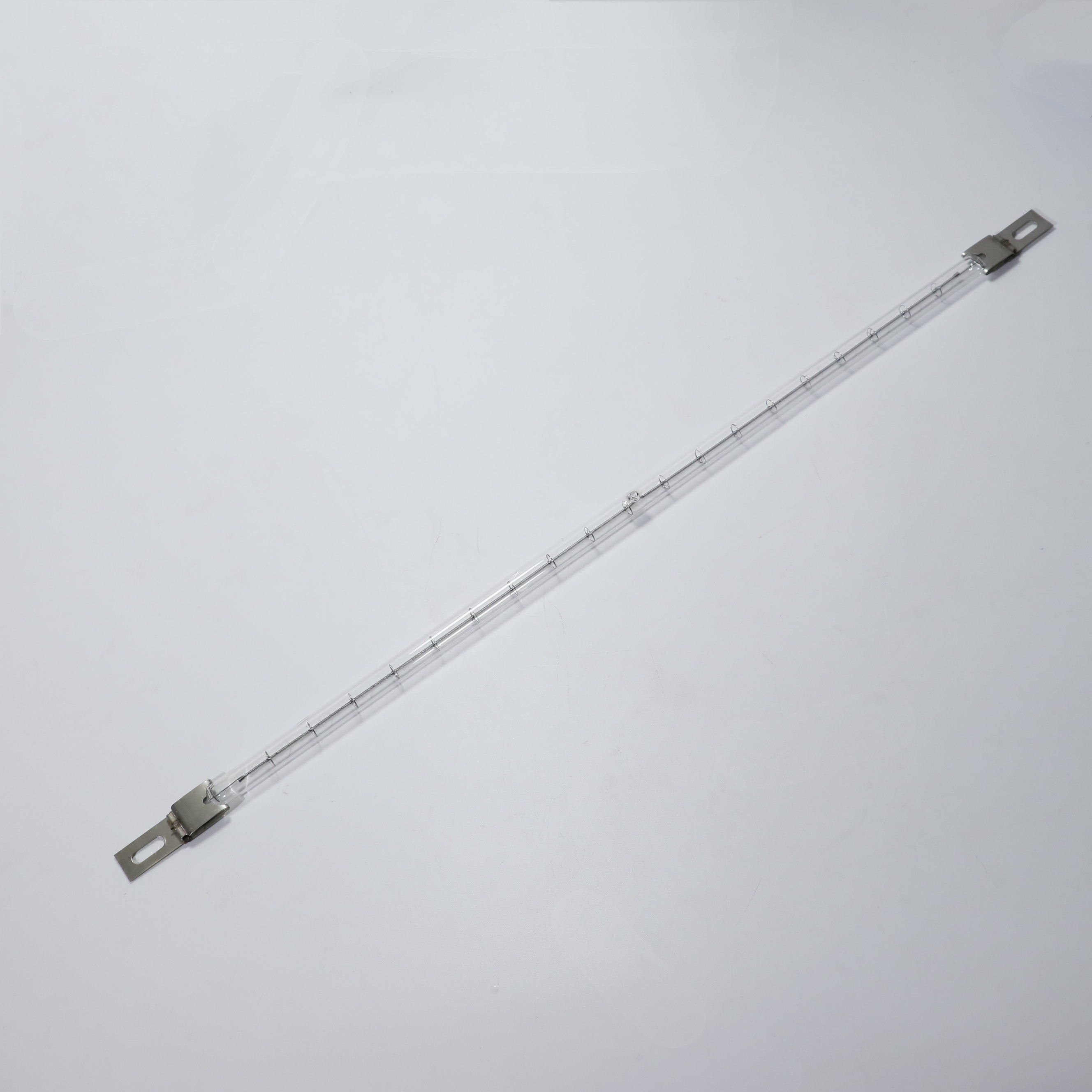
Best Selling 220V 1000W Quartz Infrared Heat Lamp for Industry
General-purpose workhorse for paint curing, thermoforming, powder coat pre-gelation, and drying tunnels where high power density and quick cycle turnover are vital.
Get a Quote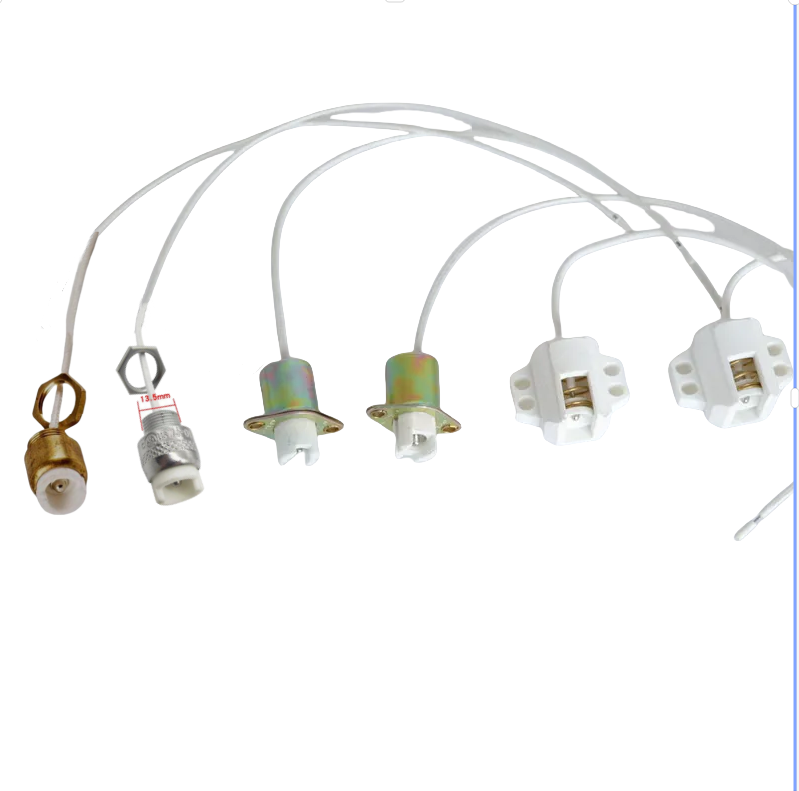
Halogen Infrared Heating Lamp R7S Ceramic Base Holder Mount
Engineered high-temperature ceramic termination ensuring zero electrical creepage, robust spring-clamp mechanical retention, and rapid swap-in maintenance ergonomics.
Get a Quote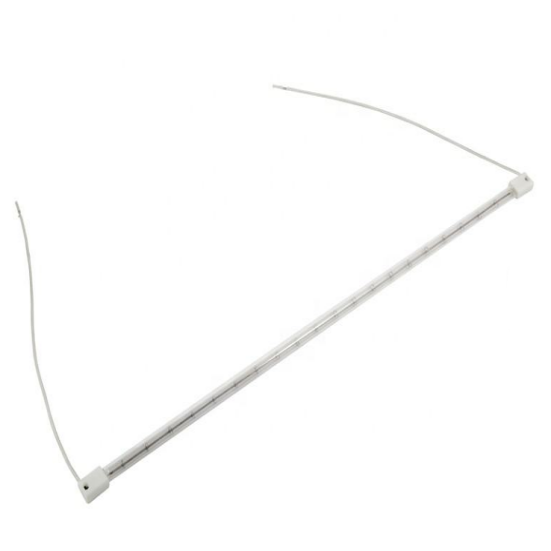
Customizable Infrared Halogen Lamp for Continuous Textile Lines
Designed for continuous fabric drying, heat-setting stenters, and dye fixation, providing uniform lateral wavelength emission to prevent fabric discoloration or scorch.
Get a Quote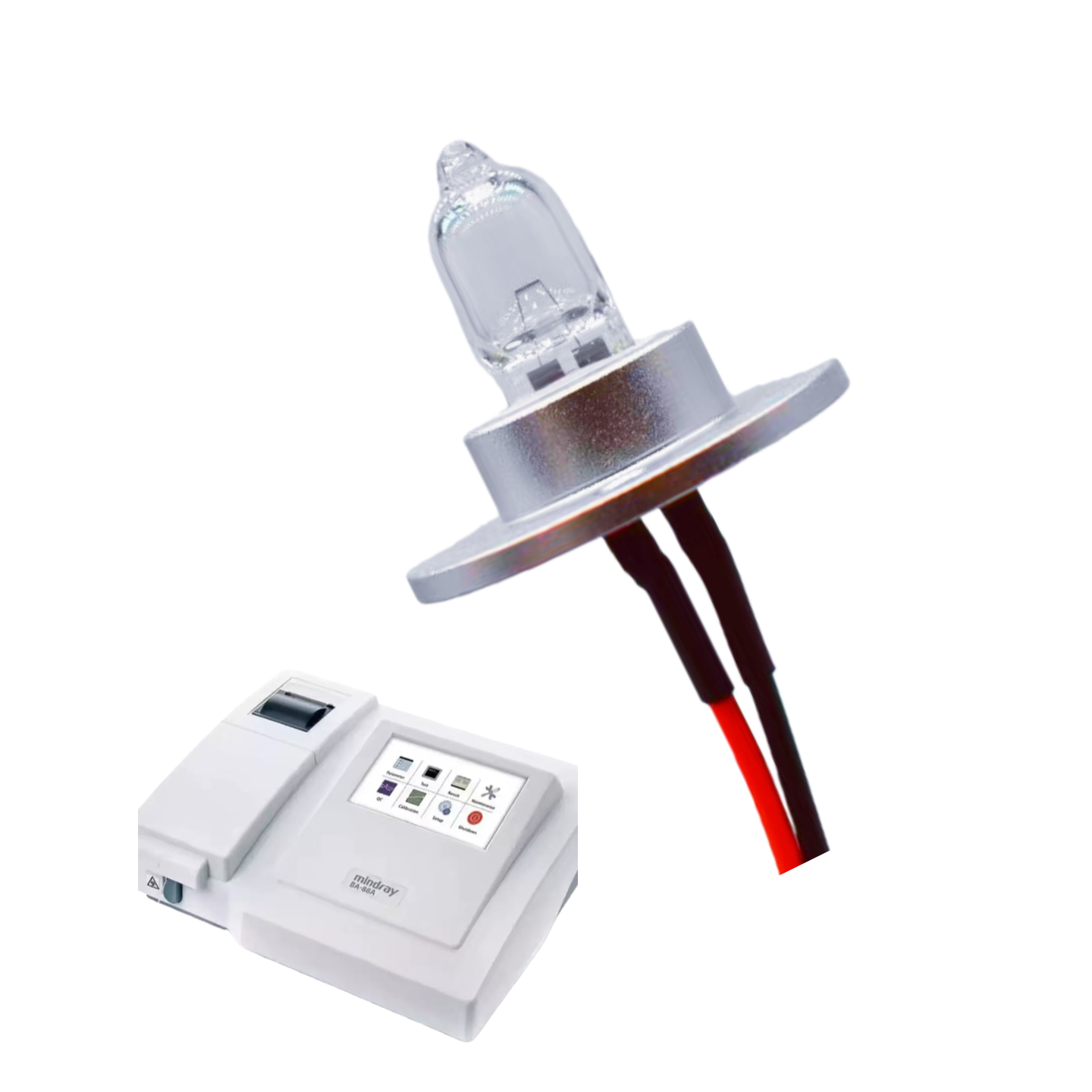
BA-88A Halogen Lamp Bead 6V 10W for Biochemical Analyzers
Medical-laboratory grade fused quartz envelope offering exceptional transmission stability across UV and visible spectra for precision spectrophotometric diagnostics.
Get a Quote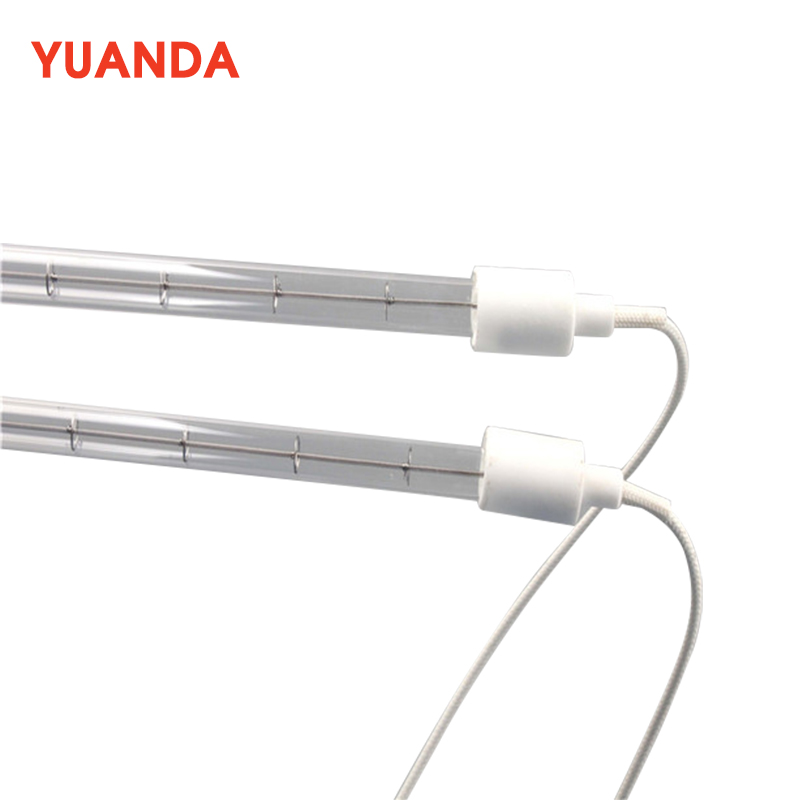
Wholesale Industrial Infrared Halogen Emitter for Automated Drying
Built to system integrator specifications. Features tailored wattage densities and bespoke gas backfill chemistry to eliminate tungsten evaporation blackening.
Get a Quote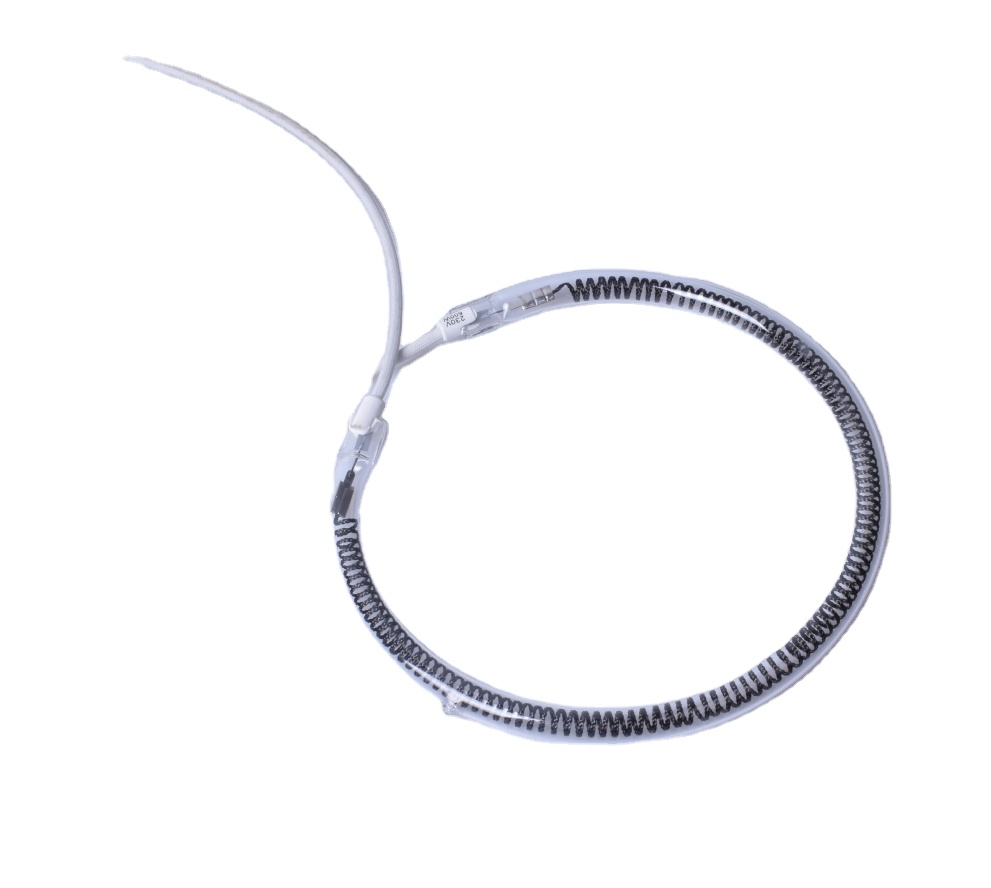
1000W Carbon Fiber Circular Infrared Emitter for PET Blowing
Ring-shaped medium-wave emitter matching PET preform geometries. Carbon fiber radiates within the primary plastic absorption spectrum, eliminating wall thinning defects.
Get a QuoteIndustrial Fused Quartz Tubing: Material Science, Metallurgy & Performance
China's premier quartz manufacturing ecosystem, anchored in Lianyungang (Donghai), commands global fused quartz production through pristine natural silica reserves, refined thermal refining, and precision cold working.
Thermal Shock Resistance (ΔT > 1100°C)
Fused silica displays an exceptionally low linear coefficient of thermal expansion (α ≈ 5.5 × 10¯&sup7;/K) between 20°C and 1000°C. This near-zero expansion allows quartz tubing to endure extreme thermal gradients, surviving instant water-quench cycles from glowing 1150°C states without micro-fracturing or dimensional warping.
Broadband Optical Transmission (180nm–4.5µm)
High-purity quartz envelopes maintain transmission efficiencies exceeding 90% across deep ultraviolet, visible, and infrared spectra. Controlling the hydroxyl ion (OH¯) concentration to ≤ 5 ppm eliminates parasitic absorption bands at 2.2 µm and 2.73 µm, securing maximum forward radiant efficiency in precision heating.
Chemical Inertness & Refractory Integrity
Composed of 99.99%+ SiO2, transparent quartz tubing remains inert to all commercial acids (except hydrofluoric and phosphoric at >300°C). With a strain point at 1120°C and softening point at 1683°C, it acts as an unyielding barrier against atmospheric contamination in ultra-clean semiconductor processing.
Standard vs. Precision Class Quartz Tubing Tolerances
Procuring quartz glass for industrial emitters and process chambers demands strict compliance with mechanical, optical, and thermal tolerances. Below is our engineering parameter matrix.
| Parameter / Property | Commercial Standard Grade | Semiconductor / Analytical Grade | Inspection Protocol & Standard |
|---|---|---|---|
| SiO2 Chemical Purity | ≥ 99.95% | ≥ 99.995% to 99.999% | ICP-OES / Direct Mass Spectrometry |
| Hydroxyl (OH¯) Content | ≤ 20 – 30 ppm | ≤ 5 ppm (Dehydroxylated) | FTIR Spectrophotometer (2.73 µm band) |
| Outer Diameter (OD) Tolerance | ±0.20 mm to ±0.35 mm | ±0.05 mm to ±0.10 mm | Non-contact dual-axis Laser Micrometer |
| Wall Thickness Uniformity | ≤ 10% eccentricity | ≤ 5% concentricity deviation | Ultrasonic Wall Thickness Gauge |
| Max Working Temp (Continuous) | 1050 °C – 1100 °C | 1150 °C – 1200 °C | Thermal soak annealing protocol |
| Softening Temperature | 1683 °C | 1730 °C | Dilatometer Thermal Expansion Analysis |
| Dielectric Strength (20°C) | 25 – 40 kV/mm | > 50 kV/mm | ASTM D149 High Voltage Breakdown |
Future Procurement Trends: Strategic Global Supply Outlook
Global supply chains are migrating from transactional spot buying toward collaborative Tier-1 manufacturing relationships. Here are the core factors defining quartz glass procurement over the coming decade.
1. Photovoltaic N-Type TOPCon & Perovskite Scaling
With crystalline silicon solar technology transitioning rapidly to N-Type TOPCon, HJT, and tandem perovskite cells, demand for quartz diffusion furnace tubes, wafer boats, and medium-wave IR metallization emitters has surged. Facilities require high thermal uniformity and low boron/phosphorus contamination to maximize power conversion efficiencies.
2. Electrification of Industrial Thermal Drying
Stricter environmental regulations are driving factories to replace fossil-fuel gas drying ovens with high-efficiency quartz infrared radiators. Electrified IR heating offers instantaneous power modulations (≤ 1.2s ramp-up), reducing plant carbon footprints and operational energy losses by up to 45%.
3. Supply Chain Near-Sourcing & Direct OEM Partnerships
International OEMs in North America and Western Europe are bypassing third-party trading intermediaries to partner directly with onsite-verified Chinese manufacturers. Direct factory relationships yield tighter dimensional tolerances, customized pin terminations, tailored lead wire assemblies, and compressed prototype cycles.
Manufacturing Advancements: Precision Drawn Tubing to Finished Emitters
Next-generation quartz tubing relies on sophisticated thermodynamic refining, robotic cold processing, and vacuum thin-film sputtering to meet harsh application requirements.
Electric & Plasma Fusion Drawing
Modern quartz manufacturers utilize continuous electric-melt vacuum drawing furnaces alongside vertical tower plasma deposition. This achieves near-zero bubble counts (Class 0/1 bubble free), razor-sharp ovality tolerances (≤ 0.1 mm), and pristine surface fire-polishing across continuous tube runs exceeding 4000mm in length.
Directional PVD Reflective Coatings
Applying liquid ceramic white or nano-gold films via Physical Vapor Deposition (PVD) directly onto outer quartz envelopes creates a unified 180° radiant reflector. This internal mirror configuration eliminates separate external metal reflectors, minimizing thermal drift and targeting radiant flux precisely where it is required.
Automated Glassworking & Sealing
Transitioning from manual blowtorches to CNC multi-axis glassworking lathes ensures micro-precision across pinch-seals, molybdenum foil encapsulation, and terminal welding. Automated thermal glass working eliminates localized stress risers, guaranteeing hermetic seal integrity throughout continuous thermal cycling.
Why Kavri Quartz Leads China's Quartz Tubing & Emitter Sector
Headquartered in Lianyungang, Jiangsu — the epicenter of China's quartz and silicon materials industrial cluster — Kavri Quartz delivers verified manufacturing capabilities, institutional engineering pedigree, and direct export infrastructure.
Donghai Cluster Advantage
Located next to the world-renowned Donghai silica deposits, securing unhindered access to high-purity natural silica sand and crystal feedstock with minimal raw material supply volatility.
Three Dedicated Lines
Operating 3 specialized production lines spanning halogen short-wave lamp assembly, carbon fiber winding/evacuation, and precision cold-cut quartz tubing and laboratory apparatus fabrication.
Export-Centric Standard
With 81%–90% of finished volume exported to Germany, the Netherlands, the USA, Japan, and South Korea, all assemblies adhere to rigorous CE, RoHS, and international dimensional tolerances.
OEM/ODM Customization
Over 10 years of OEM development. We manufacture directly to client engineering CAD blueprints, nameplates, or physical samples, supporting custom voltages, heated lengths, caps, and private labeling.
Frequently Asked Questions for B2B Procurement Teams
Clear, authoritative technical answers addressing engineering tolerances, logistics safety, material certification, and custom prototyping cycles.
What is the minimum purity benchmark for semiconductor-grade quartz tubing vs. heating lamp envelopes?
How does Kavri Quartz prevent fragile breakage during global maritime and air freight shipments?
What technical parameters are needed to rapidly replicate a custom infrared quartz emitter?
How does shortwave halogen compare with carbon fiber medium-wave for plastic thermoforming and PET blow molding?
What are standard lead times for custom prototypes versus production container quantities?
Can Kavri Quartz provide optical quartz flow cells and custom laboratory instruments?
Request Direct Engineering Consultation & Factory Pricing
Connect directly with our senior quartz glass technical team in Lianyungang. Provide your blueprint, operating envelope, or sample specifications to receive engineering feedback and an official quote within 4 hours.