Precision Quartz Tube Heating Emitters & Connector Solutions
Designed to endure severe mechanical stress, ultra-fast thermal ramping, and corrosive atmosphere exposure. Explore our verified standard and custom emitter configurations with factory-direct connector terminations.
The Mechanics of Quartz Tube Connectors: Material Science & Hermetic Sealing
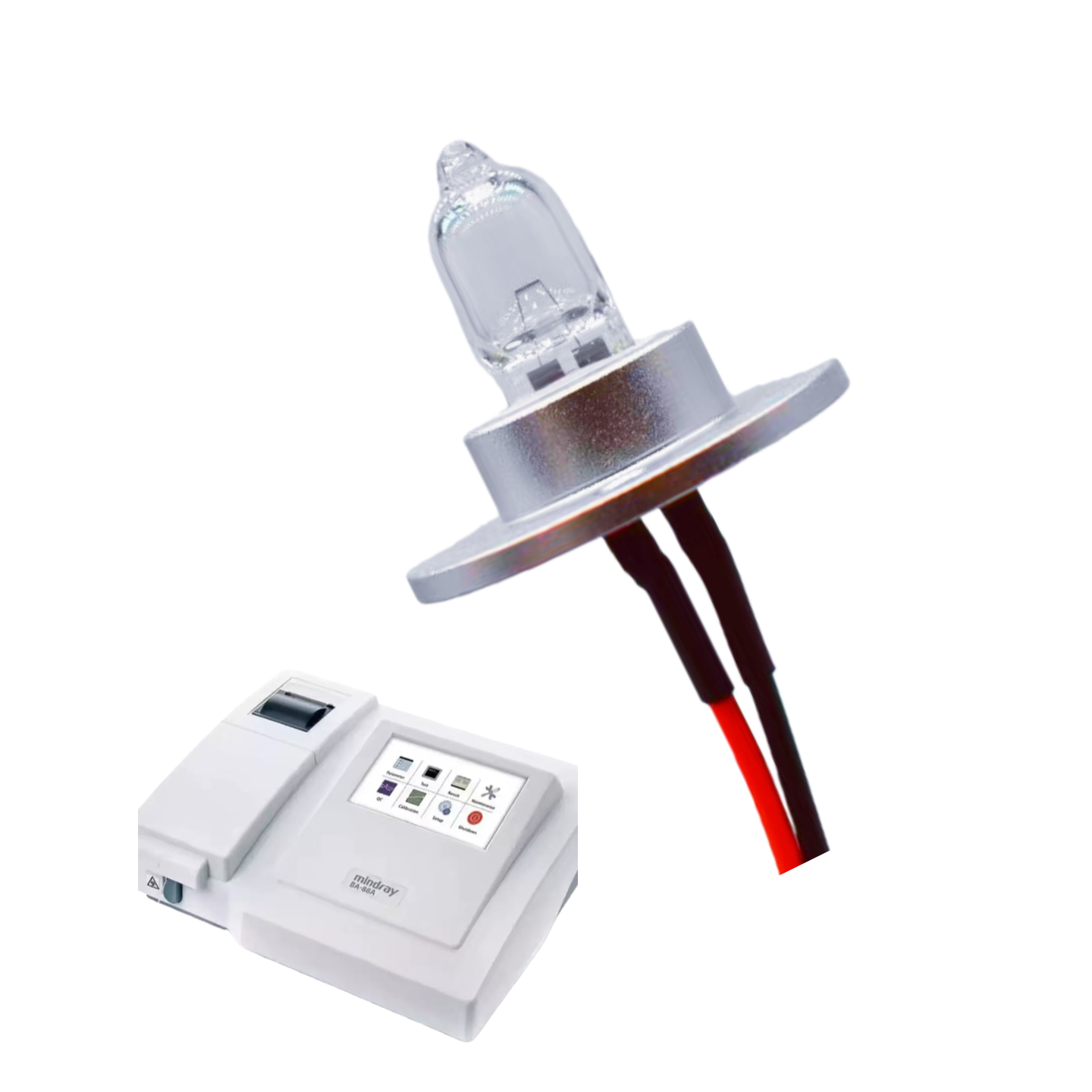
In high-power infrared emitters, CVD semiconductor reaction chambers, and precision biochemical instruments, the quartz tube connector is rarely just a mounting cap—it represents the critical thermo-mechanical boundary. Because fused quartz exhibits an exceptionally low coefficient of thermal expansion (CTE of approximately 5.5 × 10⁻⁷/K), connecting it to conductive metals (copper, nickel, Kovar, or tungsten with CTEs exceeding 50 to 170 × 10-7/K) without catastrophic structural rupture requires advanced metallurgical and glass-blowing engineering.
Molybdenum Foil Pinch Sealing
To establish a true hermetic electrical feedthrough through a quartz envelope, Kavri Quartz incorporates ultra-thin, chemically etched molybdenum foil ribbons (typically 15 to 30 microns thick with feather-edged borders). Under extreme vacuum and oxygen-hydrogen flame heating, the quartz collapses around the foil. The feather edges yield plastically to compensate for thermal expansion discrepancies, ensuring zero gas leakage up to 350°C continuous seal temperature.
Steatite & Alumina Ceramic Bushings
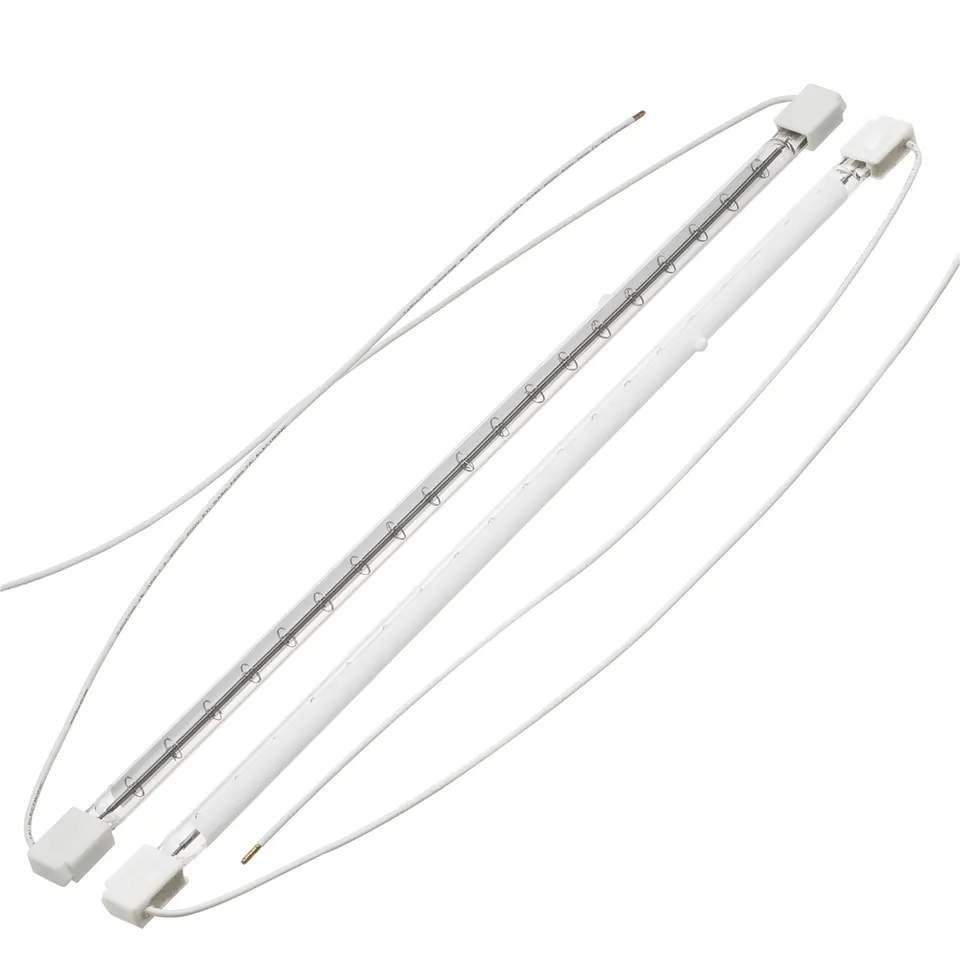
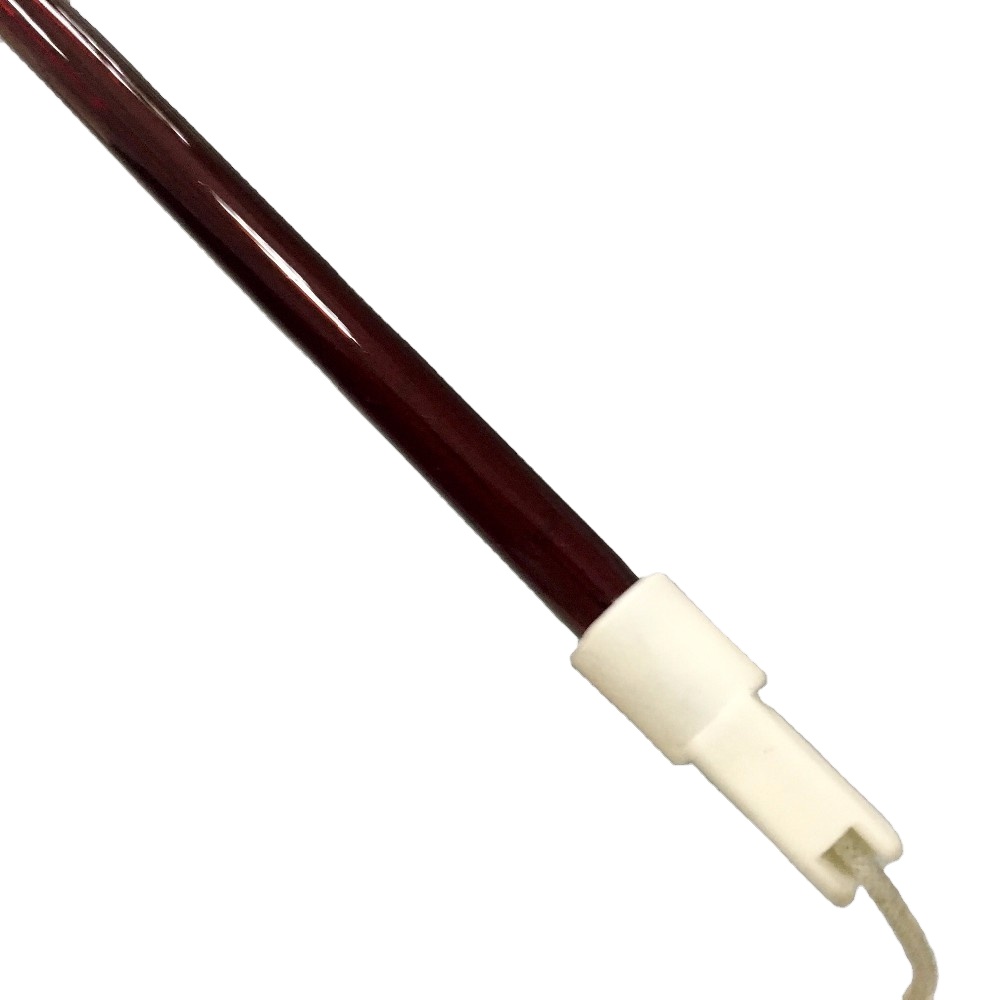
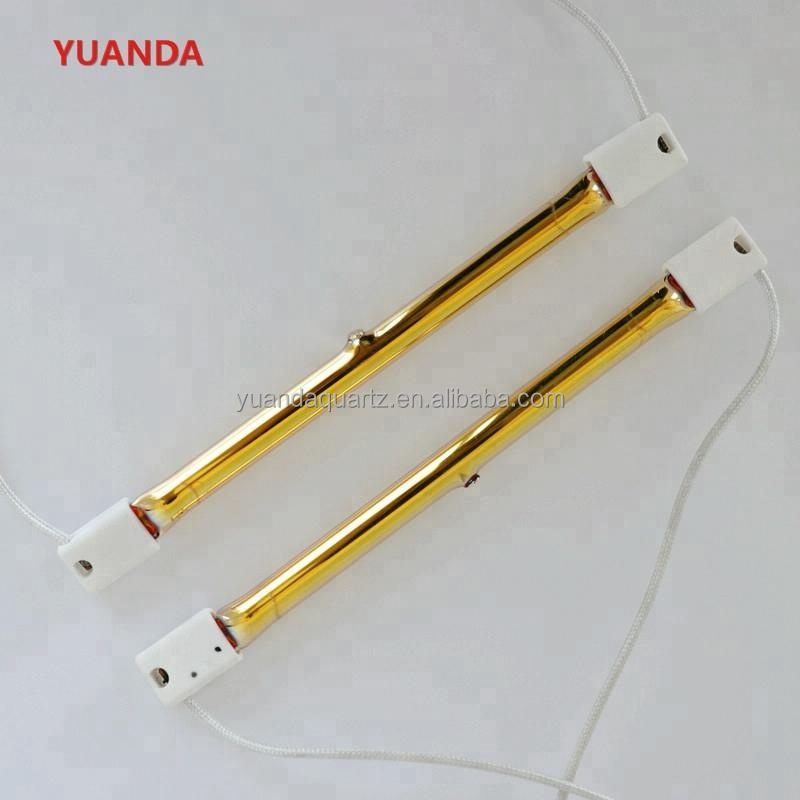
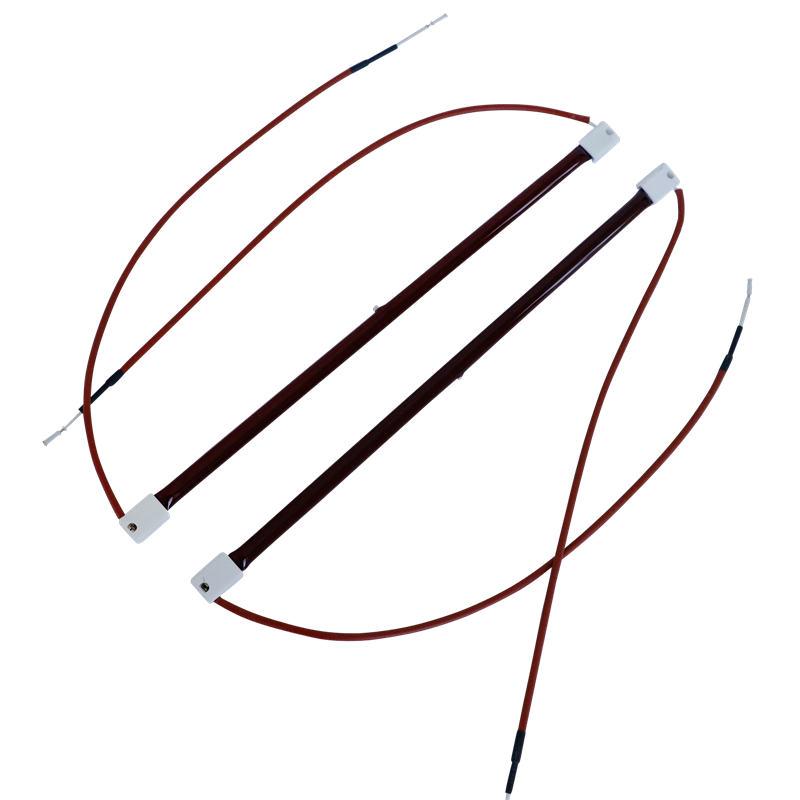
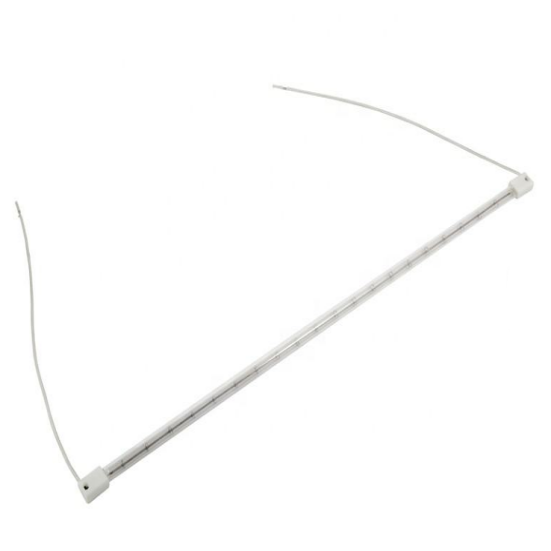
Industrial twin-tube and single-tube quartz emitters utilize high-dielectric steatite (C221) or sintered alumina (Al2O3) connector caps. These ceramic bodies provide electrical isolation exceeding 15 kV/mm, mechanically shield fragile pinch seals from mechanical torque, and prevent ambient oxygen from oxidizing the inner molybdenum ribbon lead contacts under elevated operational temperatures.
High-Flexibility Stranded Leads & Crimps
Vibration-prone environments like PET blow molding machinery require high-reliability lead wire terminations. Connectors are factory-fitted with pure nickel core wires sheathed in woven fiberglass, PTFE, or high-purity mica tape insulation rated for 450°C–600°C. Terminal lugs (fork, ring, faston, or specialized plug-in blades) are ultrasonic welded or pneumatic-crimped to maintain minimal contact resistance.
| Connector & Seal Parameter | Standard Ceramic Cap Type | Hermetic Metal-Quartz Transition | Spring-Loaded Quick-Disconnect |
|---|---|---|---|
| Operating Temperature Limit | Continuous 350°C, Peak 500°C | Continuous 450°C, Peak 600°C | Continuous 280°C, Peak 350°C |
| Dielectric Breakdown Voltage | > 25 kV/mm (Alumina C799) | > 15 kV/mm (Hermetic Glass-Moly) | > 18 kV/mm (Steatite C220) |
| Thermal Shock Resistance (ΔT) | ΔT = 800°C to water quenching | ΔT = 1000°C (Quartz Substrate) | ΔT = 650°C |
| Typical Industrial Applications | PET blowing, Automotive paint curing | Semiconductor CVD, Epitaxy chambers | High-speed printing dryers, SMT reflow |
| Customization Capabilities | L-Shape, Round, Twin-Tube (11x23, 15x33mm) | Direct Kovar/Invar graded glass seals | Snap-in OEM retrofits, quick-latch terminal |
Procurement Trends & Technological Evolution: 2025–2030
Global manufacturing demands are pivoting towards decarbonization, rapid heating line automation, and shorter maintenance turnarounds. The procurement of quartz tube connectors and integrated emitter assemblies is undergoing a fundamental structural transformation.
1. Modular Plug-and-Play Quick-Release Connectors
Traditional industrial quartz tube replacement often entails 20 to 45 minutes of maintenance downtime per machine module, requiring technicians to unscrew terminal studs and route fragile insulated leads inside congested wiring harnesses. Global OEM machinery builders are increasingly mandating tool-less, spring-loaded ceramic quick-connect plugs. These connectors integrate self-locating guide pins and ceramic push-lock sockets that reduce emitter replacement cycle times to under 30 seconds while guaranteeing zero mechanical bending stress on the quartz envelope.
2. Zero-Lead & RoHS-Compliant High-Temperature Sealing Cements
Regulatory tightening across the European Union and North America (such as REACH and RoHS Annex III exemptions phase-outs) is compelling factories to abandon lead-bearing ceramic cements historically used to bond ceramic end caps onto quartz glass. The industry is rapidly adopting inorganic silicate and geopolymer bonding systems that maintain zero degassing under ultra-high vacuum conditions and exhibit thermal expansion curve matching up to 900°C.
3. Transition to Multi-Channel Twin-Tube Geometries
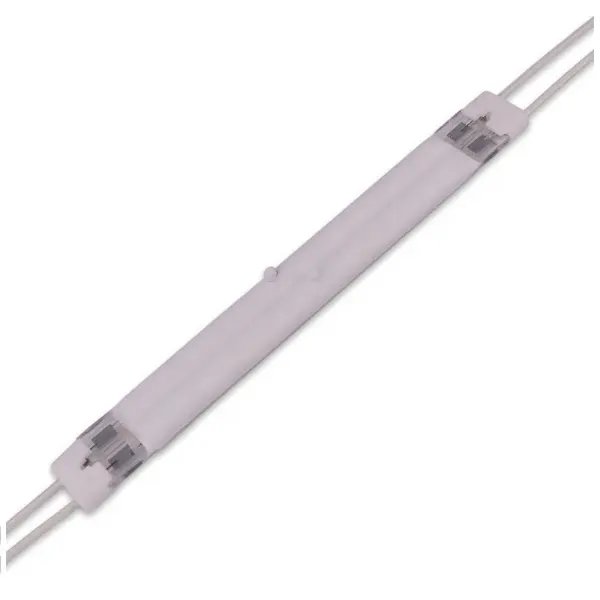
Single round quartz tubes are increasingly being superseded by 11×23mm and 15×33mm "figure-8" twin-tube cross sections. The twin-tube geometry provides significantly higher section modulus, eliminating the droop and sag common in 2000mm+ long single tubes operating at 950°C filament temperatures. This physical rigidity requires engineered twin-bore ceramic end connectors capable of securing dual filaments within a single compact terminal envelope.
4. Supply Chain Consolidation around Cluster Manufacturers
Procurement directors are shifting away from intermediate distributors toward vertically integrated original factories located within quartz resource clusters. Kavri Quartz's manufacturing facility in Lianyungang, adjacent to Donghai County (the global hub for silica refinement), enables unmatched supply chain control: from high-purity natural silica sand (>99.99% SiO2) and precision CNC glass-tube redrawing to automated filament winding and final connector potting under one roof.
Why Global Tier-1 Buyers Choose Kavri Quartz Product Co., Ltd.
Founded in 2014 and onsite-verified by Alibaba.com and leading third-party inspection agencies, Kavri Quartz stands as one of China's most trusted manufacturers of infrared lamps, quartz connectors, and fused silica instruments.
Donghai Quartz Valley Sourcing Advantage
Operating out of Lianyungang, Jiangsu, gives our production lines immediate access to China's premier mineral silica cluster. We maintain strict control over OH content, bubble density, and wall thickness tolerances from the raw quartz ingot phase, resulting in unmatched structural consistency for every tube connector assembly.
In-House Tooling & Rapid Prototyping
With our CNC glass lathes, hydrogen-oxygen flame welding units, and in-house ceramic mold shop, custom prototype connectors and sample heating assemblies can be fabricated and dispatched within 5 to 7 working days from customer CAD drawing approval, eliminating lengthy sub-vendor delays.
100% Comprehensive Factory Testing
Every production batch undergoes multi-point optical profiling, power calibration under full load, insulation resistance testing up to 2500V, and thermal shock burn-in cycles. Export crates feature custom molded pearl foam packaging to ensure zero transit damage across air and sea freight routes.
Frequently Asked Questions for B2B Technical Buyers
Get detailed, authoritative engineering answers regarding thermal ratings, minimum order volumes, material customization, and logistics parameters.
What are the maximum continuous operating temperatures for quartz tube connectors?
- Pinch Seal Area: The internal molybdenum foil hermetic seal should not exceed 350°C in ambient oxygen to prevent foil oxidation and seal fracturing. Under inert gas or vacuum conditions, it can withstand up to 450°C.
- Ceramic Connector Caps: Our steatite caps operate comfortably at up to 500°C, while pure sintered alumina (Al2O3) caps endure continuous exposure up to 1000°C.
- Lead Wire Systems: Standard pure nickel wire with woven silicone-impregnated fiberglass is rated for 450°C; mica-wrapped stranded nickel leads can endure up to 600°C.
Can Kavri Quartz reverse-engineer proprietary or obsolete connector fittings from OEM machines?
What is the Minimum Order Quantity (MOQ) for custom quartz connector assemblies?
How does half-white ceramic compare to gold reflector coating on quartz tubes?
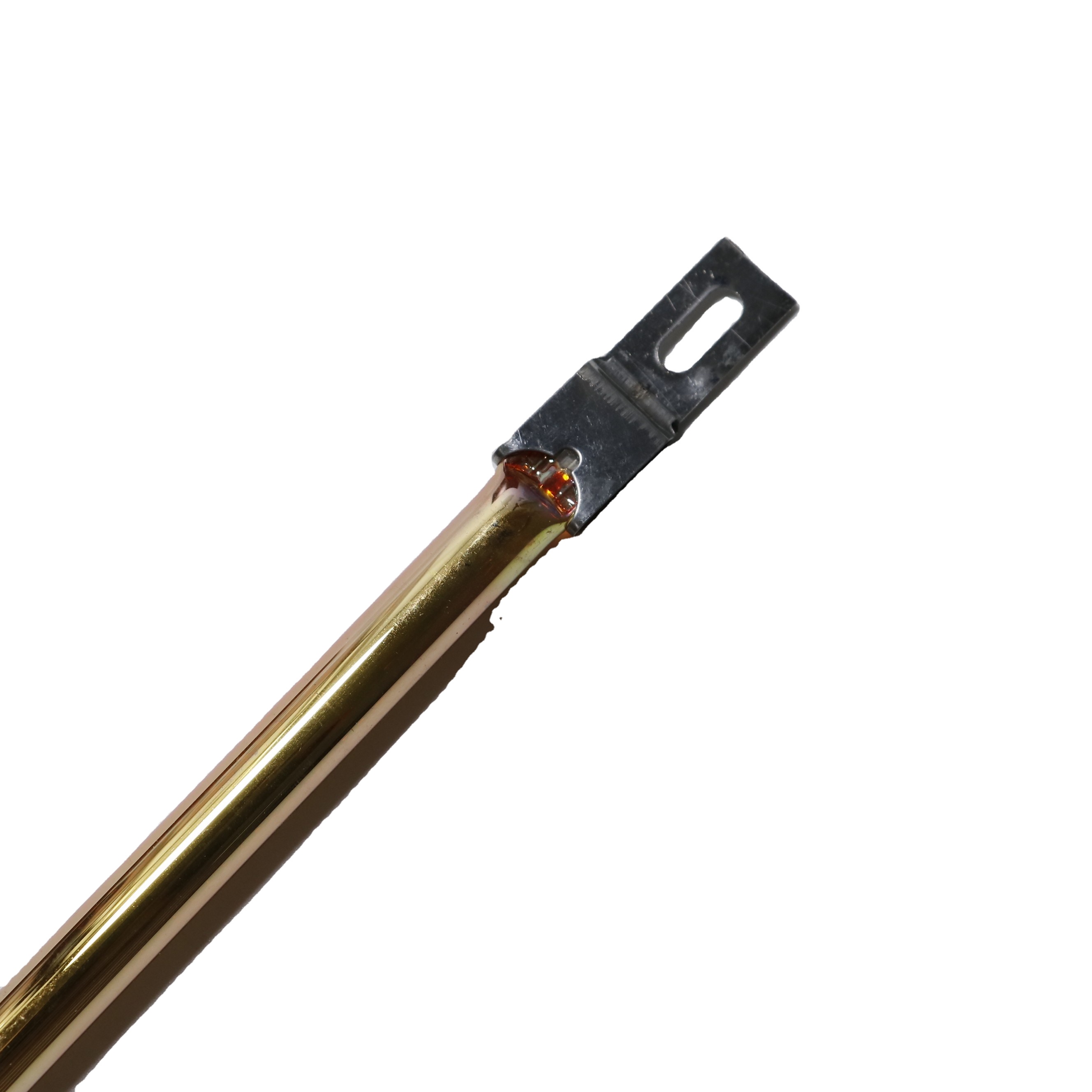
- Gold Reflector Coating: Provides the highest reflectivity (approx. 95% in the infrared spectrum). However, gold layers degrade if continuous tube wall temperatures exceed 600°C. It is optimal for automotive paint booths, electronics, and precision drying.
- Ceramic Half-White Coating: Exhibits slightly lower reflectivity (approx. 70–75%), but is thermally indestructible up to 1000°C. It will not discolor, chip, or flake in high-ambient temperature ovens like PET preform heating tunnels.