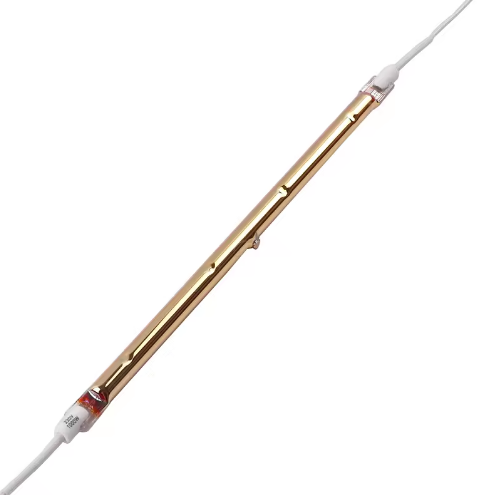
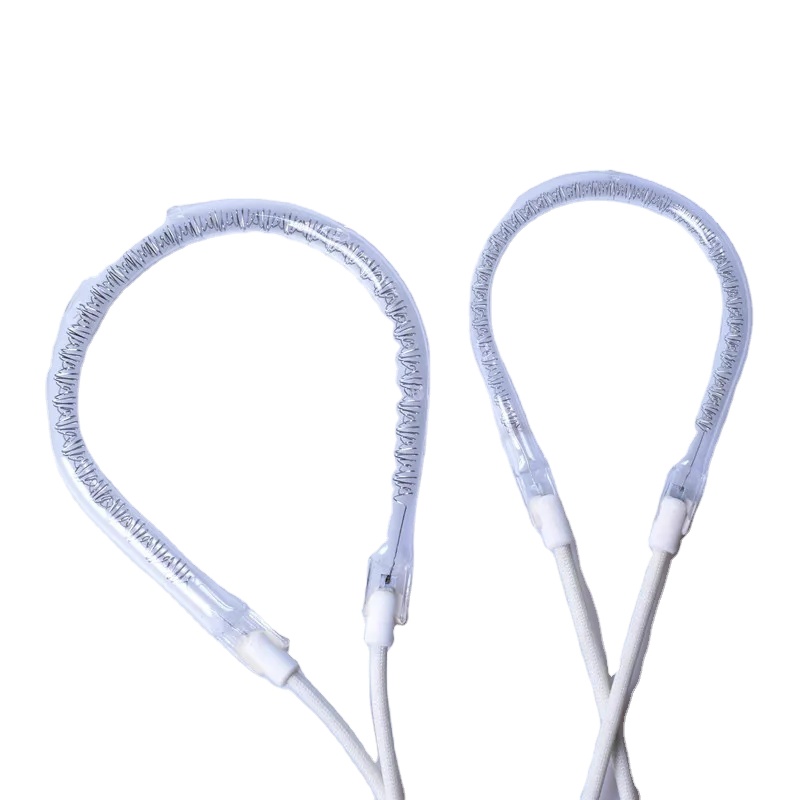
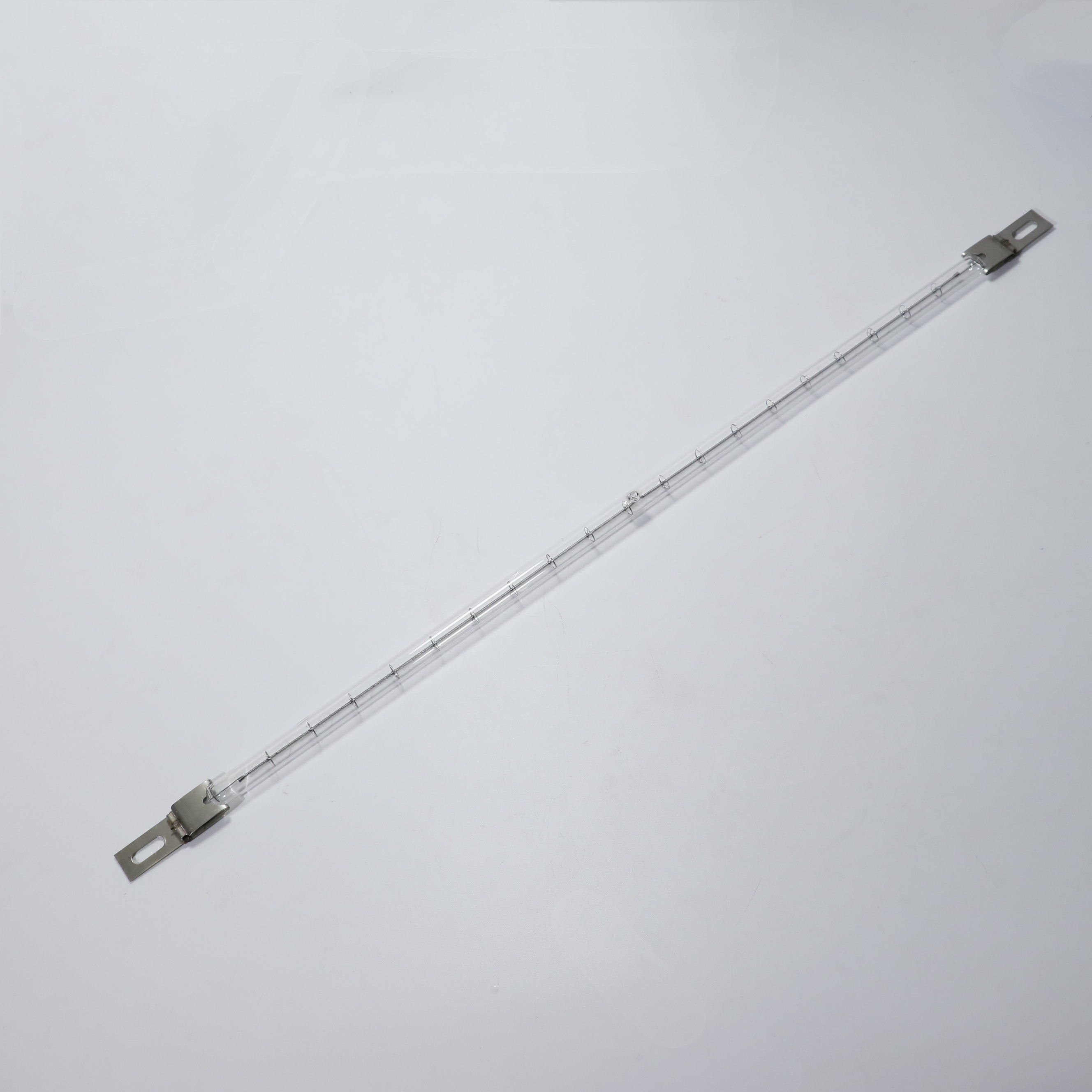
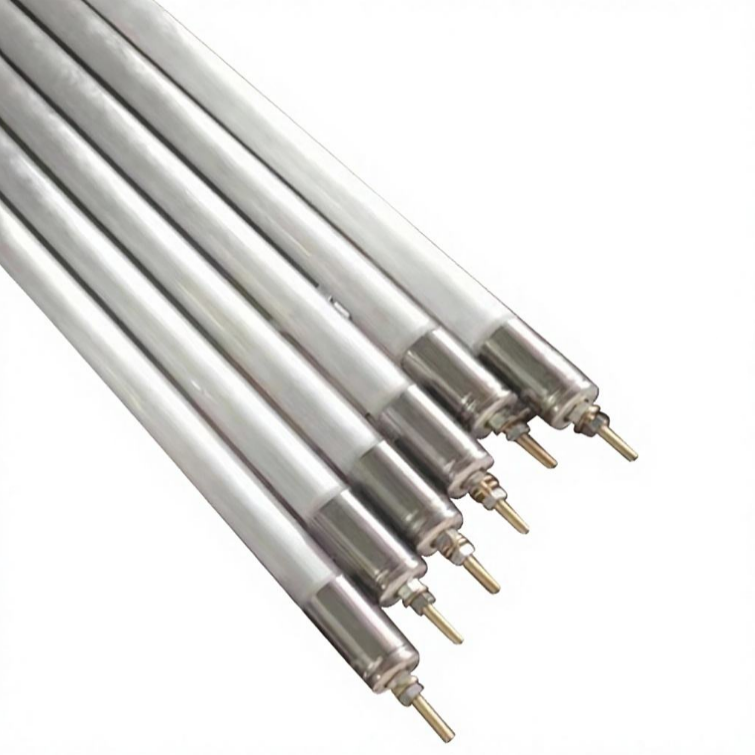
Precision-fabricated from optical-grade and thermal-grade synthetic and natural fused silica tubes. Direct replacements and OEM equipment integrations for demanding semiconductor, bottle blowing, industrial drying, and laboratory heating matrices.
An authoritative analysis of non-crystalline silicon dioxide (SiO2) polymorphism, thermal shock survivability, and transmittance bands for process engineers and procurement specialists.
Fused quartz glass (amorphous silicon dioxide, SiO2) represents the pinnacle of glass manufacturing technology. Unlike borosilicate, soda-lime, or aluminosilicate glass, fused silica features an interconnected, three-dimensional tetrahedral molecular network without modifier ions (such as sodium, calcium, or potassium). This absence of alkali ions is what imparts its extraordinary thermal stability, exceptional electrical insulation, and chemical inertness.
In high-temperature vacuum furnaces and continuous halogen infrared systems, conventional glass softens and flows between 500°C and 700°C. By contrast, Kavri's CE-certified fused quartz features a strain point of 1,075°C, an annealing point of 1,180°C, and a softening point reaching 1,680°C. Devitrification—the phase transformation from the metastable amorphous state into crystalline cristobalite—is strictly suppressed by maintaining trace alkali impurities (Li, Na, K) below 1.5 ppm, preventing surface hazing and micro-fractures during sustained 1,100°C operations.
Physical / Thermal Parameter
Standard Fused Quartz (Natural)
Synthetic Fused Silica (Type III/IV)
Borosilicate Glass 3.3 (Reference)
SiO2 Chemical Purity
≥ 99.99% (4N Grade)
≥ 99.9999% (6N Ultra-Pure)
~81% (Contains B2O3, Na2O, Al2O3)
Coefficient of Thermal Expansion (CTE)
5.5 × 10⁻⁷ / K (20°C to 320°C)
5.0 × 10⁻⁷ / K
33 × 10⁻⁷ / K (6x higher expansion)
Thermal Shock Resistance (ΔT)
Survives 1,100°C plunge into 20°C water
Survives 1,200°C plunge into water
Cracks at ΔT > 150°C
Continuous Working Temperature
1,100°C (1,300°C short-term)
1,150°C (1,450°C short-term)
450°C - 500°C Max
Dielectric Strength (20°C, 1MHz)
25 – 40 kV/mm
30 – 50 kV/mm
10 – 15 kV/mm
Optical Transmission Window
260 nm – 3,500 nm (Low OH: to 4,000 nm)
185 nm – 2,500 nm (Deep DUV Grade)
310 nm – 2,200 nm
Because the thermal expansion coefficient of fused quartz (5.5 × 10⁻⁷ / K) is virtually near-zero, the material experiences negligible internal thermal stress gradients during localized heating. This allows quartz halogen tubes to ignite from ambient cold to a filament temperature of 2,400 K within 800 milliseconds without shattering, making it the mandatory standard for high-speed PET blow molding and continuous coil coating.
2. Spectral Physics: Short-Wave Halogen vs. Medium-Wave Carbon Kinetics
Industrial thermal processing efficiency hinges on matching the emitter's radiation spectrum with the specific absorption bands of the substrate, governed by Planck's Radiation Law and Wien's Displacement Law. Kavri Quartz engineers manufacture emitters categorized across two critical spectral domains:
Operate at high filament temperatures (~2,200°C to 2,600°C) with exceptional volumetric penetration depth. Ideal for heating semi-crystalline thermoplastic preforms (such as PET, PLA) throughout their core wall thickness without prematurely scorching the outer surface. Also mandatory for rapid powder coating fusion, automotive body primer baking, and high-speed rotary printing presses running at over 300 meters per minute.
Feature lower color temperatures (~1,200°C) coupled with high radiant power density. Water molecules, organic solvents, polyurethanes, and clear adhesives possess strong absorption bands in the 2.5 μm to 3.5 μm spectrum. Carbon fiber emitters maximize direct molecular resonance drying, drastically cutting energy consumption by up to 35% compared to conventional convective air dryers.
Market Intelligence & Strategic Sourcing
Strategic Procurement Trends in High-Purity Fused Quartz (2025–2030)
Key insights driving procurement shifts among European, American, and Japanese OEMs toward integrated supply ecosystems and regulatory compliance.
The Donghai-Lianyungang Raw Silica Cluster Advantage
Procurement teams are moving away from intermediaries to partner directly with manufacturers situated within premier raw mineral hubs. Kavri Quartz leverages its strategic location in Lianyungang, Jiangsu (incorporating the famed Donghai crystal cluster), granting direct access to natural rock crystal deposits and domestic high-purity refined quartz sand. This vertical cluster integration guarantees stable raw stock allocations, rapid custom ingot melting, and superior cost-to-performance efficiency for overseas exporters.
Stringent CE Conformity & Environmental Compliance
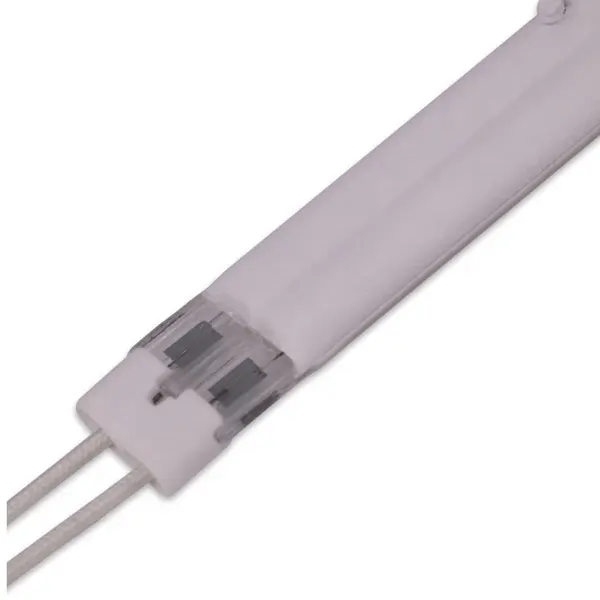
Import regulations across the European Union and North America now rigorously enforce compliance with the Low Voltage Directive (LVD 2014/35/EU), Electromagnetic Compatibility (EMC 2014/30/EU), and RoHS 3 (Directive 2015/863). Buyers demand full documentation verifying heavy metal-free seals, lead-free molybdenum ribbon weld pinouts, and non-outgassing ceramic end-caps to guarantee zero chamber contamination in cleanrooms and food packaging lines.
Electrification & Radiative Decarbonization
With international net-zero mandates penalizing fossil-fired industrial gas ovens, major processing industries (including automotive coating tunnels, lithium-ion battery cathode slurry drying, and photovoltaic glass baking) are retrofitting lines with electric fused quartz radiative cassettes. High-flux quartz emitters reduce furnace footprints by up to 60%, offering instantaneous zone control and eliminating thermal idling waste.
Technological Evolution
State-of-the-Art Advances in Quartz Radiative Engineering
How structural geometry innovations, multi-layer nano-coatings, and proprietary quartz purification techniques are expanding performance boundaries.
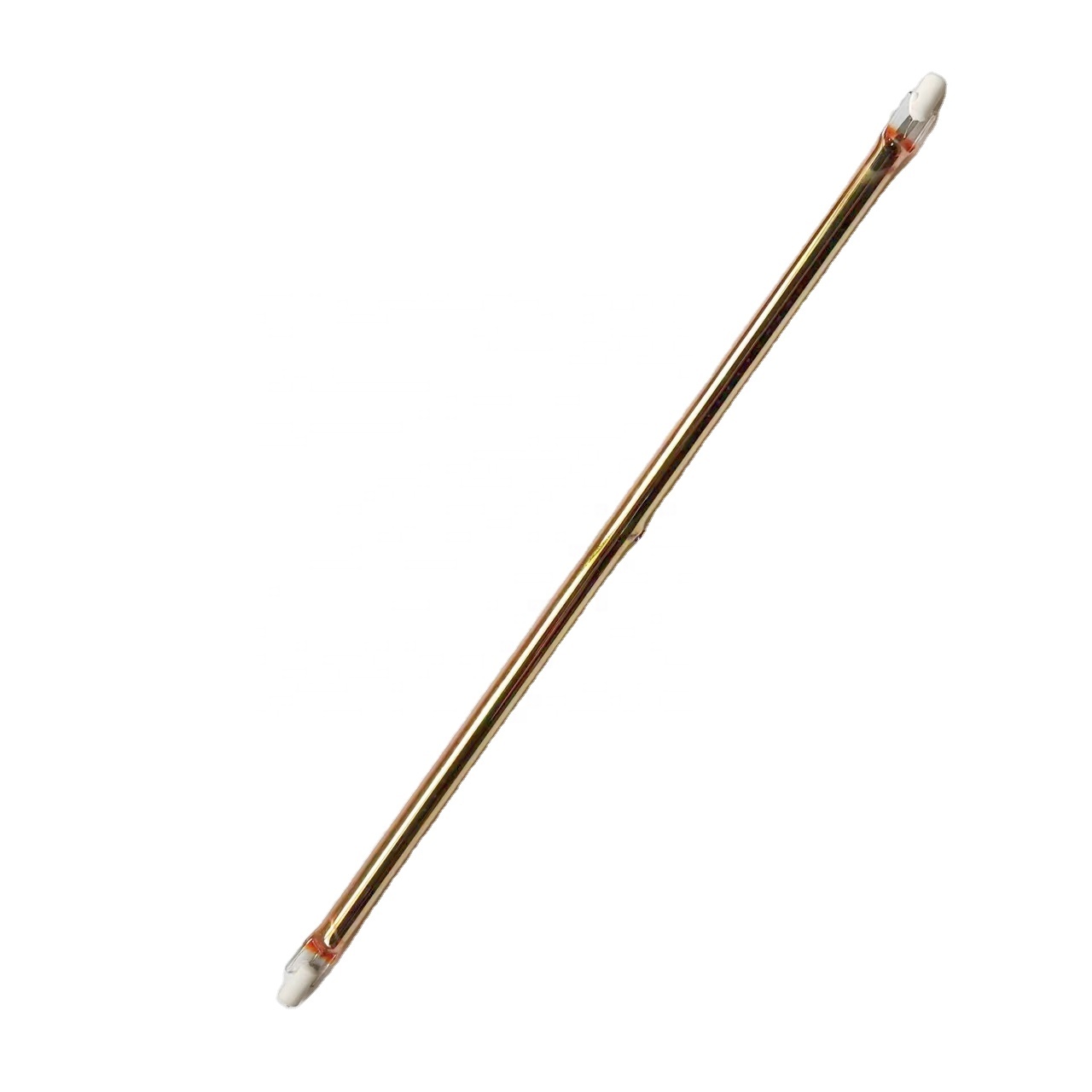
Directional Reflection: 24K Gold vs. Ceramic Nanocoating
In conventional 360° circular quartz heating tubes, half of the generated radiative energy is radiated toward the back wall of the furnace, demanding external secondary metal reflectors that quickly corrode, gather dust, and lose optical efficiency.
Modern engineering utilizes direct envelope coating. 24K High-Reflectance Gold Sputtering reflects up to 98% of rearward infrared radiation directly onto the target substrate, reducing ambient equipment temperature and cutting kilowatt-hour draw by 40–50%. For continuous operating temperatures exceeding 800°C—where gold films may undergo thermal migration—Kavri Quartz applies a Half-White Ceramic Diffuse Nanocoating, delivering up to 90% directivity and thermal stability up to 1,150°C.
As machinery widths widen to accommodate multi-meter plastic film webs and glass annealing lines, single quartz tubes of extended lengths (exceeding 2,000 mm) become susceptible to mechanical sagging when mounted horizontally under intense internal thermal stress.
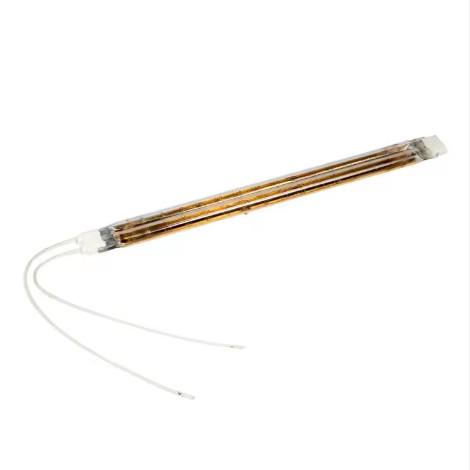
The continuous quartz fusion welding of double tubes (profiles such as 11 × 23 mm and 15 × 33 mm) produces an integrated structural I-beam effect. This eliminates mechanical deflection, enables power capacities up to 150 W/cm linear density, and allows multi-circuit wiring where two filaments can be activated independently for graduated zone heat profiling.
Verified Manufacturing Prowess
Why Global Tier-1 Buyers Partner with Kavri Quartz
Combining regional mineral abundance with over a decade of rigorous OEM/ODM fabrication discipline.
Integrated Production Lines
Operating 3 dedicated continuous manufacturing lines with an annual output capacity between US$1–2.5 Million. Equipped with continuous glass drawing towers, automatic thermal cutting machines, precision optical flame lathes, and computerized vacuum sealing stations.
10+ Years Dedicated OEM/ODM
Established in 2014, providing precision contract manufacturing according to customer drawings, CAD files, or returned worn samples. Customization covers voltage (12V to 480V), wattage (up to 15,000W), overall lengths up to 6,000 mm, termination caps, and buyer branding.
Strict QA & ≤4h Rapid Response
Every production batch undergoes spectrophotometer transmission verification, polariscopic residual stress analysis, dimensional tolerance inspection (±0.05 mm), and helium mass spectrometer leak testing. Inquiry-to-engineering turnaround achieved within 4 hours.
Robust Global Export Packaging
Serving markets across Germany, the Netherlands, Japan, South Korea, the USA, and South America under Incoterms including FOB, CFR, CIF, EXW, and DDP. Shipped in multi-layer shock-absorbing pearl foam sleeves nested inside reinforced export-grade plywood crates.
Procurement Clarifications
Frequently Asked Technical & Sourcing Questions
Clear, definitive answers to questions frequently evaluated by quality engineers, procurement leads, and equipment builders.
What specific quality and safety standards are verified under your CE Certification?
Our fused quartz infrared heat lamps and laboratory quartzware strictly comply with the European Union's Low Voltage Directive (LVD 2014/35/EU) and relevant safety harmonized standards (such as EN 60335-1, EN 60335-2-30 for heating appliances, and EN 60598 for luminaires). CE verification confirms that our quartz products possess adequate dielectric breakdown strength (preventing high-voltage arcing at elevated temperatures), safe earthing connectivity across metal caps, superior lead-wire insulation ratings (>500°C silicone or Teflon coated pure nickel wire), and stable thermal stress distribution to eliminate explosive failure hazards in industrial environments.
How do you manage hydroxyl group (OH-) content, and why is it critical for IR lamp life?
The hydroxyl group (OH-) content directly influences the structural viscosity, softening temperature, and optical absorption characteristics of fused quartz. Specifically, molecular OH- introduces an intense optical absorption dip at 2.72 μm. If fused quartz envelopes possess elevated OH levels (>30 ppm), this absorbed energy converts into localized wall heating, causing premature tube sagging and accelerating devitrification. Kavri Quartz utilizes electrical vacuum fusion and secondary vacuum baking to limit OH- content to ≤ 5 ppm (low-OH grade) for high-load short-wave halogen lamps, ensuring maximum envelope transmission and extended service life up to 5,000+ hours.
What dimensional tolerances can you guarantee for custom quartz tubes and rods?
Through precision optical outer-diameter gauging during the continuous drawing process, we maintain standard outer diameter (OD) and inner diameter (ID) tolerances of ±0.10 mm to ±0.20 mm for standard stock. For precision applications (such as semiconductor processing boats, laser flow tubes, or biochemistry analytical flow cells), our CNC machining, centerless grinding, and polishing capabilities achieve tight tolerances of ±0.02 mm to ±0.05 mm, with total runout/straightness held below 0.1% of overall length.
Can you manufacture direct drop-in replacements for obsolete or third-party European emitters?
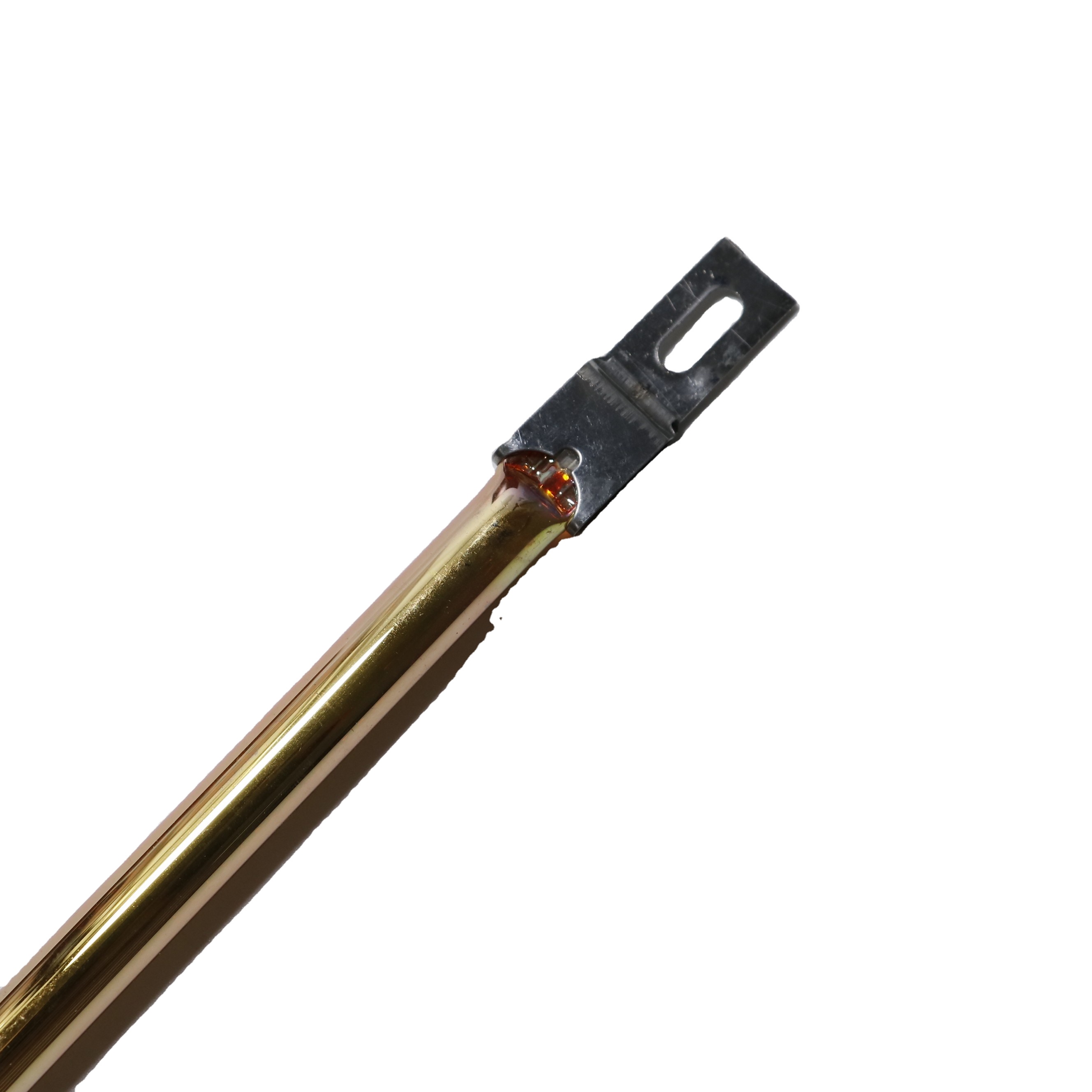
Yes. A large share of our export contracts involves reverse-engineering and manufacturing drop-in replacements for machinery from European, American, and Japanese OEMs (such as Sidel, Krones, Heidelberg, and Heraeus-style cassettes). Clients simply provide an existing model code, a dimensioned drawing, or a physically worn sample. We faithfully replicate the exact heated length, overall length, electrical parameters (volts, watts, resistance profile), ceramic termination cap geometry, and connection terminals (R7s, SK15, X-clips, metal tags, or plain lead wires).
What is your Minimum Order Quantity (MOQ) for custom fabricated items?
For standard catalogue items, baseline replacement lamps, and off-the-shelf quartz glass tubes, our low initial order quantity starts at just 8 to 10 pieces, ensuring cost-effective maintenance trials and prototype evaluations. For custom-engineered projects involving unique tooling, CNC-machined quartz geometries, or specialized multi-circuit terminal caps, MOQs are evaluated case-by-case following drawing review, with flexible sample validation terms.
How are fragile fused quartz glass tubes packaged to guarantee zero breakage during sea and air transit?
Quartz logistics demands specialized containment protocols. Each individual tube or emitter is wrapped in high-density anti-static foam sheeting and isolated in heavy-wall individual cardboard sleeves. Multiple sleeves are grouped in compartmentalized inner cartons, then nestled within a suspended cushion of high-resilience pearl foam inside an outer, fumigated ISPM-15 compliant plywood crate. Every shipment carries tilt and impact indicator labels, achieving a proven historical breakage incidence rate below 0.1% across transatlantic and transpacific shipments.
Partner directly with Lianyungang's premier CE-certified fused quartz glass manufacturer. Submit your dimensional specifications, working temperature requirements, or machinery OEM reference codes today for a rapid technical proposal and quote within 4 hours.