0%

Quartz Glass is not a single, uniform material. Its composition, purity, manufacturing route, and finish can change how it performs under heat, light, and chemical exposure. In 2026, buyers and engineers may encounter fused quartz, synthetic fused silica, natural quartz glass, and specialized grades for optical, semiconductor, laboratory, or lighting applications. The names can overlap in product catalogs. Check the supplier’s specification sheet.

This guide compares the main types by practical features, including thermal stability, ultraviolet transmission, contamination risk, and available shapes. A clear tube under a bright inspection lamp, for example, may need different optical properties than a vessel exposed to rapid temperature changes. There is no universal “best” type. The right choice depends on the operating conditions, required tolerances, and verified test data—not just a product label or price. Small differences matter.

Some descriptions deserve caution. Terms such as “high purity” or “optical grade” do not mean the same thing across every supplier, and a broad category name cannot replace a technical datasheet. This overview offers a structured starting point, not a substitute for application-specific review. Even familiar grades can have trade-offs. That is worth remembering. We will examine what distinguishes each Quartz Glass type, where it is commonly used, and which questions help readers make a more informed comparison.
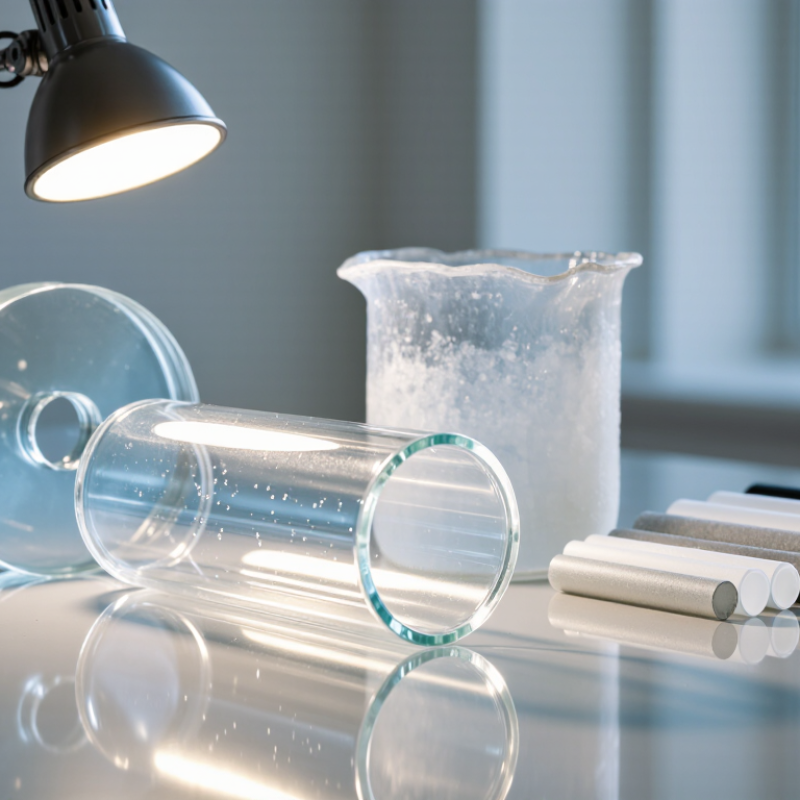
What Are the Top Quartz Glass Types in 2026?

How Quartz Glass Is Classified by Purity and Manufacturing Method

What Are the Top Quartz Glass Types in 2026?

Quartz glass is classified mainly by purity and manufacturing method. Purity is often expressed in “N” grades: 4N suggests 99.99% purity, while 5N suggests 99.999%. These figures describe the material, not guaranteed performance in every application.

Trace metals, hydroxyl content, and bubbles can also affect optical transmission and thermal behavior. Check the product specification, not just the grade label.

Manufacturing routes shape the glass in different ways.

Electrically fused quartz is made by melting high-purity feedstock in an electric furnace. It can suit applications where low contamination and consistent dimensions matter.

Flame-fused quartz uses a flame to melt silica, then forms it into a part. This route can produce clear material, but its hydroxyl content may be higher.

Synthetic quartz, made from chemical precursors, can offer very high purity and controlled optical properties. It usually costs more.

The best choice depends on the working conditions. A semiconductor component may require strict metal limits, while a lamp tube may prioritize thermal stability and shape.

Ask for test data on impurities, bubbles, and hydroxyl levels. Small differences matter.

And grade names can vary between suppliers, so comparisons are not always simple. I would treat any single “top” ranking with caution.

Fused Quartz: Properties, Grades, and Common Uses

What Are the Top Quartz Glass Types in 2026?

Fused Quartz: Properties, Grades, and Common Uses

Fused quartz is made by melting high-purity silica into glass. It has very low thermal expansion, so it tolerates rapid temperature changes better than ordinary glass. It also transmits ultraviolet light well, depending on grade and thickness. These properties make it useful in laboratory tubes, furnace windows, optical components, and semiconductor equipment. It is not unbreakable. A sharp impact or uneven heating can still cause failure.

Grades differ in purity, bubble content, hydroxyl level, and optical transmission. Electrical-grade material suits many insulating and high-temperature parts. Optical grades are selected for controlled light transmission, while higher-purity options help limit contamination in demanding processes. Grade names are not always consistent between suppliers, so compare measured specifications rather than relying on labels alone. Fused quartz can also be difficult to machine, and its cost may be unnecessary for applications that do not need its heat or purity performance.

Tips: Check the operating temperature, wavelength range, and chemical exposure before choosing a grade. Ask for traceable test data, especially when optical transmission or contamination limits matter. Keep edges smooth; scratches can become stress points. Small details count. A careful selection process helps, though real-world conditions may still differ from a datasheet.

Synthetic Quartz Glass: Purity, Performance, and Applications

Synthetic quartz glass is made from highly refined silica, giving it very low levels of metallic impurities. That purity helps reduce absorption and contamination in demanding optical and semiconductor processes. Under a bright inspection lamp, a clean component should show consistent clarity, though tiny defects may still matter in precision work.

Its performance depends on more than purity. Synthetic quartz offers strong ultraviolet transmission, good thermal stability, and low thermal expansion. These traits suit lamps, optical windows, and furnace components exposed to rapid temperature changes. It can handle heat well. Still, thermal shock resistance varies with shape, surface finish, and installation; no material is immune to stress.

Choosing a grade requires matching measured properties to the actual operating environment. Check wavelength range, temperature cycles, and acceptable contamination levels with supplier documentation and independent test data. A higher-purity grade may not improve performance if the application does not need it. That part is easy to overlook. Scratches, edge chips, and cleaning residues can also reduce service life, so inspection and handling deserve as much attention as the material specification.

Specialty Quartz Glass Types for Optical and Industrial Use

Specialty Quartz Glass Types for Optical and Industrial Use

Quartz glass is not one uniform material. Its purity, hydroxyl content, and manufacturing route can change how it performs. Synthetic fused silica often offers strong ultraviolet transmission and low optical absorption, making it useful in lenses, windows, and laser components. Natural fused silica may suit applications where exact transmission at shorter wavelengths is less critical. Check the grade’s transmission curve, not just its label. Small differences matter.

Industrial designs may use transparent tubing, plates, or opaque quartz. Opaque grades can help shield radiant heat in furnace assemblies, while clear quartz parts allow visual inspection or transmit light. High-purity quartz is common in demanding thermal processes, but purity alone does not guarantee longer service life. Thermal gradients, surface scratches, and chemical exposure also affect performance. They’re easy to overlook. For a real selection, compare operating temperature, wavelength, dimensions, and cleaning conditions with a supplier’s technical data. A cautious prototype test may reveal issues that a specification sheet misses. The “best” type depends on the job.

How to Compare Quartz Glass Types for a Specific Application

Choosing a quartz glass type for a specific application requires more than comparing product labels. In 2026, fused silica remains common for ultraviolet optics, laboratory vessels, semiconductor equipment, and high-temperature parts. Synthetic quartz usually offers better purity and stronger ultraviolet transmission. Electrically fused quartz can suit larger components, while flame-fused material may provide excellent optical clarity for smaller parts. Start with the exposure.

Match the material to the working environment. For deep-UV applications, examine transmission, hydroxyl content, and trace-metal levels. For furnace components, compare softening temperature, thermal expansion, and resistance to repeated heating. A tube exposed to rapid temperature changes needs reliable thermal-shock performance. A viewing window may need low bubbles, low striae, and a carefully controlled surface finish. Small details matter.

Engineers should also check dimensions, tolerances, cleaning requirements, and available inspection data. A higher-purity grade is not automatically the best choice. It may increase cost without improving a visible-light process. Likewise, a lower-cost option can create distortion, contamination, or early failure in demanding equipment. A neat ranking is tempting, but it can mislead. I have seen application decisions change after one overlooked factor, such as moisture release from the glass surface. Testing a sample under real temperature, light, and pressure conditions remains more dependable than relying on a specification sheet alone. Some comparisons stay uncertain until the glass meets the actual process.

FAQS

What is synthetic quartz glass made from?

It is made from highly refined silica. This creates very low metallic impurity levels. Under a bright lamp, clarity should look consistent.

Why is purity important in quartz glass?

High purity can reduce absorption and contamination. This matters in ultraviolet optics and precision processing. However, extra purity may not improve every application.

What performance features does synthetic quartz glass offer?

It provides strong ultraviolet transmission, thermal stability, and low thermal expansion. These properties support optical windows, lamps, and furnace parts. It handles heat well.

Is quartz glass resistant to thermal shock?

It can tolerate rapid temperature changes, but performance varies. Shape, surface finish, and installation all influence stress. No material is immune.

How should I choose a quartz glass grade?

Match the grade to wavelength, temperature cycles, and contamination limits. Review supplier documents and independent test data. Real conditions matter more than labels.

What should be checked for deep-ultraviolet applications?

Check transmission, hydroxyl content, and trace-metal levels. Small impurities may affect optical performance. The correct data can remain uncertain without testing.

Which properties matter for furnace components?

Compare softening temperature, thermal expansion, and repeated-heating resistance. A tube facing sudden heating needs dependable thermal-shock performance. Installation still matters.

How can surface condition affect service life?

Scratches, edge chips, and cleaning residues can shorten service life. Inspect parts before installation. Handle them carefully. I might underestimate this step.

Is a higher-purity quartz grade always better?

No. It may increase cost without improving visible-light performance. A cheaper grade may cause distortion, contamination, or early failure. Test a sample under real light, temperature, and pressure.

Conclusion

Quartz Glass is classified mainly by its purity and the way it is manufactured, two factors that shape its performance and best uses. Fused quartz is valued for its thermal stability, low expansion, and resistance to demanding environments. Its grades vary according to purity and production needs, making it suitable for applications such as laboratory equipment, industrial components, and high-temperature processes. Synthetic quartz glass is made through controlled methods to achieve especially high purity and consistent optical properties, which are important in precision instruments and advanced manufacturing.

Specialty quartz glass types are designed for particular optical or industrial requirements, including transmission, strength, or resistance to heat and chemicals. To choose the right type, compare purity, manufacturing method, operating temperature, optical needs, chemical exposure, and mechanical demands. Matching these characteristics to the intended application helps balance performance, reliability, and cost.

Emily

Emily

Emily is a professional marketing specialist with in-depth knowledge of the company’s products and the needs of the customers who use them. She regularly contributes expert articles to the company website, offering clear explanations, practical guidance, and thoughtful perspectives on product......